
TOKYO — Japan said Tuesday it plans to use some slightly radioactive soil stored near the tsunami-wrecked Fukushima nuclear plant on flower beds outside Prime Minister Shigeru Ishiba’s office to show it is safe to reuse.
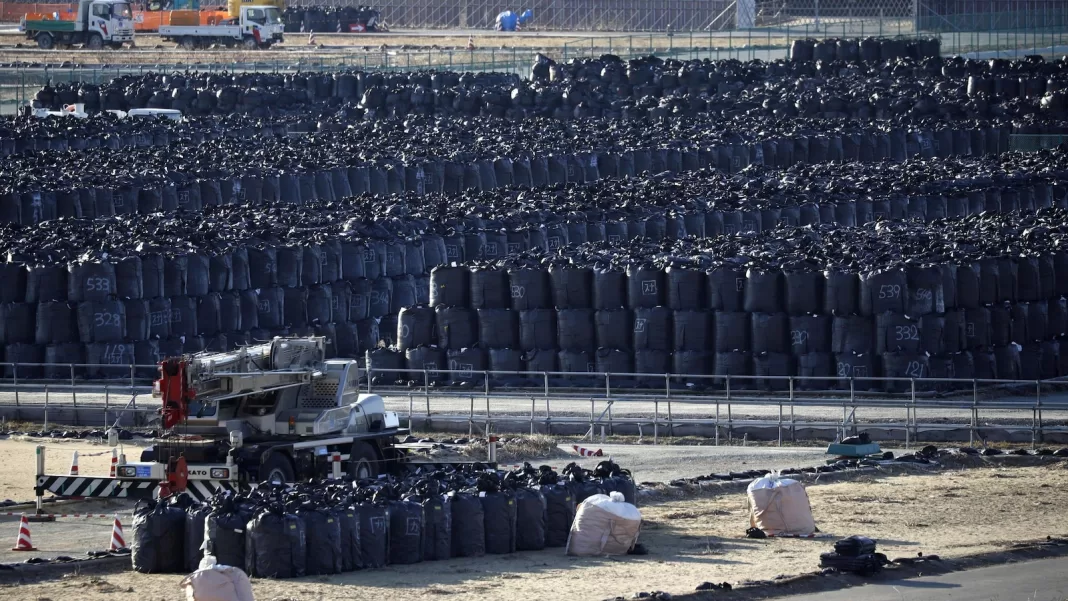
The soil was removed from across the Fukushima prefecture as part of decontamination work following the 2011 nuclear disaster and has since been in interim storage. Some of it has since reached levels safe enough for reuse, officials say.
Using the soil at Ishiba’s office in Tokyo is aimed at reassuring the public it is safe. The government said that it plans to reuse the soil for flower beds and other purposes within the grounds of government agencies. The plan is based on guidelines set by the Environment Ministry in March and endorsed by the International Atomic Energy Agency.
The Fukushima disaster resulted in large amounts of radioactive materials spewing out from the plant, polluting surrounding areas.
Japan is stuck with large volumes of the dirt, chopped trees and other debris collected during intensive decontamination work. It has 14 million cubic meters of dirt and other materials — enough to fill 11 baseball stadiums — stored at a sprawling outdoor facility straddling the towns of Futaba and Okuma, near the Fukushima plant.
The government is aiming to find disposal sites for the soil by 2045, with officials suggesting low risk material could be used to build roads and in other public works projects across the country.
The Environment Ministry said that the soil will be used as foundation material and safely covered with top soil thick enough to keep radiation at negligible levels.
But there is much public unease. The government has already been forced to discontinue a plan to experiment using some of the soil in flower beds at several public parks in and around Tokyo following protests.
The IAEA is providing assistance with the Fukushima decommissioning process, which requires removing more than 880 tons of melted fuel debris.
In 2023 Japan began discharging treated radioactive wastewater from the plant into the sea to reduce the risk of accidental leaks and to make space to build facilities needed for melted fuel removal.