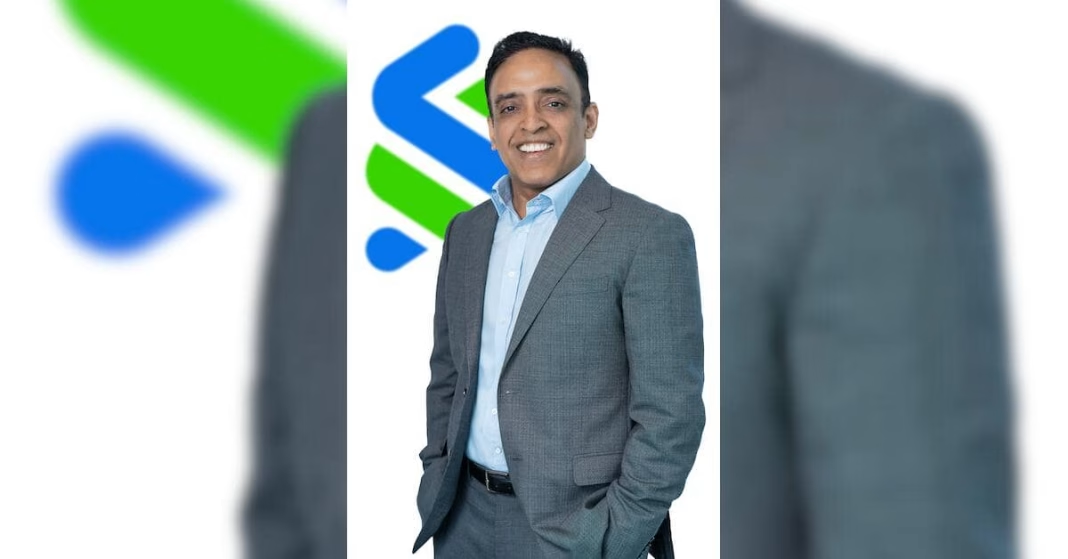

GIFT City could evolve from a platform primarily used for distributing financial products into a booking centre for cross-border wealth business, where investment transactions are also booked through the financial hub, said Samir Subberwal, global head, wealth solutions, retail products, data and analytics, Standard Chartered.
“I think it could evolve into a booking centre as well. We just have to see how everything progresses in GIFT City. Right now, it is distribution. The future can be where we start to book in GIFT City as well,” Subberwal said in an interaction with Business Standard.
A booking-centre role would mean GIFT City going beyond connecting investors with financial products to also becoming a location through which investment business is booked. Subberwal, however, said it was too early to predict how quickly the financial centre would evolve in that direction.
The bank is using GIFT City to expand its wealth solutions for both resident Indians looking to diversify overseas and non-resident Indians (NRIs) seeking to invest in Indian assets. While the current offering to resident Indians is focused on a set of global model portfolios, the bank already has seven products through GIFT City for NRIs investing in India.
The four model portfolios — conservative, income, balanced and growth — were launched globally on October 1, 2022, and GIFT City is the 13th market in which the bank is offering them. They are multi-asset portfolios based on a client’s risk profile and are actively managed according to the bank’s chief investment officer (CIO) house views.
Subberwal said the bank had recently upgraded Indian markets to overweight, reflecting its assessment of valuations, and increased India’s allocation in the model portfolios accordingly.
Amundi is the bank’s global partner for the portfolios, which have around $5.5 billion in assets under management globally. In GIFT City, SBI Amundi has the fund management entity (FME) licence and will be the FME on record, while Standard Chartered has applied for a distribution licence.
The bank is yet to set an India-specific asset management target for the offering. Subberwal said it was too early to assess demand, particularly as the proposition for resident Indians can be offered only through reverse enquiry and the bank cannot solicit customers onshore for it.
The Liberalised Remittance Scheme (LRS) permits remittances of up to $250,000 per individual annually. Subberwal said the limit was adequate for the proposition because resident Indians were unlikely to move all their assets offshore and would typically allocate only a portion of their portfolios to overseas diversification.
Standard Chartered follows an open-architecture model and does not have its own asset management or insurance businesses. Subberwal said the bank would look at bringing more partner products to GIFT City as it builds the required infrastructure and sees sufficient customer demand.
For NRIs, the bank expects GIFT City to become an increasingly popular route to invest in Indian assets, partly because of the tax advantage it offers. The seven products already available to NRIs through the financial hub predate the resident-Indian offering.
The expansion is part of a broader strategy to focus on affluent customers and small and medium enterprises (SMEs), a priority for the bank across its global markets and not just India.
In India, it plans to hire more relationship managers, advisers and wealth specialists, upgrade branches into priority centres and deepen relationships with existing customers.
The bank has 24 priority centres in India, of which 11 have been upgraded in recent years. It plans to upgrade more before the end of the year.
India’s wealth market is becoming increasingly competitive, with banks and wealth management firms seeking to attract affluent and ultra-high-net-worth individuals.
Subberwal said Standard Chartered’s international network, global product advisory and due diligence capabilities, and open architecture differentiated its proposition.
Subberwal said the needs of wealthy Indians were becoming more sophisticated as wealth creation expanded among startup founders, entrepreneurs and business owners. Customers were increasingly looking beyond conventional equity investments and simple funds towards alternative investments, borrowing and more specialised advice.
The bank has also expanded its hedge fund offering globally, onboarding several hedge funds between last year and this year. The bank plans to bring hedge funds into its Indian offering as well, he said.
On whether GIFT City could eventually draw business away from established international wealth centres such as Singapore and Hong Kong, Subberwal said it was difficult to predict.
He expects NRIs to increasingly use GIFT City to invest in Indian assets, but said the bank was agnostic about where it booked and distributed business.
“Could GIFT City become a complete booking centre tomorrow, where we offer lots of products? It’s a possibility, but it is difficult for me to predict that at this point in time. For us, it doesn’t matter. As a global player, whether I am booking and distributing in GIFT City versus Singapore or Hong Kong, I am agnostic,” he said.