
 Image generated with Ai
Canada’s Ministers Unite to Honour First Nations, Inuit and Métis Veterans on Indigenous Veterans Day, recognising generations of military service, sacrifice and leadership. Five federal ministers have reaffirmed the government’s commitment to Indigenous Veterans, highlighting their historic contributions, continuing military involvement and important role in strengthening Canada’s Arctic security.
Canada Honours Indigenous Veterans as Federal Ministers Recognise Military Legacy and Arctic Contributions
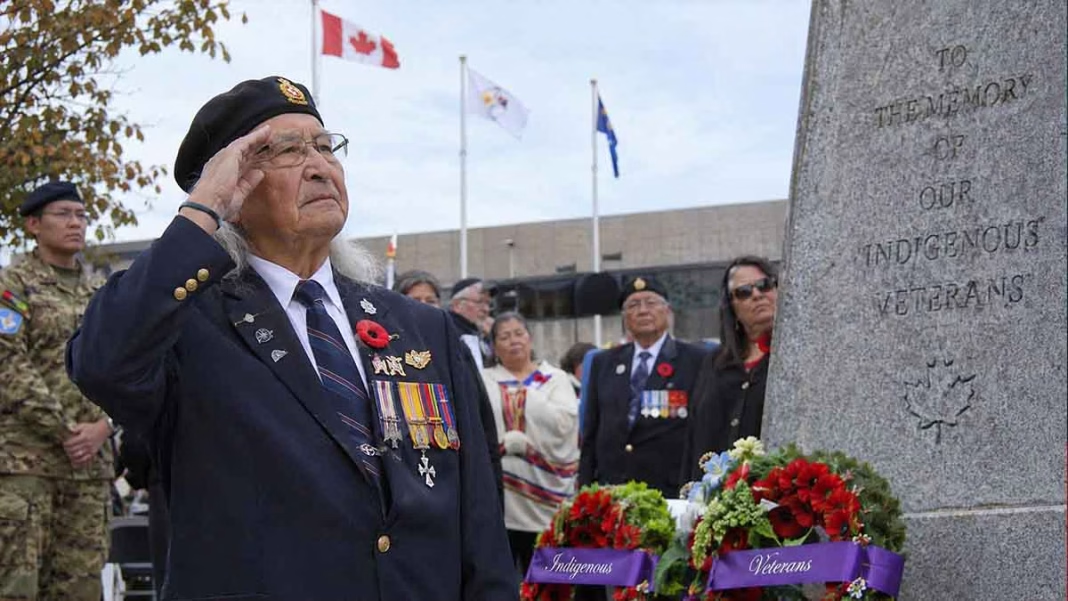
Ottawa, Canada: Canada has marked Indigenous Veterans Day with a joint statement from five federal ministers, recognising the military service, sacrifices and lasting contributions of First Nations, Inuit and Métis people to the country’s defence history and national security.
Advertisement
Advertisement
The statement was issued by Jill McKnight, Minister of Veterans Affairs and Associate Minister of National Defence; David J. McGuinty, Minister of National Defence; Rebecca Alty, Minister of Crown-Indigenous Relations; Rebecca Chartrand, Minister of Northern and Arctic Affairs; and Mandy Gull-Masty, Minister of Indigenous Services.
The ministers emphasised the importance of remembering Indigenous military personnel whose service has helped shape Canada’s armed forces, while acknowledging those who continue to contribute to defence operations.
Advertisement
Advertisement
Their message also highlighted the significance of Indigenous knowledge and experience in protecting Canada’s northern territories, where Canadian Rangers support military operations and national sovereignty.
Indigenous Veterans Day Recognises Generations of Military Service
Observed annually on 8 November, Indigenous Veterans Day provides an opportunity to recognise First Nations, Inuit and Métis people who have served in Canada’s military.
Advertisement
Advertisement
The commemoration draws attention to a longstanding tradition of military participation, including service during major international conflicts and subsequent defence operations.
Indigenous personnel have contributed to Canada’s military history in various capacities, demonstrating courage, resilience and leadership despite historical barriers and inequalities.
The federal ministers acknowledged that this legacy continues to influence new generations of Indigenous Canadians pursuing military careers.
Their statement also reaffirmed the government’s responsibility to ensure Indigenous Veterans receive appropriate recognition and support.
Historic Military Figures Highlight Indigenous Contributions
The ministers specifically recognised Francis Pegahmagabow, Tommy Prince and Charles Henry Byce as examples of distinguished Indigenous military service.
Francis Pegahmagabow, a First World War soldier from the Wasauksing First Nation, became one of Canada’s most highly decorated Indigenous soldiers. His wartime achievements and subsequent advocacy for Indigenous rights established an enduring legacy.
Advertisement
Advertisement
Tommy Prince, a member of the Brokenhead Ojibway Nation, served during the Second World War and Korean War. He became widely recognised for his military accomplishments and exceptional courage.
Charles Henry Byce, who had Cree ancestry, received distinguished military honours for his service during the Second World War.
Together, their stories demonstrate the importance of Indigenous participation in Canada’s military history and the need to preserve these accounts for future generations.
Indigenous Leadership Continues Within the Canadian Army
The statement also acknowledged Lieutenant-General (Retired) Jocelyn Paul of the Huron-Wendat First Nation.
Paul received the Meritorious Service Cross for his service in Afghanistan and subsequently became the first Indigenous officer to command the Canadian Army.
His appointment represented an important milestone in the recognition of Indigenous leadership within Canada’s military establishment.
Advertisement
Advertisement
The ministers presented his career as evidence of how the contributions of earlier Indigenous Veterans helped create opportunities for subsequent generations.
His achievements also illustrate the continuing importance of Indigenous representation in senior military positions.
Canadian Rangers Strengthen Arctic Security and Sovereignty
A significant element of the ministerial statement concerned the Canadian Rangers, whose responsibilities include supporting military activities in remote and northern communities.
Many Rangers are Indigenous, bringing extensive knowledge of local geography, environmental conditions and traditional survival practices to their duties.
Their expertise is particularly valuable across Canada’s Arctic, where extreme weather, limited infrastructure and vast distances create substantial operational challenges.
The ministers highlighted the increasing international interest in the Arctic and the corresponding importance of protecting Canadian sovereignty.
Advertisement
Advertisement
Canadian Rangers contribute through patrols, local knowledge, community-based support and assistance to Canadian Armed Forces operations.
Their continued involvement demonstrates how Indigenous expertise remains essential to Canada’s contemporary defence capabilities.
Northern Communities, Cultural Heritage and Responsible Tourism
The recognition of Indigenous Veterans also has relevance for Canada’s cultural heritage and tourism sectors, particularly in northern destinations where Indigenous communities play important roles in preserving local history.
Museums, memorials, cultural institutions and community-led heritage initiatives provide opportunities to understand Indigenous military experiences within the broader context of Canadian history.
For travellers exploring Canada’s northern regions, Indigenous-led cultural experiences can offer valuable perspectives on community identity, traditional knowledge and the historical relationship between local populations and the land.
However, military remembrance and tourism serve different purposes. Indigenous Veterans Day is primarily an occasion for recognition and reflection rather than a tourism promotion.
Advertisement
Advertisement
Responsible heritage tourism should therefore prioritise historical accuracy, community participation and respectful interpretation.
These principles are particularly important when presenting Indigenous military history to international visitors unfamiliar with Canada’s historical and cultural background.
Government Reaffirms Commitment to Indigenous Veterans
The five ministers reiterated the federal government’s commitment to ensuring Indigenous Veterans receive the recognition and support they deserve.
Their joint message brought together portfolios covering veterans’ affairs, defence, Indigenous services, Crown-Indigenous relations and northern affairs.
This coordinated approach reflects the range of government responsibilities associated with military remembrance, Indigenous communities and national security.
The statement did not announce additional funding, new veterans’ programmes or specific policy changes.
Advertisement
Advertisement
Instead, it focused on acknowledging historical achievements, recognising contemporary service and encouraging Canadians to participate in remembrance.
The ministers invited the public to honour both Indigenous Veterans and serving military personnel for their dedication and contributions.
Preserving Indigenous Military History for Future Generations
Indigenous Veterans Day provides an annual opportunity to strengthen public understanding of the contributions made by First Nations, Inuit and Métis service personnel.
Preserving personal accounts, military records and community histories can help ensure these contributions remain visible in Canada’s national narrative.
For educational institutions, cultural organisations and heritage destinations, these stories offer opportunities to communicate the complexity of Canada’s military past.
The ministers’ statement ultimately reinforces the importance of recognising Indigenous service not only through annual commemorations but also through sustained public awareness.
Advertisement
Advertisement
As Canada’s defence priorities evolve, particularly across the Arctic, the experience and leadership of Indigenous military personnel remain relevant to the country’s future.
Canada’s Indigenous Veterans Day commemoration reinforces the importance of recognising First Nations, Inuit and Métis military service across generations. By honouring historic figures, contemporary leaders and Canadian Rangers, federal ministers have highlighted Indigenous contributions to national defence, Arctic sovereignty and cultural heritage, encouraging continued remembrance, respect and public understanding.