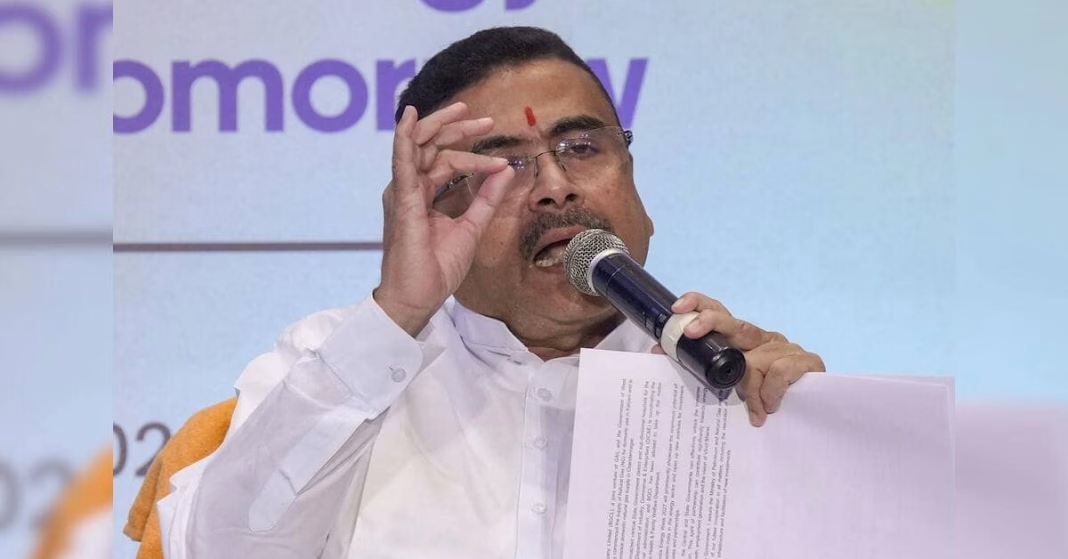

The West Bengal government on Thursday unveiled a new Investment Promotion Policy with a focus on job creation.
The move marks a reversal of the previous Trinamool Congress government’s decision to retrospectively withdraw industrial incentives, a step that caused considerable disquiet in industry circles.
The new policy will apply to investments made on or after May 9, 2026, when the Bharatiya Janata Party (BJP) government assumed office in the state. However, the backlog of industrial incentives, estimated at ₹50,000 crore, remains outside the scope of the policy.
Launching the West Bengal Investment Promotion Policy, 2026, in the presence of industrialists, West Bengal Chief Minister Suvendu Adhikari said, “On the eve of Dhanteras and Diwali, we are introducing our industrial policy,” describing it as “a very small beginning.”
The policy provides assistance of up to 120 per cent of eligible investment in plant and machinery for units in thrust sectors located in priority areas, disbursed over 10 years from the commencement of production.
The identified thrust sectors include semiconductors and electronics, electric vehicles and batteries, automobiles, speciality steel, critical minerals processing, green hydrogen, pharmaceuticals, defence and shipbuilding.
For regular units, the assistance is capped at 100 per cent of eligible fixed capital investment (FCI).
The key components of incentives for manufacturing units include financial assistance linked to State Goods and Services Tax (SGST), reimbursement of electricity duty, assistance towards Employees’ Provident Fund (EPF) contributions and reimbursement of stamp duty paid on project land.
For service-sector units, the incentives include financial assistance linked to SGST, assistance towards EPF contributions, reimbursement of electricity duty and rental assistance for leased premises, to be disbursed over five years.
Strategic and mega projects can seek “tailor-made” benefits.
The policy covers micro, small and medium enterprises (MSMEs), large units, not-for-profit institutions, and sick or closed units, apart from strategic and mega projects and service units.
Adhikari said the government was committed to fulfilling its promises. “The earlier government deleted the word incentive. We have reintroduced the word incentive and made a provision of Rs 5,000 crore,” he said.
The sanctioned assistance is paid from a dedicated fund.
Industry sees a good start
Industry representatives welcomed the move, describing it as a positive beginning. “From zero incentives, we now have incentives. That’s a good start, even though other states may be offering more,” said an industry representative.
Harshvardhan Neotia, chairman, Ambuja Neotia Group, said the policy was an encouraging step towards translating the state’s economic potential into investment, enterprise and employment. “The government’s emphasis on a unified single window and faster clearances gives businesses the confidence to plan and execute within predictable timelines.”
The Bengal Chamber of Commerce & Industry said it was a much-needed shot in the arm for the state’s economy. “The single biggest relief for industry is the creation of a Dedicated Assured Incentive Fund, ensuring that sanctioned incentives are backed by a committed funding mechanism.”
Mayank Jalan, chairman and managing director, Keventer Group, said the policy put emphasis on execution and innovation. “This policy invites us to build and grow with a new Bengal, a new investment destination.”
Addressing land challenges
Adhikari said the absence of a land policy was one reason behind the failure of West Bengal’s earlier industrial policies. He said the government was studying the land policies adopted by Uttar Pradesh, Maharashtra, Gujarat and Andhra Pradesh over the past three to four years, particularly their approaches to land purchase, pooling and development.
A separate land policy is likely.
Responding to questions on Singur, Adhikari said the government was looking at options for the area. “We will do something there,” he said, adding that discussions had been held with Ashok Leyland.
The incentive backlog
Even as the government unveiled its industrial policy, Adhikari flagged the state’s limited fiscal headroom, citing a debt burden of ₹8 trillion.
He said the backlog of incentives promised under previous policies was estimated at around ₹50,000 crore. The state may look at it when it is in a financially better position, like Maharashtra and Tamil Nadu. “Let us first move forward,” he said.