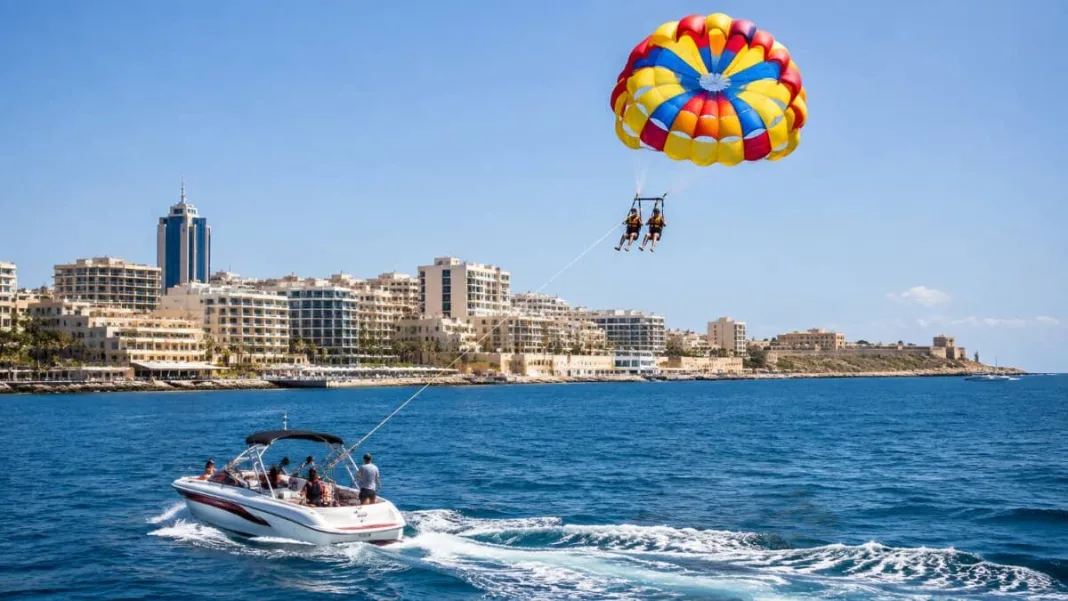

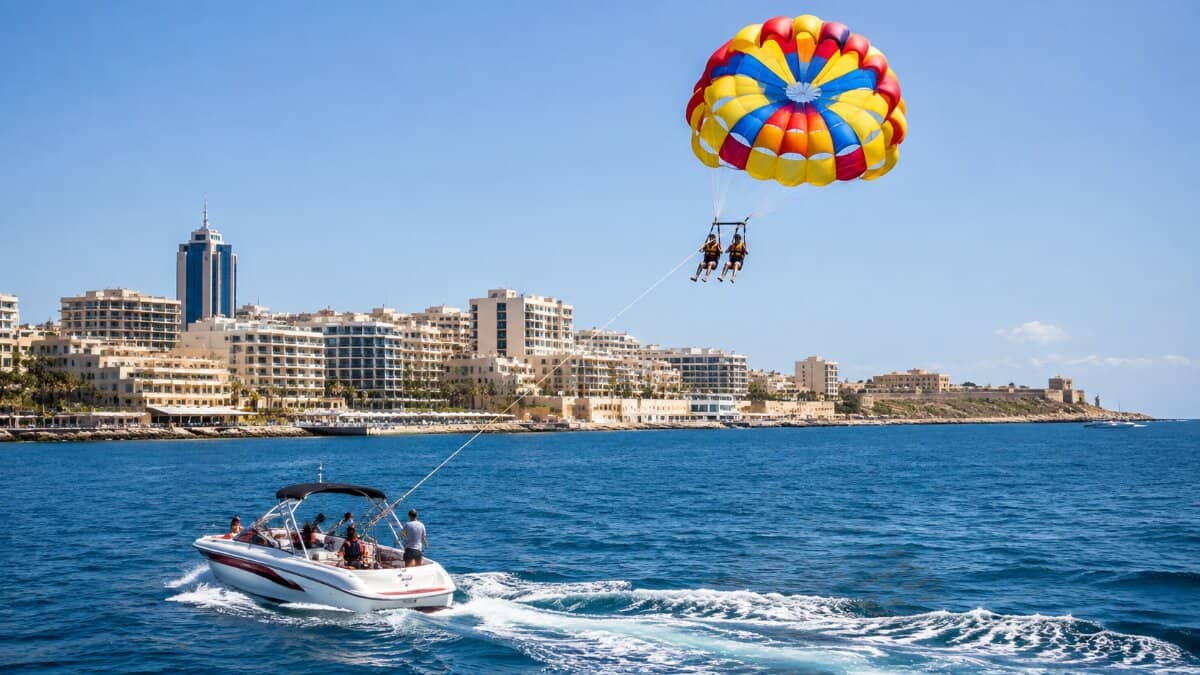
Malta’s adventure tourism safety framework has become a key travel industry discussion point after a parasailing incident off St Julian’s highlighted the importance of licensing, operator responsibility and marine activity controls. The case has pushed wider attention towards how Mediterranean destinations manage commercial water sports, including operator permits, vessel certification, instructor requirements and tourist risk management. Malta’s regulatory approach connects with wider European coastal tourism markets such as Italy, Greece, Spain, Croatia, France, Germany and the United Kingdom, where millions of visitors participate in sea-based recreational activities every year.
Malta Tourism Safety Moves Into Focus As Adventure Experiences Grow
Malta’s position as a Mediterranean leisure destination depends heavily on its coastline, marine experiences and adventure tourism products. Activities such as boating, diving, parasailing and other water-based excursions form an important part of the visitor economy.
The official Malta Police Force confirmed that an incident involving parasailing occurred approximately one and a half miles off the coast of St Julian’s on 19 September 2026. The preliminary investigation stated that two people participating in parasailing entered the sea, with the authorities launching further investigations.
However, the wider tourism question extends beyond the individual incident. For travel companies, tour operators and international visitors, the key issue is how destinations regulate adventure activities where weather conditions, equipment standards, operator training and emergency response systems directly influence traveller safety.
Malta provides a useful case study because its tourism economy combines high visitor volumes with a large marine recreation sector.
Malta’s Water Sports Licensing System Creates A Safety Chain For Visitors
Malta’s water sports operations are regulated through a licensing structure managed through maritime authorities. Operators seeking permission to conduct commercial water activities must obtain appropriate licences before operating.
According to Malta’s official government service information, water sports operators can apply for licences covering activities including paragliding and water skiing operations. Applicants must meet eligibility requirements and provide operational details.
The licensing system requires operators to identify:
| Safety Requirement | Tourism Importance |
|---|---|
| Licensed water sports operator | Ensures commercial activities operate under regulatory approval |
| Registered craft details | Helps authorities track vessels used for tourism activities |
| Commercial vessel certification | Supports operational safety standards |
| Instructor/operator information | Ensures qualified personnel manage activities |
| Emergency arrangements | Supports visitor protection during incidents |
Transport Malta’s licensing requirements also state that craft used under water sports licences must hold valid commercial vessel certificates issued by the authority. Applications may require additional approvals from other agencies, including Malta Tourism Authority involvement when activities operate from tourism-managed coastal areas.
For international travel companies, this creates an important operational checkpoint: selling adventure experiences should involve verified local operators rather than informal providers.
St Julian’s And Valletta Represent Malta’s High-Value Coastal Tourism Model
The two Maltese locations most connected with the wider tourism discussion are St Julian’s and Valletta.
St Julian’s is one of Malta’s most recognised visitor hubs, combining hotels, restaurants, nightlife, coastal attractions and marine activities. Valletta, Malta’s capital city and UNESCO World Heritage destination, represents the country’s wider tourism gateway and cultural identity.
Together, these locations reflect Malta’s broader challenge: maintaining a premium tourism reputation while ensuring that adventure products meet international visitor expectations.
| Location | Tourism Role | Safety Relevance |
|---|---|---|
| St Julian’s | Coastal leisure, hotels, marine activities | Water activity management and visitor safety |
| Valletta | Cultural tourism, cruise arrivals, gateway city | National tourism reputation and destination trust |
The issue is significant because modern travellers increasingly evaluate destinations not only by attractions but also by safety standards, transparency and quality controls.
Mediterranean Destinations Share A Common Adventure Tourism Challenge
The Malta case connects with a wider Mediterranean tourism trend. Countries including Italy, Greece, Spain, Croatia and France depend heavily on coastal tourism and offer similar marine adventure products.
The common challenge is balancing tourism growth with safety regulation.
| Country | Shared Tourism Connection |
|---|---|
| Italy | Mediterranean coastal tourism and marine recreation |
| Greece | Island tourism and water-based experiences |
| Spain | Beach tourism and adventure activities |
| Croatia | Adriatic coastal tourism and boating experiences |
| France | Mediterranean leisure markets |
| Germany | Major European outbound tourism market |
| United Kingdom | Strong Mediterranean holiday market and overseas visitor demand |
These countries share a common visitor expectation: adventure activities must be accessible, professionally managed and supported by clear safety rules.
For tour operators, this means destination selection is increasingly linked with regulatory confidence.
Operator Training And Instructor Standards Become Critical Tourism Factors
Beyond business licences, qualified personnel remain central to adventure tourism safety.
Malta provides a separate permit framework for nautical instructors operating within water sports activities. Official requirements include recognised nautical qualifications and experience requirements before approval.
This reflects a wider international tourism principle: equipment alone cannot guarantee safety. The competence of instructors, decision-making during changing weather conditions and emergency preparation are equally important.
Adventure tourism operators increasingly need documented procedures covering:
- Weather assessment before activity launch
- Passenger briefing requirements
- Equipment inspection schedules
- Emergency communication systems
- Rescue coordination plans
- Staff certification records
Weather Monitoring Becomes A Core Issue For Marine Tourism Safety
Weather conditions are among the biggest operational factors affecting parasailing and other aerial marine activities.
Malta’s official police statement noted that preliminary findings indicated wind conditions may have contributed to the incident, while investigations continue.
For tourism operators, this highlights a broader industry requirement: activities dependent on wind, waves and sea conditions require dynamic decision-making.
A safe tourism framework must allow operators to cancel experiences when conditions are unsuitable, even when customers have already booked.
This approach protects visitors and reduces reputational risks for destinations.
Why This Matters For Travel Agents And Tour Operators
International travel sellers increasingly package adventure experiences alongside hotels and flights. This creates responsibility beyond accommodation and transport.
Travel companies promoting marine activities should consider:
| Operational Area | Recommended Action |
|---|---|
| Supplier selection | Work only with licensed activity providers |
| Customer information | Explain weather-related cancellation policies |
| Insurance checks | Confirm operator liability coverage |
| Safety documentation | Verify certification and compliance |
| Emergency procedures | Understand local response systems |
The Malta example demonstrates that tourism safety is becoming a competitive destination factor.
Malta’s Tourism Safety Focus Moves Towards Stronger Visitor Protection
Malta’s review of its water sports safety framework highlights the growing importance of responsible adventure tourism management. As coastal activities continue to attract international visitors, clear regulations, qualified operators and effective safety procedures remain essential for maintaining traveller confidence. The future of Malta’s tourism sector will depend not only on offering memorable marine experiences but also on ensuring that every activity meets high standards of visitor protection and operational responsibility.
The post Malta Launches Inquiry After St Julian’s Parasailing Incident Highlights Tourism Water Sports Challenges appeared first on Travel And Tour World.
Source link