
Solomon Islands is quietly building a more consequential travel-technology system in Western Province than the individual announcements initially suggested. Munda International Airport is now electronically processing international passengers through the national Border Management System, Noro International Seaport has been connected to the same architecture, online visa applications and payments are operational, and direct Brisbane–Munda air access remains commercially active. Together, these developments create an emerging digital air-sea gateway outside Honiara, although several important technology, data and operational gaps remain.
Solomon Islands Travel Technology Story Is Now Bigger Than A Single Airport Upgrade
The most important development for travel businesses is not simply that Munda International Airport obtained new border-processing technology. It is that three previously separate stages of an international journey are starting to become digitally connected: pre-arrival visa administration, electronic immigration clearance at an international airport, and border-processing capability at a nearby international seaport.
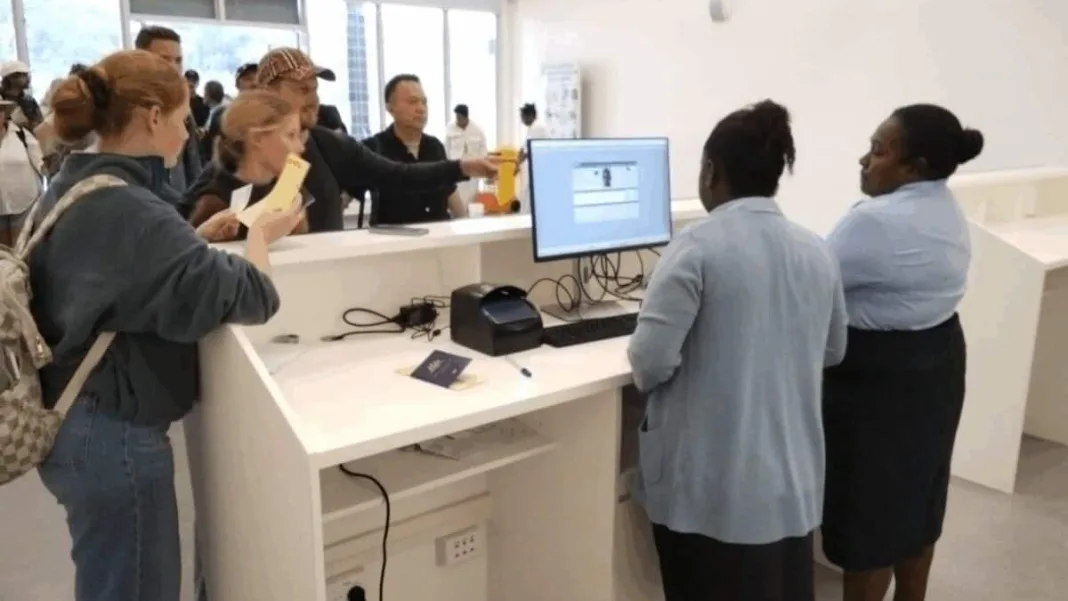
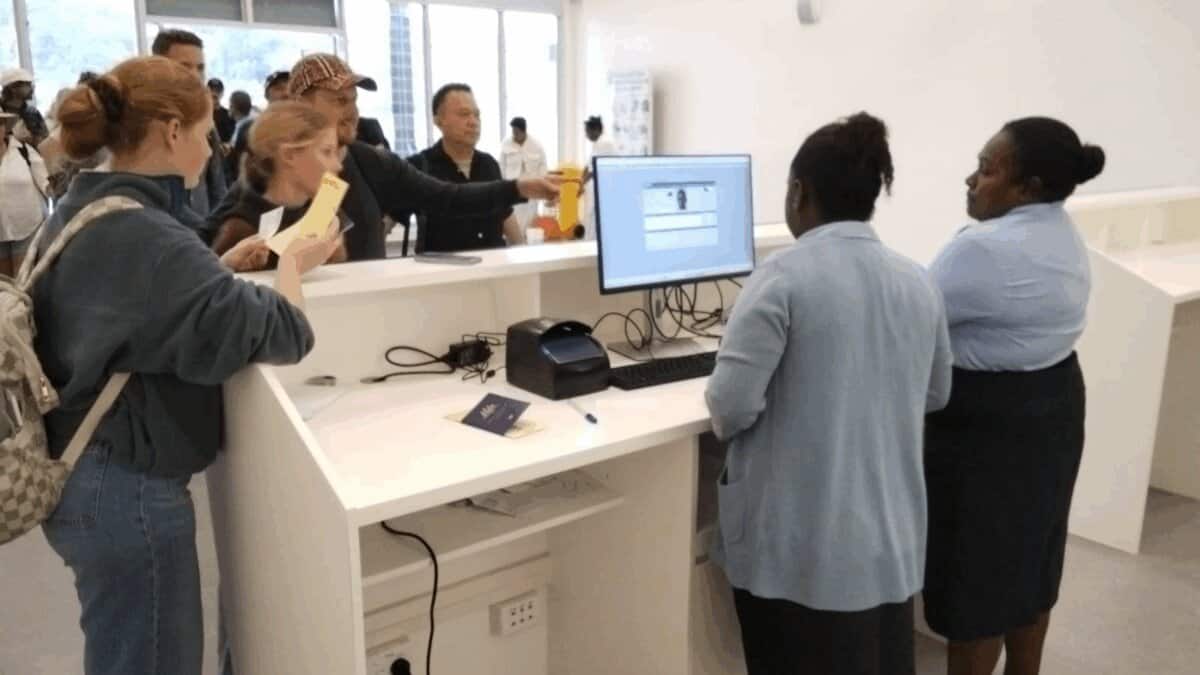
According to the Solomon Islands Government, Munda International Airport activated the Solomon Islands Border Management System on 3 July 2026. It became the country’s second international airport able to process cross-border air passengers electronically. The first international service cleared through the system was a Solomon Airlines arrival from Brisbane carrying 38 tourists.
The same official government record establishes the part of the story that has received considerably less travel-industry attention. Immigration and ICT teams assessed both Munda International Airport and Noro International Seaport in May 2026, after which both facilities were connected for the processing of arriving and departing passengers.
That means Western Province no longer has only an international airport with digital immigration capability. It now has an air gateway and an international maritime entry point operating within the same national border-management framework.
The digital travel corridor terminology used in this report is an analytical description of that emerging configuration. It is not the official name of a Solomon Islands Government programme.
The Western Province Digital Travel Stack Now Taking Shape
| Traveller journey stage | Technology or infrastructure | Verified position as of 17 September 2026 | Why it matters |
|---|---|---|---|
| Before departure | Electronic Visa System | Online applications, processing, approvals and records have been officially implemented. Visa payments can also be made electronically. | Reduces reliance on a completely paper-based pre-travel process for travellers requiring visas. |
| International air arrival | Border Management System at Munda | Live since 3 July 2026; 38 tourists on the first Brisbane arrival were processed electronically. | Gives Western Province an international digital passenger-processing gateway independent of Honiara. |
| International maritime processing | BMS connection at Noro | Government confirms Noro and Munda are connected for arriving and departing passenger processing. | Extends the national border architecture beyond aviation into a Western Province international seaport. |
| Maritime journey information | Shipping Schedule Hub | Solomon Islands Ports Authority launched a free Android application on 29 June 2026 providing domestic shipping schedule information. | Adds a separate traveller-facing digital layer to the country’s maritime transport system. |
| Longer-term passenger data | APIS and PNR | Integration is targeted under the Immigration Strategic Plan for 2029 rather than presented as fully operational today. | Could eventually allow more sophisticated pre-arrival passenger information and risk assessment. |
Munda Has Moved From Secondary Gateway Status To Live Digital Border Processing
The distinction between Munda and Honiara is important for tour operators.
Honiara International Airport was the first Solomon Islands airport to operate the new BMS, going live on 7 July 2025. Munda followed almost one year later, giving the country a second electronically enabled international airport.
The programme is being supported through trilateral cooperation involving the Solomon Islands Government, the Australian Department of Home Affairs and the Papua New Guinea Immigration and Citizenship Authority. Australia provided SBD18 million in 2024 for development of the Solomon Islands BMS.
This decentralisation matters because the government’s own immigration structure gives Western Province a defined regional border-operating role. The Immigration Strategic Plan also places travel facilitation, digitisation and decentralised processing within its longer-term institutional agenda.
Munda therefore represents more than additional airport hardware. It demonstrates that electronic international border clearance is moving beyond the capital.
Brisbane Munda Traffic Gives The Technology An Immediate Tourism Use Case
Digital border infrastructure only becomes commercially meaningful when travellers actually use the gateway.
Munda already has that demand base.
The Solomon Islands National Statistics Office records that regular Brisbane–Munda weekly flights commenced in February 2024. During the first quarter of 2025, 267 visitor arrivals were recorded at Munda by country of residence. Australians accounted for 82.8 per cent, followed by New Zealand at 6.7 per cent, the United States at 3.4 per cent and the United Kingdom at 2.6 per cent.
Australia was also the largest national visitor source for Solomon Islands overall during that quarter, representing 28 per cent of visitors, or 1,570 arrivals.
That makes the Brisbane connection especially important to the travel-technology story. Electronic immigration at Munda is being deployed at a gateway with an established, predominantly Australian international visitor profile rather than at an airport waiting for overseas demand to materialise.
Solomon Airlines is also actively selling Brisbane–Munda travel in September 2026. Its current early-booking promotion lists one-way fares from AUD429, with eligible Munda travel dates including 9 October to 11 December 2026, 29 January to 19 March 2027, and 16 April to 25 June 2027. The promotion is scheduled to remain on sale until 18 September 2026 unless inventory sells out earlier.
What The Current Munda Market Looks Like
| Indicator | Verified figure or status | Travel-technology relevance |
|---|---|---|
| BMS activation | 3 July 2026 | Electronic international border processing is operational. |
| First digitally processed tourist arrival | 38 passengers | Provides documented evidence of a live passenger transaction rather than a planned deployment. |
| Brisbane–Munda scheduled service | Weekly service established from February 2024 | Supplies a recurring international passenger flow for the digital gateway. |
| Munda visitor arrivals in Q1 2025 | 267 | Latest officially published route-specific Munda figure located in the government statistics series. |
| Australian share of those arrivals | 82.8% | Shows why Australian distribution partners should watch changes to Munda entry processing closely. |
| Current Brisbane–Munda promotional fare | From AUD429 one way | Confirms the international route remains commercially marketed in September 2026. |
Noro Changes The Story From Airport Digitisation To Multi Modal Border Technology
Noro is the element that turns the development into a broader travel-technology story.
The Solomon Islands Ports Authority identifies Noro as an international port. Its domestic and international berth has a declared depth of 12 metres and a length of 60 metres, while one berthing wharf handles both international and domestic shipping vessels.
Solomon Ports separately confirms that the country has three international wharves, with two in Honiara and one at Noro.
Connecting Noro to the BMS therefore extends electronic border-processing capability to a real international maritime facility in the same Western Province tourism geography as Munda.
It is important not to overstate the implementation. The government confirms Noro is connected for passenger processing, but the material reviewed does not document a named first international vessel or a first passenger group successfully cleared there through BMS.
For travel trade reporting, that distinction is material. Munda has demonstrated live electronic passenger clearance. Noro has confirmed system connectivity and processing capability. Those are not yet identical operational milestones.
Solomon Ports Adds Another Traveller Facing Digital Layer
A second maritime technology development adds useful context.
On 29 June 2026, Solomon Islands Ports Authority launched its Shipping Schedule Hub application, giving domestic travellers and shipping operators digital access to vessel schedule information through Android devices. Schedules are also accessible through the authority’s website.
There is no official evidence that this application is technically integrated with the Immigration BMS, and it should not be presented as such.
Its significance is instead structural. Solomon Islands is digitising different parts of the maritime journey simultaneously: information discovery through the port schedule platform and border processing through the immigration architecture.
That combination points towards a more digitally managed transport ecosystem even though the systems remain operationally distinct.
The eVisa Launch Completes A Pre Arrival Layer But Does Not Remove Border Clearance
The 6 September 2026 national electronic visa reform makes the Munda-Noro story substantially more important than it was in July.
According to the Solomon Islands Government, the new system allows relevant applicants to submit visa applications, have them processed, receive decisions and maintain the approval record electronically. An online payment gateway is also operational. The revised visa regime contains 34 visa categories across 11 subclasses.
Crucially, electronic visa approval does not eliminate immigration inspection. All travellers remain subject to border clearance on arrival.
For agencies selling Munda itineraries, this creates two separate technology stages that should not be conflated: digital pre-travel authorisation where required, followed by physical entry processing using the BMS on arrival.
A Current Visa Portal Technical Notice Creates An Immediate Trade Risk
The strongest reason travel professionals should treat this as an operational technology story rather than a simple destination-development announcement is that digitalisation also introduces digital service dependencies.
As checked on 17 September 2026, the Solomon Islands Immigration Division is displaying an online notice advising that a technical problem affecting a particular visa type may interfere with access to some online services and information. The notice does not identify the affected visa category.
At the same time, the main Immigration visa page states that online application and payment are operational.
These two official pages should be read together. The eVisa platform is operational, but that does not mean every digital workflow is necessarily functioning without interruption at every moment.
Travel agencies should therefore verify the live portal rather than relying solely on a previously saved visa procedure.
APIS PNR Biometrics And Full Online Processing Remain Future Phases
Solomon Islands is not yet presenting the current system as the final state of its border technology.
The Immigration Strategic Plan 2025–2035 targets integrated Advance Passenger Information System capabilities, Passenger Name Record integration and digitised biometric processing across ports of entry by 2029. It also targets end-to-end online service capability, e-products, modernised arrival and departure mechanisms and expanded pre-arrival processing.
This is a critical distinction for B2B travel technology readers.
| Capability | Position today | Strategic direction |
|---|---|---|
| Munda electronic border clearance | Operational | Already live |
| Noro BMS connectivity | Confirmed | Further provincial digitisation continues |
| eVisa application | Operational | Broader e-products targeted |
| Online visa payment | Operational | Digital revenue tracking targeted |
| APIS integration | Not presented as fully operational | 2029 target |
| PNR integration | Not presented as fully operational | 2029 target |
| Digitised biometric processing at all entry ports | Future programme item | 2029 target |
| End-to-end online immigration capability | Still part of strategic roadmap | 2029 target |
Why This Matters For Travel Agents Tour Operators And DMCs
The information gain lies in viewing Munda, Noro and the eVisa system as components of one evolving distribution and border environment rather than unrelated government upgrades.
Western Province can increasingly be sold as an international entry geography in its own right. Direct Brisbane access already gives Munda an overseas passenger flow. Electronic border processing reduces dependence on a purely manual immigration environment at that gateway. Noro’s BMS connection creates a digital foundation for maritime entry processing. Online visas move another administrative step upstream before departure.
However, technology does not automatically create frequency, capacity or seamless multimodal connectivity. Munda’s direct international service remains limited compared with a major hub. Noro’s BMS connection has not yet been accompanied by publicly documented first-passenger clearance data. The eVisa system has a current technical notice. Future APIS, PNR and biometric capabilities remain roadmap items rather than completed functions.
For the travel trade, the strategic opportunity is real, but so is the need for precise operational checking.
Critical Operational Takeaways For Travel Sellers
- Check visa eligibility before ticketing. Do not assume every nationality follows the same electronic application pathway.
- Verify the live Immigration portal before departure. A current technical notice affects at least one unspecified visa type.
- Treat eVisa approval and arrival clearance as separate processes. Electronic authorisation does not remove immigration inspection at the border.
- Use Munda as a genuine international gateway where flight schedules support the itinerary. Direct Brisbane inventory is actively marketed for forthcoming travel periods.
- Do not market Noro as having proven live passenger BMS transactions yet. Official confirmation currently establishes connectivity and processing capability.
- Build contingency time into complex air-sea itineraries. Digital connectivity does not eliminate physical transport constraints or schedule changes.
- Monitor APIS, PNR and biometric developments. These could materially alter airline, agent and passenger-data workflows as the 2029 programme advances.
- Avoid assuming port apps, eVisa and BMS are one integrated platform. They are complementary digital developments, but official sources do not establish technical interoperability between every system.
Western Province Could Become Solomon Islands Most Important Test Of Decentralised Digital Travel
The longer-term significance of Munda and Noro lies in decentralisation.
For years, international travel technology in small island destinations has tended to concentrate around capital-city gateways. Solomon Islands is now demonstrating a different model: digital border capability can be extended to a tourism-oriented secondary airport and a regional international seaport while pre-travel visa processing moves online nationally.
Munda’s direct Brisbane market means the experiment already has international tourism demand behind it. Noro gives that transformation a maritime dimension. The government’s 2029 technology roadmap indicates that passenger data, biometric processing and end-to-end services may become substantially more sophisticated.
The decisive question is therefore no longer whether Solomon Islands is digitising immigration. It is how quickly these separate systems can mature into a reliable, resilient and genuinely interoperable travel environment capable of supporting more international traffic beyond Honiara.