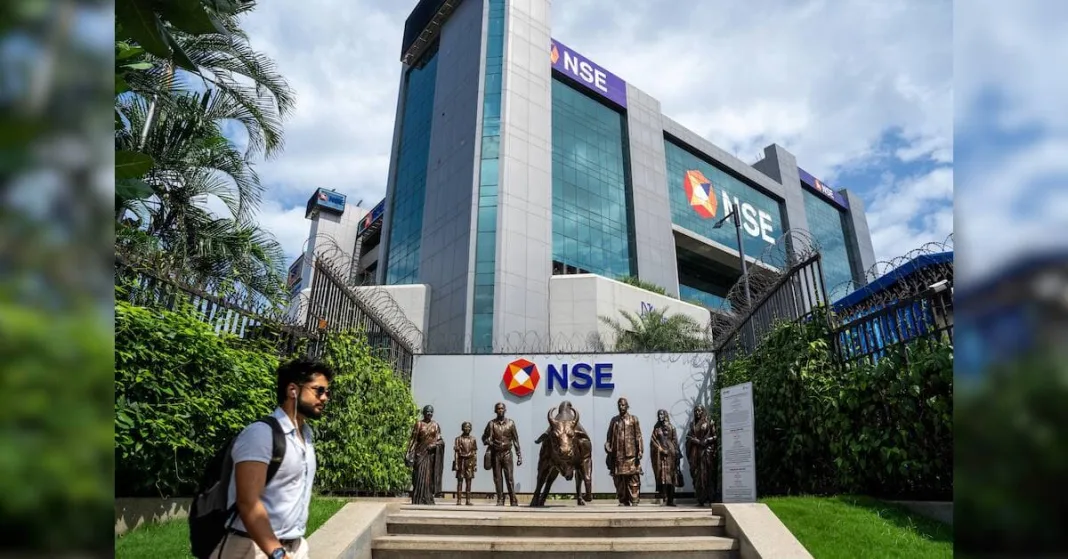

The initial public offering (IPO) of the National Stock Exchange of India (NSE) has attracted “unexpectedly large” demand, with interest significantly exceeding the shares available for allocation, NSE Managing Director and Chief Executive Officer Ashishkumar Chauhan said on Tuesday.
Chauhan did not disclose the split between domestic institutional investors (DIIs) and foreign portfolio investors (FPIs), saying the allocation process was still under way. He said the anchor book, which was earlier expected to be around ₹9,000 crore, had been reduced to around ₹6,000 crore-plus, even as demand remained much higher.
“Demand is unexpectedly large,” Chauhan said, adding that the issue had attracted a large number of investors seeking to acquire a limited number of shares.
The allocation will be made across different categories of institutional investors, including domestic mutual funds, other domestic institutions and FPIs, under the applicable framework, he said.
The NSE IPO will open for subscription on September 17 and close on September 21. The price band has been fixed at ₹1,700-1,785 per share. The issue is entirely an offer for sale (OFS), with up to 12.64 crore shares being sold by existing shareholders. No new shares are being issued by NSE.
Chauhan said existing shareholders had initially been reluctant to sell their holdings at the proposed valuation, resulting in the offer being reduced from an earlier proposed 6.2 per cent to 5.11 per cent.
NSE had to request some of its shareholders to participate in the OFS to ensure that the exchange met the requirements for listing, he said.
The exchange’s listing will provide existing shareholders with a more transparent and liquid avenue to sell their holdings. At present, NSE shares are traded in the private market, where shareholders can face higher transaction costs and difficulties relating to counterparties, Chauhan said.
The shares will be listed on BSE, according to the company’s IPO note.
On the pricing of the IPO, Chauhan said the company’s bankers had consulted investors in India and overseas, including large institutions, mutual funds, pension funds and retail investors.
“There was feedback to leave something for retail investors,” he said, explaining the deliberations around the issue price.
The proposed IPO comes as NSE remains India’s largest stock exchange by turnover across several key segments. According to the company’s IPO note, it had a 93.05 per cent share of India’s cash-market turnover and a 68.48 per cent share of equity options based on premium turnover in the three months ended June 2026.
Chauhan also pushed back against the perception that NSE’s business is overwhelmingly dependent on weekly options.
Weekly options currently account for about 42 per cent of NSE’s total income, he said, compared with around 60-70 per cent three to four years ago. The balance comes from monthly index options, stock options, equities, equity futures, co-location facilities, data, indices and other businesses.
The exchange has also expanded across asset classes, including equities, currencies, commodities, interest rates and electricity.
NSE’s integrated business model includes exchange listings, trading, clearing and settlement, indices and market data.
Chauhan attributed part of the decline in NSE’s EBITDA margin last year to a large one-time fine. He said the exchange’s normalised EBITDA margin had remained in the 76-79 per cent range over the past five years.
NSE’s consolidated revenue from operations rose 9 per cent year-on-year to ₹4,560 crore in the quarter ended June 2026, while net profit increased to ₹3,121 crore from ₹2,811 crore a year earlier, according to the company’s IPO note.
Chauhan said NSE’s investor base had expanded substantially beyond the country’s major cities and that the exchange would continue efforts to bring more investors and companies from regions such as Jammu and Kashmir, the Northeast, Odisha, Jharkhand and Chhattisgarh into the capital market.
As of June 30, NSE had 13.237 crore unique registered investors and 26.136 crore registered investor accounts, with investors spread across more than 99 per cent of Indian postal codes. The exchange had 3,005 listed entities and a combined market capitalisation of ₹474.08 trillion on its platform, according to NSE.