

September 13, 2026 14:53 GMT+5:30
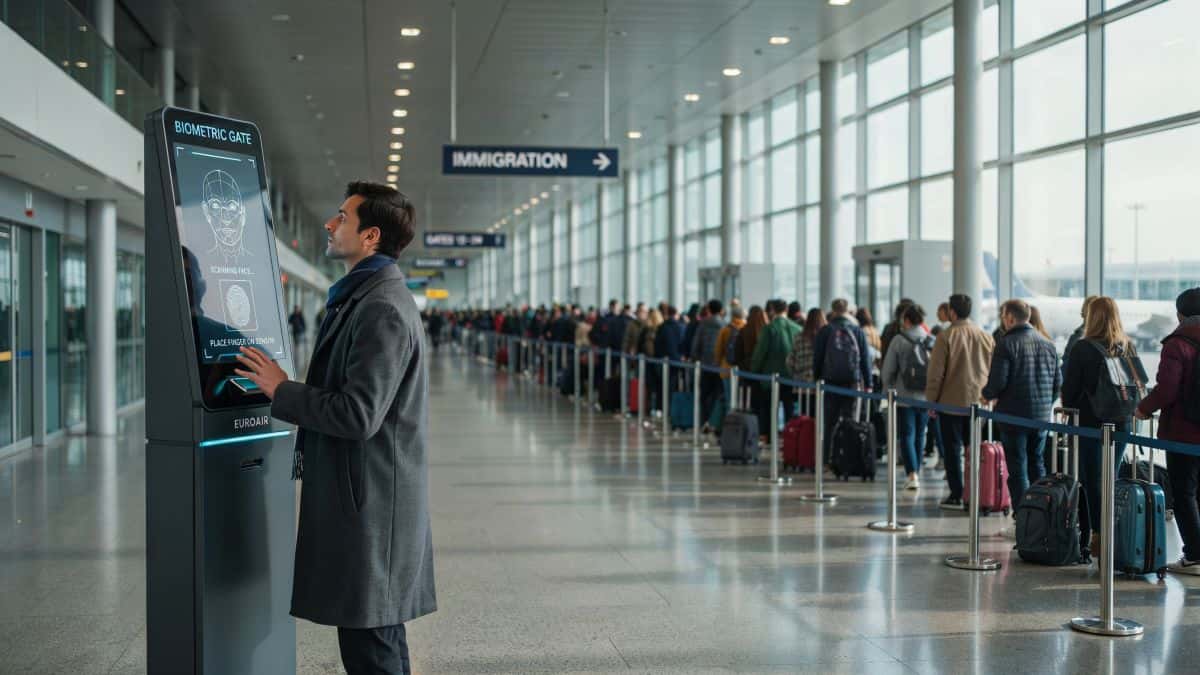
Image generated with Ai
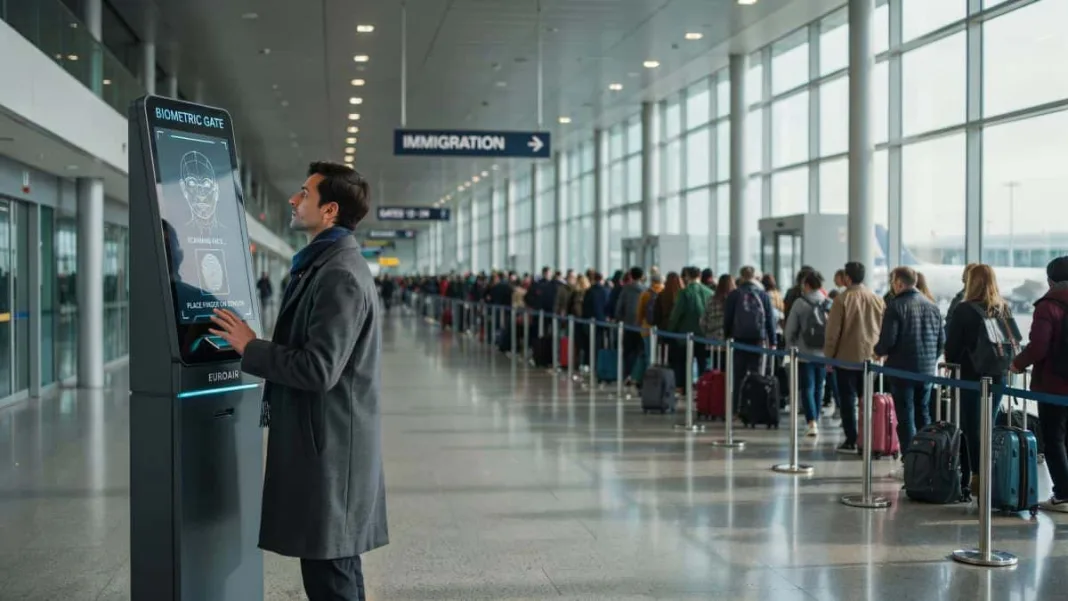
France, Germany and seven other Schengen countries are reportedly receiving more time to complete implementation of the EU Entry/Exit System (EES), as technical problems and border queues complicate travel. Belgium, the Netherlands, Greece, Malta, Portugal, Italy and Switzerland complete the reported group. Travellers should still prepare for EES checks. As of 13 September 2026, this source review found no official announcement confirming the reported nine-country extension. Whether a journey involves first-time biometric registration, additional waiting or contingency processing depends on the passenger’s circumstances and the arrangements at their crossing.
EES Border Checks: What Full Deployment Means
EES digitally records eligible non-EU visitors’ arrivals and departures for short stays. It launched on 12 October 2025, with eu-LISA announcing completion of progressive deployment on 10 April 2026.
France’s Foreign Ministry identifies the same April milestone. Germany’s Federal Police confirmed full operation at German airports and seaports from that date.
The practical distinction is between system availability and the process a passenger encounters. A connected crossing may still need contingency arrangements. Equally, one traveller passing through quickly does not establish that another airport, sailing or departure will work the same way.
Why the September EES Deadline Matters
The EU’s temporary framework allowed partial suspensions during exceptional congestion. These could pause biometric collection at individual crossings for up to six hours while other information continued to be recorded.
An initial 90-day flexibility period could gain another 60 days if fewer than 80% of files created during the rollout contained biometrics.
The legislation set an outer limit of 330 days from launch, making 6 September 2026 the final day of that window. This explains the significance of the reported extension: it concerns how authorities manage processing pressure. Its exact new scope remains unverified.
Why Passport Stamping Can Still Appear
Technical failures have their own legal procedures. Article 21 of the EES regulation permits temporary local storage when central recording becomes impossible.
Advertisement
Advertisement
If electronic recording and storage are unavailable in the exceptional circumstances specified, authorities can record non-biometric details manually and stamp the passport. They must add the information electronically when possible.
For travellers, receiving a passport stamp can therefore reflect a fallback procedure. Where that procedure leaves biometrics missing, the regulation provides for collection at the next border crossing. A stamped passport alone does not establish that a destination has abandoned EES.
Latest EES Figures: What They Reveal About Your Journey
Two recent official updates show the volume handled:
| Official update | Figure | What it measures |
|---|---|---|
| European Commission, 6 August 2026 | More than 150 million | Entries and exits recorded since launch |
| eu-LISA, 9 September 2026 | Around 76 million by mid-August | Passenger records |
These measurements differ and must not be combined or presented as tourist arrivals.
Neither figure measures waiting times. The useful conclusion for passengers is narrower: EES operates at substantial scale, while their experience depends on the crossing and its operating conditions. However, these totals cannot identify the quickest airport or establish how much connection time someone needs.
Border Refusal Data: Documents Deserve as Much Attention as Queues
eu-LISA’s first-quarter report covers 1 January–31 March 2026:
| Recorded outcome | Total |
|---|---|
| Refusals of entry | 19,985 |
| Extensions of authorised stay | 11,885 |
| Revocations of authorised stay | 665 |
| Fingerprinting exemptions | 978,940 |
These figures cover crossings using EES during its rollout, rather than all Schengen border traffic.
Recorded refusal grounds included 7,202 cases involving insufficient justification of the purpose and conditions of stay. Another 4,353 involved the permitted stay limit already being reached.
The practical lesson extends beyond queues. A smooth biometric check cannot replace valid entry documents or a compliant itinerary. Keep the evidence supporting your visit readily available.
Schengen Connections: Your First Entry Point Matters Most
EES applies at the external borders of the 29-country Schengen area. Switzerland participates despite being outside the EU; Ireland and Cyprus do not operate EES.
Consider a London–Paris–Rome itinerary. Paris is where the passenger enters Schengen. On a direct London–Rome journey, that point is Rome. This follows from the system’s external-border scope.
For connecting passengers, the critical detail is where immigration processing falls within the itinerary. Information about the final destination alone cannot establish what happens at an earlier entry airport.
The return journey also deserves attention. UK guidance says travellers may be asked for a fingerprint or photograph when leaving Schengen. Completing registration on arrival therefore does not eliminate exit verification. Account for that border stage alongside check-in and security when reviewing departure instructions.
UK Departures: Where EES Checks Take Place
| Journey | Where EES checks normally happen |
|---|---|
| Dover ferry crossing | Before leaving the UK |
| Le Shuttle from Folkestone | At the UK terminal |
| Eurostar from London | At St Pancras before departure |
| Direct flight from the UK to Schengen | At the Schengen arrival border |
Registration is free. UK support included £3.5 million each for Eurostar, Eurotunnel and Dover: £10.5 million across the three allocations.
Operational flexibility has already affected journeys. On 8 July, the border security minister confirmed that French officers used available flexibility on 23 May to relieve road congestion. The government urged passengers to follow operator advice before departure.
EES Registration and Exemptions: Check Your Traveller Category
Different passengers face different requirements:
- Eligible visa-exempt visitors: biometric registration includes a facial image and four fingerprints where physically possible. Children under 12 are exempt from fingerprinting.
- Short-stay visa holders: fingerprints are checked through the visa system.
- Repeat visitors: existing records are normally verified, although fresh collection can sometimes be necessary.
Qualifying long-stay visa and residence-permit holders are exempt from EES registration. Certain family members qualify with the required residence documentation; the relationship alone is insufficient. Children’s fingerprint exemption does not remove all border procedures.
Before You Travel: Protect Your Connection and Permitted Stay
The general short-stay ceiling remains 90 days within any 180-day period across Schengen collectively. Moving between participating countries does not restart the allowance.
Before departure:
- Identify the crossing where you enter Schengen.
- Follow the operator’s recommended arrival time.
- Carry documents establishing your entry rights or exemption.
- Check your remaining permitted stay.
ETIAS remains a separate pre-travel authorisation scheme. A July parliamentary briefing recorded the removal of the earlier late-2026 launch wording; it did not confirm a specific replacement date.
The reported implementation delay may give authorities more room to manage congestion. For passengers, its value depends on the arrangements at their crossing. Build your travel preparations around that location, your documentation and your connection—not an assumed blanket pause in checks.
In conclusion, France joins Germany and seven more Schengen countries as the EU reportedly extends the timetable for full implementation of EES border checks to address technical problems and ease queues. However, official confirmation of this reported extension remains unverified. For travellers, any additional flexibility could help authorities manage congestion, but it does not guarantee shorter waits or remove entry requirements. Prepare for biometric registration, follow guidance for your specific crossing and keep supporting documents ready. The practical benefit depends on how each border manages passenger flows.
Advertisement
Advertisement