

September 13, 2026 03:39 GMT+5:30

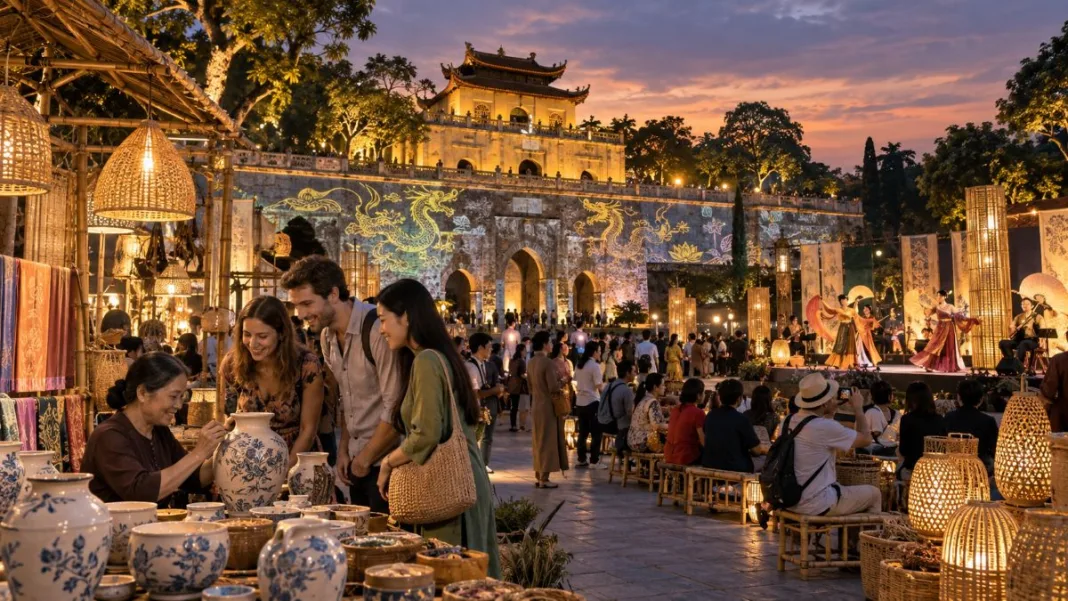
Image generated with Ai
Hanoi Heritage Flow Festival 2026 powers September travel with culture, crafts and UNESCO heritage, turning the Vietnamese capital into a vibrant cultural tourism hub. As Hanoi Heritage Flow Festival 2026 unfolds across major landmarks, September travel gains fresh energy through culture, crafts and UNESCO heritage. Visitors can explore historic sites, creative performances, traditional villages, modern technology and international cultural exchanges. Moreover, the festival connects Thăng Long Imperial Citadel, the Temple of Literature, Bat Trang and Hanoi Museum. Therefore, this ten-day celebration gives travellers stronger reasons to discover Hanoi while experiencing living traditions, creative art and heritage in exciting new ways.
Hanoi Festival Tourism Creates a Ten-Day Cultural Journey
The festival is designed as more than a single-site celebration. Activities take place at heritage sites, museums, craft villages and public spaces across Hanoi, creating a cultural journey through different parts of the capital.
Hanoi authorities want the festival to honour and preserve Thăng Long–Hanoi heritage while bringing it into contemporary life. Tourism, art, education and community participation are deliberately connected within the programme.
The first Thăng Long–Hanoi Festival in 2025 featured more than 30 cultural, artistic and tourism activities and attracted nearly 200,000 direct participants, according to Hanoi’s official culture authority. The city subsequently identified the festival as an annual cultural event that it intends to develop into a recognised Hanoi cultural brand.
Thăng Long Imperial Citadel Mixes Ancient Heritage With New Technology
The Thăng Long Imperial Citadel is one of the festival’s central locations.
The official opening programme was scheduled for 8 pm on 11 September, with around 5,000 delegates and domestic and international guests. Music, dance and performance were combined with modern presentation technologies including 3D mapping, augmented reality, a rotating stage and other visual effects.
For cultural travellers, this approach changes how historic spaces can be experienced. Hanoi is placing modern creative tools inside a heritage setting while keeping the historical location at the centre of the visitor experience.
Japan, South Korea and India Strengthen International Cultural Exchange
International cultural tourism forms another important part of Heritage Flow.
The “Thăng Long–Hanoi, Heritage Bridge” international arts exchange on 12 September was planned with artistic delegations from Japan, South Korea and India. Vietnamese participation includes delegations connected with Điện Biên, Đắk Lắk, Huế and Ho Chi Minh City.
This international participation gives visitors an opportunity to experience cultural exchange inside Hanoi rather than viewing the festival purely as a local celebration.
It also supports Hanoi’s wider objective of presenting the capital’s culture internationally while creating stronger connections between its heritage and other cultures.
Temple of Literature Becomes a Living Heritage Experience
The Temple of Literature–Quốc Tử Giám hosts activities throughout the festival from 11 to 20 September.
The programme combines exhibitions, displays, traditional craft experiences and artistic performances. Instead of treating heritage simply as something to observe, the festival encourages visitors to engage with craft traditions and cultural practices.
This experiential model can make heritage sites more attractive to travellers who want activities alongside historical sightseeing.
Bat Trang Brings Pottery Tourism Into the Festival
Hanoi’s famous Bat Trang pottery village receives its own festival spotlight on 19 September through the performance “Thanh âm Gốm”, or “Sounds of Ceramics”.
The programme explores sounds created from ceramic materials and instruments and links the village’s traditional craftsmanship with contemporary art.
For tourism, this creates a strong link between Hanoi’s central heritage attractions and its traditional craft villages. Visitors can move beyond the historic centre and experience a living craft tradition that remains part of local cultural life.
Fashion and Traditional Crafts Give Hanoi a Contemporary Identity
The festival also takes traditional materials into contemporary design.
On 19 September, the “Sắc màu Hà Nội – The Color of Hanoi” fashion event near the Cảm Tử Monument features designers Hà Duy, Cao Minh Tiến and Adrian Anh Tuấn.
Official plans say the programme draws on Hanoi cultural elements including silk, traditional elegance, bamboo and rattan crafts.
The result is another tourism layer: traditional craft is presented not only as historic heritage but as part of modern Hanoi’s creative identity.
Hanoi Museum Extends Heritage Tourism Beyond September
Not every festival experience ends on 20 September.
At Hanoi Museum, exhibitions, experiential activities and intangible-cultural-heritage performances run from 11 September through the end of 2026. Craftspeople, artists, researchers, clubs, training institutions and creative cultural spaces are expected to participate.
This gives travellers visiting Hanoi later in the year another connection to the Heritage Flow programme.
Heritage Flow Builds a Wider Tourism Identity for Hanoi
The festival closes at 8 pm on 20 September at Đông Kinh Nghĩa Thục Square, with an event planned for around 2,000 delegates.
More importantly for tourism, Heritage Flow shows how Hanoi is linking historic monuments, craft villages, museums, contemporary music, fashion, technology and international cultural exchange.
Rather than presenting heritage as something fixed in the past, the city is using the festival to make it part of a modern visitor experience. For travellers, that creates more reasons to explore different parts of Hanoi, experience traditional culture in new forms and see how the Vietnamese capital is developing heritage tourism around creativity, community and cultural exchange.
Hanoi Heritage Flow Festival 2026 powers September travel because it transforms the capital’s culture, crafts and UNESCO heritage into experiences travellers can actively explore. The festival connects historic monuments, museums, Bat Trang pottery, fashion, music, technology and international cultural exchange across Hanoi. As a result, visitors gain more reasons to move beyond traditional sightseeing and experience living heritage across the city. Hanoi Heritage Flow Festival 2026 therefore strengthens September travel by making culture, crafts and UNESCO heritage more accessible, creative and engaging. Its wide programme shows how Hanoi is using its cultural identity to build a richer tourism experience.
Advertisement
Advertisement