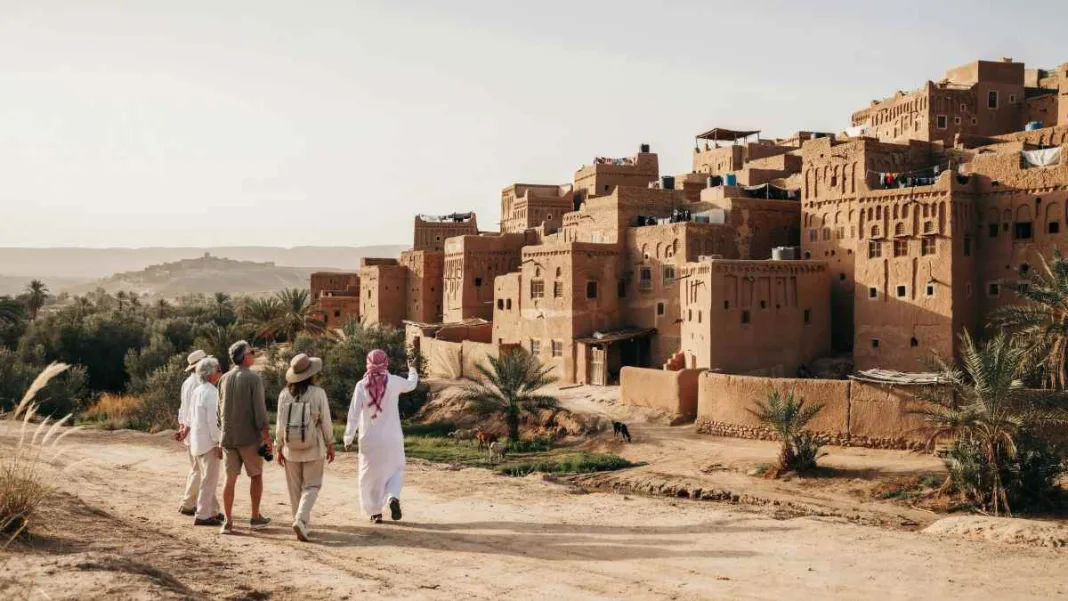


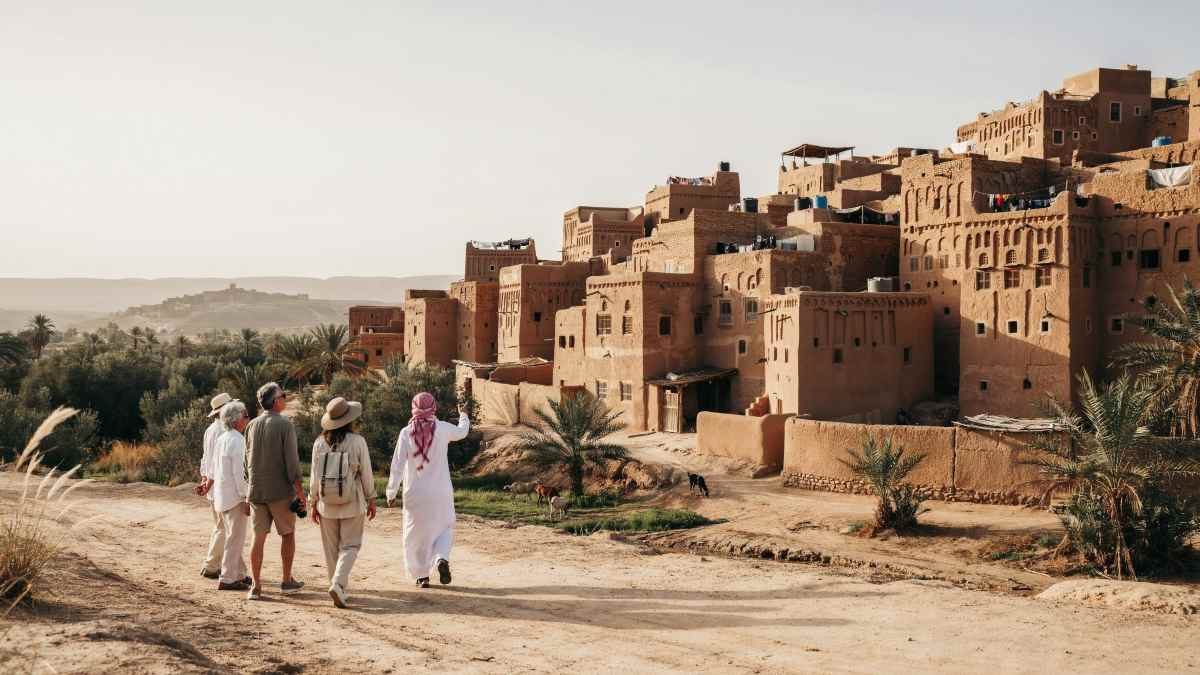
Image generated with Ai
Yemen, Hadramaut, Seiyun and Shibam comprise a closely monitored section of Yemen’s tourism sector where escorted cultural tours persist despite the rigorous restrictions that have affected other areas of Yemen. Tourists who manage to enter the Hadramaut Valley have the opportunity to take a flight to Seiyun and then move to Shibam, where there is UNESCO-registered mud brick architecture.
Hadramaut Maintains a Restricted Tourism Corridor
Tourism access in Yemen remains highly constrained, with conditions varying significantly between regions. While travel to the northern highlands and Sana’a remains closed or severely restricted for many international visitors, Hadramaut has retained a limited pathway for organised cultural tourism.
The Hadramaut Valley provides a distinct tourism environment centred on historic settlements, traditional architecture and desert landscapes. Visitor movements are conducted under controlled conditions, with licensed agencies overseeing escorted cultural itineraries.
For travellers, this means tourism in the region differs substantially from conventional independent travel. Access, transportation and sightseeing arrangements are organised around security and local operating requirements, while movement between destinations is managed through approved travel arrangements.
Advertisement
Advertisement
The resulting tourism corridor is narrow but focused on some of Yemen’s most distinctive architectural heritage.
Seiyun Provides an International Gateway
Seiyun functions as an important access point for visitors travelling into the Hadramaut region.
Travellers undertaking authorised cultural journeys can fly directly into Seiyun before continuing overland towards heritage sites within the valley. The airport’s role is particularly important because the wider Yemeni aviation network remains affected by significant restrictions and operational limitations.
Once in Seiyun, visitors can access a landscape characterised by historic towns, palm groves, dramatic valley formations and traditional mud-brick construction.
The city itself also provides an important introduction to Hadramaut’s architectural heritage. Historic buildings and regional cultural sites contribute to the wider itinerary before travellers continue towards Shibam.
The direct air-access model allows the Hadramaut tourism corridor to operate without requiring visitors to pass through areas where tourism access is more restricted.
Shibam Remains the Heritage Anchor
Shibam is the principal cultural attraction along the Hadramaut tourism route and is internationally recognised for its distinctive mud-brick architecture.
The historic settlement is known for its densely arranged multi-storey buildings rising from the surrounding valley landscape. The architecture has earned Shibam the description of a “skyscraper” city because of the height and concentration of its traditional mud-brick structures.
For cultural travellers, the settlement provides an opportunity to experience a form of historic urban architecture closely connected with Hadramaut’s traditional building techniques.
The visual character of Shibam also differentiates it from many other heritage destinations in the Arabian Peninsula. The combination of tall mud-brick buildings, narrow streets and surrounding desert and agricultural landscapes creates a distinctive cultural tourism experience.
Visits remain subject to local access arrangements and licensed agency supervision.
Escorted Travel Shapes the Visitor Experience
The controlled nature of tourism in Hadramaut means visitors generally do not experience the region as an independent backpacking destination.
Licensed agencies coordinate travel arrangements, local transportation and guided visits. Escorted itineraries provide a structured way to access heritage sites while complying with local requirements.
This approach also limits spontaneous movement between destinations. Travellers must plan journeys around approved routes, transportation arrangements and local conditions.
For cultural tourism, however, the structured model allows itineraries to focus on specific heritage assets. Shibam can be combined with other Hadramaut Valley attractions, including historic settlements and traditional architecture.
The resulting travel experience is centred on heritage rather than mass tourism, beach holidays or large-scale resort infrastructure.
Hadramaut’s Wider Cultural Landscape
Beyond Shibam, Hadramaut contains a wider collection of historic towns, traditional settlements and cultural landscapes.
Seiyun provides access to regional heritage and serves as a base for organised journeys through the valley. Other locations can be incorporated into authorised itineraries depending on prevailing local conditions and travel arrangements.
The valley’s traditional architecture is closely connected with its environment. Mud-brick construction has historically been used to create substantial multi-storey structures suited to the region’s climate and available materials.
This architectural heritage provides the foundation for cultural tourism in Hadramaut, with visitors travelling primarily to observe historic buildings, settlements and landscapes rather than conventional tourism infrastructure.
A Limited Tourism Market
The Hadramaut model represents a very different form of tourism from the large-scale international visitor markets found elsewhere in the Middle East.
Visitor numbers remain constrained by Yemen’s wider travel environment, and access is dependent on authorised arrangements and prevailing conditions. Nevertheless, the continued operation of a controlled cultural corridor provides a pathway for specialised heritage travel.
For travellers, the experience requires extensive preparation, licensed agency support and compliance with local access rules. The itinerary is focused on specific cultural destinations, with Shibam representing the central attraction.
The corridor also demonstrates the importance of Yemen’s architectural heritage to its tourism identity. Even under restricted conditions, destinations such as Shibam retain international cultural significance.
A Heritage Route Under Tight Controls
The tourism industry in Yemen still faces many restrictions; however, Hadramaut still serves as a possible option for a cultural visit to the region. Travellers have Seiyun to access to the valley, with licensed tour operators making sure that tourists move toward Shibam and other heritage sites. Shibam and its unique architecture of mud brick serve as the highlight for travellers. This is because the regulated tourism process ensures that travellers only move through cultural corridors and not throughout the entire region. In this way, Hadramaut still serves as a good option for cultural visitors to Yemen.
Advertisement
Advertisement