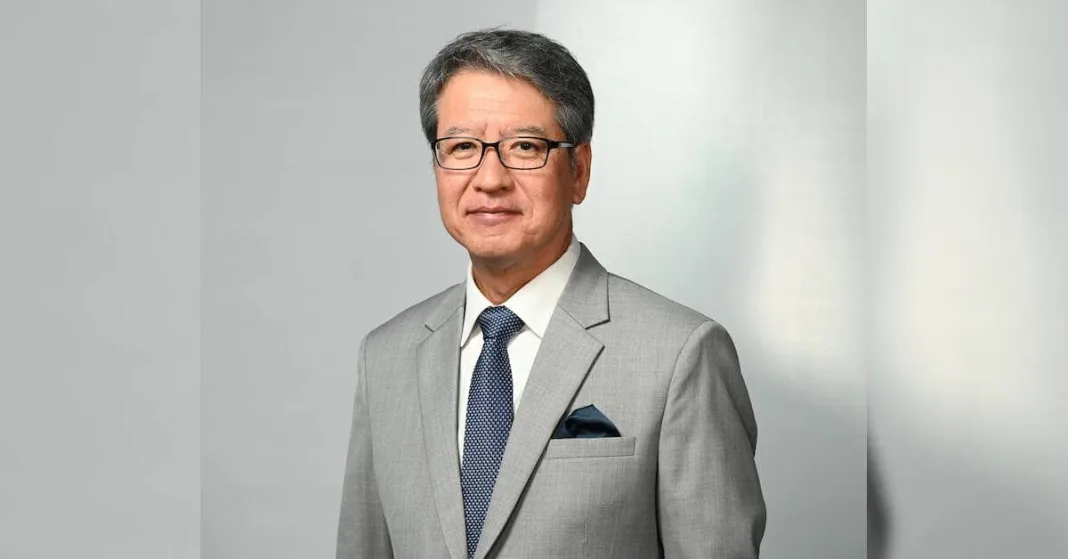

The Indian auto industry must ensure that it stays one step ahead of hackers as they evolve their technology and become more sophisticated with each passing day, Hisashi Takeuchi, managing director and chief executive officer of Maruti Suzuki India, said on Wednesday.
The Indian auto industry has faced a series of cyber attacks in recent years.
A major cyber attack involving Jaguar Land Rover (JLR), owned by Tata Motors, took place in September 2025. The attack forced the British luxury carmaker to shut down IT systems and halt production at its UK plants.
The disruption lasted nearly six weeks and affected manufacturing, retail and distribution. JLR’s three UK factories together produce around 1,000 vehicles a day.
The prolonged JLR shutdown also affected its suppliers and dealers. The company reported £196 million in cyberattack-related costs in the quarter, while wholesale volumes fell 24 per cent year-on-year and retail sales declined 17 per cent.
The incident demonstrated how a cyber attack on an automaker can spread through its wider supply chain and create significant financial losses.
Takeuchi, in his speech at the 66th annual session of the Automotive Component Manufacturers Association of India (ACMA), said: “As we embrace greater digitalization, cybersecurity becomes equally important. It is encouraging to see that organisations are continuously strengthening their cybersecurity systems by investing in advanced technologies. Having said that, even hackers are evolving their technology and becoming more sophisticated with each passing day. So, we have to ensure that we stay one step ahead of them.”
“At the same time, we cannot rule out the chances of a cyber incident. In view of this, we must be prepared with a robust contingency plan that enables us to resume business operations within the shortest possible time and minimize any potential disruption,” he added.
Japan’s Suzuki Motor Corporation (SMC) is the majority shareholder of Maruti Suzuki India. SMC has another subsidiary in India — Suzuki Motorcycle India.
Before the JLR incident, Suzuki Motorcycle India suffered a cyber attack in May 2023 that forced it to halt production at its facilities for about a week.
The shutdown was estimated to have resulted in the loss of more than 20,000 two-wheelers. Suzuki confirmed the incident, informed the relevant government authorities and launched an investigation, but did not disclose the nature or source of the attack.
Takeuchi outlined four areas that could help the automotive industry move beyond simply surviving disruptions: deep localisation, people, collective learning and technology.
He said deeper localisation could reduce the industry’s exposure to external disruptions, but stressed that competitiveness would depend on the capabilities of the entire supplier ecosystem.
“Unless our Tier-2 and Tier-3 suppliers are capable, we can’t produce world-class quality. Hence, we need to extend our focus beyond our companies to include our immediate suppliers, as well as Tier-2 and Tier-3 suppliers,” he noted.
He said the industry needed to support these suppliers through technology, quality systems and engineering capabilities.
Tier-2 and Tier-3 suppliers are companies that supply components or materials to an automaker’s direct suppliers. Strengthening them, Takeuchi said, would be critical for improving the competitiveness of India’s automotive manufacturing ecosystem.
Maruti was already using technology to identify potential disruptions in its supplier network, Takeuchi said.
The company was mapping supplier locations and combining this information with localised weather intelligence to provide advance warnings about potential disruptions.
This gives suppliers and Maruti teams more time to prepare and respond before a disruption affects their operations.
Takeuchi also warned automakers that capacity expansion needs to account for changes in demand.
He said manufacturers should not only add capacity but also ensure that factories can respond when demand rises or falls, making flexibility an important part of future manufacturing plans.
“Apart from quality, we also need to be mindful of fluctuating demand patterns. So, while scaling up capacity, we need to build capability to handle fluctuations. Advance planning of capacity expansion and building flexibility in manufacturing is the key to address this issue,” he noted.
He said the automotive industry had spent the past decade learning to withstand disruptions ranging from semiconductor shortages to geopolitical conflicts and supply-chain uncertainties.
The next challenge, he said, was to build an industry that could become stronger because of disruptions rather than merely survive them.