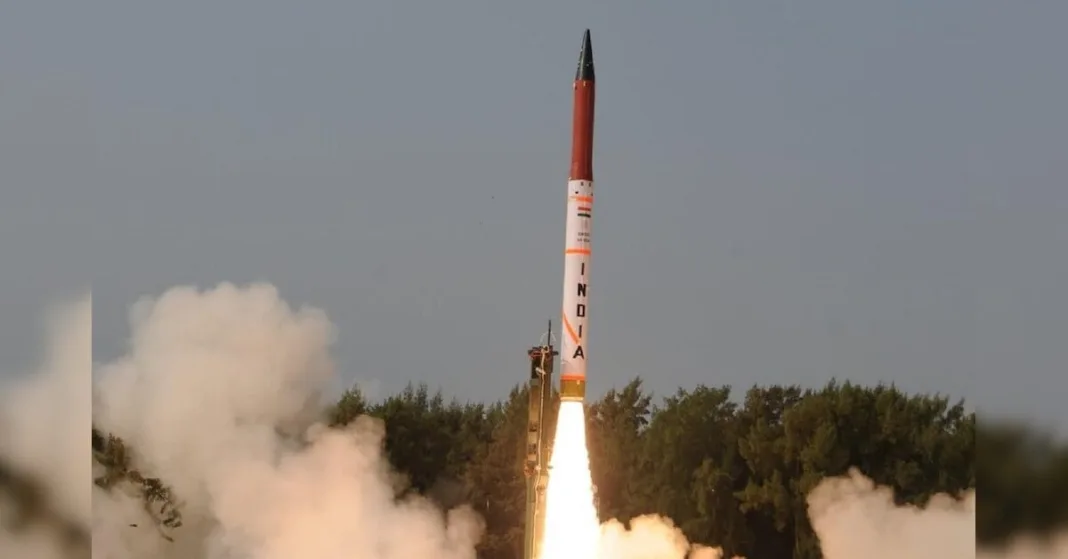

Transfer of all Defence Research and Development Organisation (DRDO)-developed conventional missile system technologies to India’s private defence industry for domestic production was approved on Tuesday by Defence Minister Rajnath Singh, in a bid to transition these weapons from development to production.
There will be competitive bidding among Indian private firms for the right to receive the transfer of technology, to be selected as the development-cum-production partner, and to undertake systems integration of these missiles in partnership with the DRDO, a Ministry of Defence (MoD) source confirmed to Business Standard on condition of anonymity.
The move is understood to exclude nuclear-armed strategic missiles such as the Agni series.
As first reported by Business Standard in May, the DRDO had been directed to licence technologies for non-strategic missiles to the private sector.
At the time, an MoD source had told Business Standard, on condition of anonymity, that the organisation had already enlisted private partners for weapons such as short-range air-defence missiles and anti-ship missiles.
The source had also identified the Astra beyond-visual-range air-to-air missile and various types of conventionally armed surface-to-surface ballistic missiles, including the Pralay surface-to-surface quasi-ballistic missile, as the most likely candidates.
The move, aimed at enhancing production capacity and ensuring affordable mass in conventional missiles, comes against the backdrop of lessons drawn from the West Asia war and the Russia-Ukraine conflict, as well as Pakistan’s decision to set up an Army Rocket Force Command.
Announcing that Singh has “approved the transfer of DRDO-developed technologies of all conventional missile systems to the Indian defence industry for production within the country”, an MoD release said the transfer of technology would promote greater participation of domestic industry in the defence ecosystem by enabling it to undertake indigenous production, subject to applicable qualifications, certifications and regulatory requirements.
“The provision will enable successful transition of missile system development to industrial production…” the MoD said, adding: “The objective is to enhance domestic manufacturing capabilities, strengthen the defence industrial base and create opportunities for the participation of Indian MSMEs and other technology partners in the supply chain.”
The move is also aimed at enhancing the operational capability of the armed forces, reducing import dependence and increasing domestic value addition, according to the MoD.