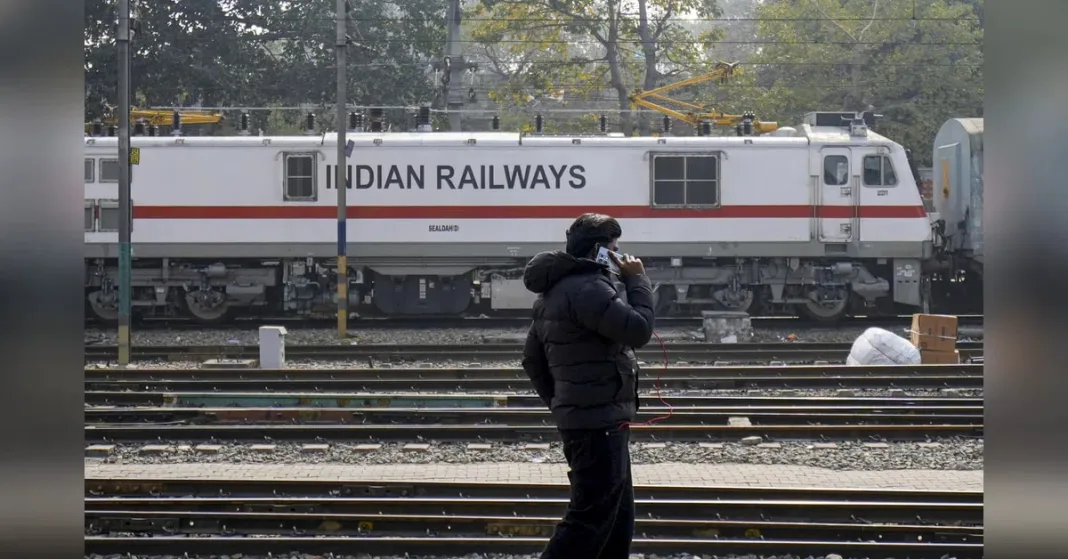

The Centre on Wednesday approved four major railway multitracking projects involving an investment of around ₹9,450 crore for adding nearly 410 km to the Indian Railways network and easing congestion on some of the country’s key passenger and freight corridors.
The projects, cleared by the Cabinet Committee on Economic Affairs chaired by Prime Minister Narendra Modi, will cover eight districts across West Bengal, Odisha, Tamil Nadu and Andhra Pradesh and are scheduled for completion by 2030-31.
For Odisha, the approvals are significant, with two of the four projects located entirely in the state. These include the 75-km Bhadrak-Haridaspur fourth line and the 72-km Cuttack-Paradeep (Badabandha) third and fourth lines. Odisha will also benefit from the 173-km Kharagpur-Bhadrak (Ranital) fourth-line project, which spans West Bengal and Odisha.
The fourth project approved by the Union Cabinet is the 90-km Gummidipundi-Gudur third- and fourth-line corridor covering Andhra Pradesh and Tamil Nadu.
The four projects will substantially augment line capacity, streamline train operations and reduce congestion, while improving operational efficiency and reliability of railway services. The additional capacity is expected to enable smoother movement of both passenger and freight trains on heavily utilised routes.
The projects have been planned under the PM Gati Shakti National Master Plan, with an emphasis on integrated planning, multimodal connectivity and logistics efficiency. Aligned with the vision of a developed and self-reliant India, with improved connectivity, the upcoming new railway lines would provide seamless connectivity for the movement of passengers, goods and services while supporting coordinated infrastructure development through stakeholder consultations.
Union Minister for Railways Ashwini Vaishnaw said the Cabinet has approved the Kharagpur-Bhadrak project, which is a part of the Howrah-Chennai main line. “It passes via Baleshwar and down to Rupsa, after Rupsa, down to Bhadrak. This falls completely along the coast of Odisha. This line is now being made four lines between Kharagpur and Bhadrak. Two mega, 41 major and 169 minor bridges will be built. The 173-km project will be developed at an estimated cost of ₹3,352 crore,” he said.
The 410-km network expansion is expected to improve rail connectivity for around 60 lakh people in 6,448 villages across eight districts of the four states. Besides strengthening economic connectivity, the projects are also expected to give a boost to tourism by improving access to a number of prominent destinations.
In Odisha, the improved railway network will strengthen connectivity to tourist and heritage destinations including Bhitarkanika National Park, Kuldiha Wildlife Sanctuary, Maa Bhadrakali Temple, Maa Dhamarai Temple, Panchalingeswar Temple, Talsari-Udaypur and Chandipur beaches, Gada Kujanga Jagannath Temple, Sarala Temple, Dhabaleswar Temple and Lalitgiri, among others. The wider network will also improve access to tourist attractions such as Pulicat Lake on the Andhra Pradesh-Tamil Nadu border, Nelapattu Bird Sanctuary in Andhra Pradesh and the Lord Veeraraghava Perumal Temple in Tamil Nadu.
The projects are also strategically important from the freight movement perspective. The corridors are key routes for transportation of coal, iron ore, cement, iron and steel, containers, automobiles, foodgrains and other commodities. The capacity augmentation is expected to facilitate additional freight traffic of around 76 million tonnes per annum.
The Centre said the enhanced railway capacity would also help lower the country’s logistics costs and support its environmental objectives. As railways remain a relatively energy-efficient and environment-friendly mode of transportation, the shift of additional freight to rail is expected to reduce dependence on road-based transportation and associated fuel consumption.
According to officials, the projects are estimated to help reduce oil imports by around 13 crore litres and cut carbon dioxide emissions by approximately 65 crore kg. The reduction in emissions has been equated to the environmental benefit of planting around 2.6 crore trees.
“The multitracking projects are expected to serve a dual purpose—strengthening the country’s transport infrastructure while supporting economic growth, employment and self-employment opportunities in the regions covered by the expanded network,” Vaishnaw said.
The projects assume added importance for Odisha as they strengthen rail links to its mineral-rich hinterland, industrial centres and ports. The Cuttack-Paradip corridor, in particular, is expected to provide greater capacity towards one of the state’s strategically important ports, while the Bhadrak-Haridaspur and Kharagpur-Bhadrak corridors will further strengthen connectivity along the state’s northern and coastal belts.
With completion targeted by 2030-31, the four projects are expected to create additional railway capacity that can cater to growing passenger demand, facilitate higher freight movement and improve the overall efficiency of one of the country’s most critical transport networks.
Odisha Chief Minister Mohan Charan Majhi has thanked Prime Minister Narendra Modi and Railways Minister Vaishnaw for the new railway lines. In a letter to Vaishnaw, he said these projects, with a combined outlay of ₹9,450 crore, will decongest critical passenger and freight corridors, enhance rail capacity, improve the movement of passengers and goods, strengthen connectivity with key economic centres and support Odisha’s continued growth and development.