
Published on August 17, 2026 |
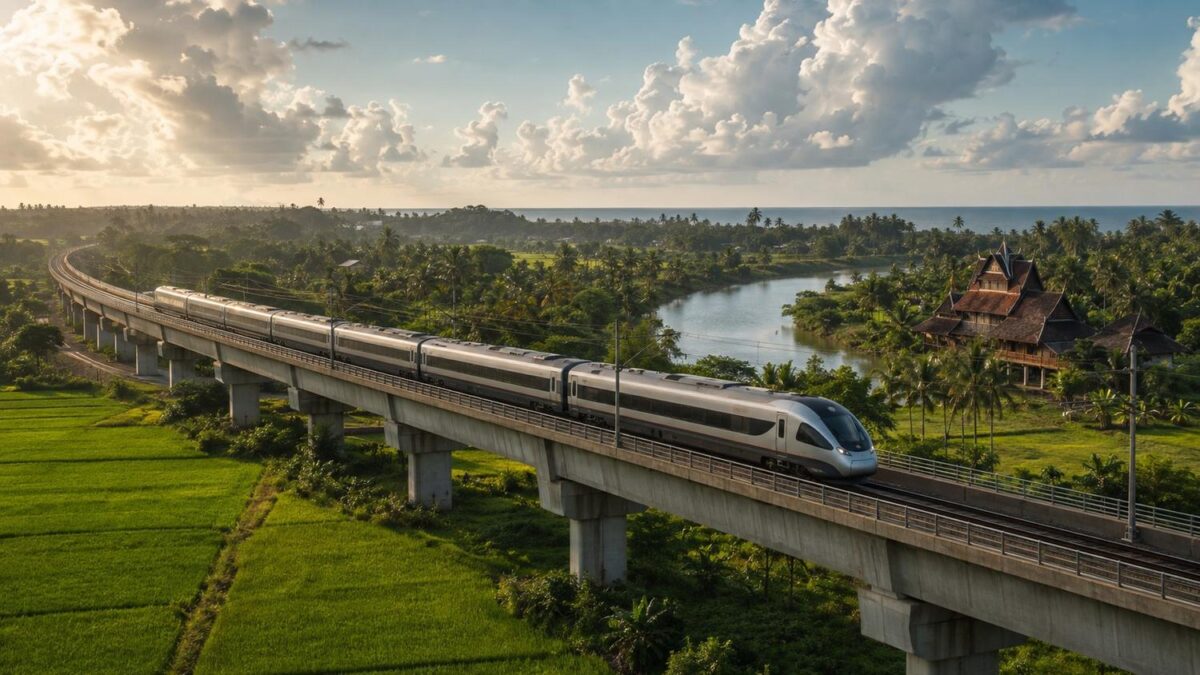
Image generated with Ai
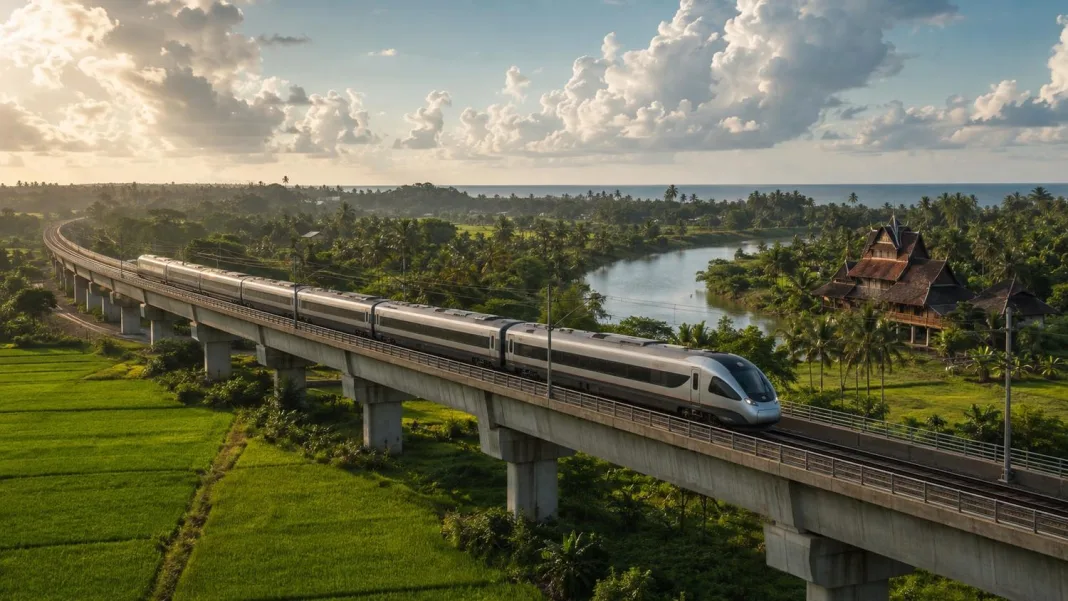
The proposed 665 km cross-peninsular corridor will potentially change the way people think about holidays. When fully operational in January 2028, the corridor will link Klang Valley and Port Klang to Pahang, Terengganu and Kelantan. Currently, the first section of the Kota Bharu – Gombak corridor will begin operations to transport passengers from January 2027. This corridor will provide the foundation for cross peninsular tourism in Malaysia. This project could connect the services of various sectors of the tourism industry such as cruise, city, cultural, culinary, coastal and island tours in one continuous land journey. It will also help Malaysia Rail Link to spread tourism spending to Malaysia’s eastern regions, support the goal of the Visit Malaysia 2026 campaign, and encourage extended stays in the Peninsular Malaysia from 2028.
Malaysia prepares for a different kind of national holiday
Malaysia’s tourism geography has long been shaped by several major gateways. Kuala Lumpur serves as the leading urban entry point. Port Klang receives maritime traffic and cruise visitors. Penang and Melaka attract cultural travellers, while Langkawi and the islands off Sabah draw leisure demand.
The East Coast offers a markedly different experience. Kelantan, Terengganu and Pahang combine Malay heritage, regional cooking, handicrafts, beaches, islands and nature. However, these attractions are spread across a long coastal corridor.
Reaching them from the Klang Valley often requires a domestic flight, a long road journey or several separate transport arrangements. That fragmentation makes it harder to sell the East Coast as one continuous holiday.
Advertisement
Advertisement
The East Coast Rail Link, or ECRL, could begin changing this pattern. The development is primarily a passenger-and-freight railway. Yet its completed alignment presents a wider tourism opportunity: a cross-peninsular journey connecting Malaysia’s western port region with eastern cultural and coastal destinations.
The official Malaysia Rail Link ECRL project page describes a 665-kilometre alignment, an estimated four-hour total travel time, passenger trains accommodating 430 people, four interchanges and ten passenger stations. The project lists 2027 as its first operating year.
Malaysia Rail Link has subsequently said that the Kota Bharu–Gombak section is expected to enter commercial operation in January 2027. The final Gombak–Port Klang section is expected to support complete operations from January 2028.
These are expected dates rather than an invitation to book. Passenger fares, detailed schedules, integrated tourism products and confirmed station transfers have not yet been published.
Advertisement
Advertisement
The tourism opportunity is nevertheless substantial. A completed corridor could allow visitors to move between markedly different parts of Peninsular Malaysia without returning to Kuala Lumpur after every stop.
What Malaysia cross-peninsular tourism would mean
Malaysia cross-peninsular tourism refers to holidays that combine destinations on the western and eastern sides of Peninsular Malaysia within one connected journey.
It does not refer to a confirmed government package or a single branded tourism product. It is a potential travel pattern created by the railway’s geographic reach.
A cross-peninsular itinerary could begin near Port Klang, include the Klang Valley and continue through Pahang and Terengganu before ending in Kelantan. Travellers could also complete the journey in reverse.
This model would differ from a simple point-to-point rail trip. The railway would act as the central spine, while local buses, hotel shuttles, taxis, ferries and tour services would connect stations with attractions.
The concept could unite several travel segments:
| Tourism segment | Potential role within the corridor |
|---|---|
| Cruise tourism | Pre- and post-cruise stays linked with Port Klang |
| Urban tourism | Kuala Lumpur and Klang Valley city experiences |
| Cultural tourism | Kelantanese and Terengganu heritage, crafts and traditions |
| Coastal tourism | Pahang and Terengganu mainland resorts and beaches |
| Island tourism | Connections towards ferry gateways serving offshore islands |
| Culinary tourism | Regional markets, traditional dishes and food businesses |
| Community tourism | Homestays, villages and locally operated experiences |
| Business travel | Combined commercial and leisure journeys |
| Domestic tourism | Short breaks and family holidays from the Klang Valley |
| Educational tourism | Heritage, ecology, marine and craft-based study visits |
This combination gives the corridor a more powerful tourism identity than transport infrastructure alone.
Its value would come from the variety of experiences accessible along the route. A visitor could move from a major port and metropolitan region to smaller coastal and cultural destinations within one wider itinerary.
Port Klang could become more than an arrival point
Port Klang is the western end of the completed route. Its tourism significance comes from its position within Selangor and its proximity to the Klang Valley.
The port area already performs an important maritime and logistics role. For leisure travel, it can also function as an entry or departure point for visitors combining a cruise with a Malaysian land holiday.
A fully operational corridor could eventually support pre- and post-cruise itineraries stretching towards the East Coast. This would allow cruise passengers to see more of the country before joining a voyage or after leaving their ship.
Such programmes have not been officially announced. Their development would require close coordination between cruise operators, railway services, terminal transfer companies, hotels and tour operators.
Luggage handling would be particularly important. International cruise travellers often carry larger bags and need predictable transfers. Railway departure times would also need to work with ship arrival and embarkation schedules.
If these challenges are addressed, Port Klang could become the western anchor of a wider holiday rather than a stand-alone transport point.
Visitors could combine the port region with Kuala Lumpur before travelling east. This could create longer stays and distribute expenditure across several states.
The opportunity is especially relevant because cruise passengers often have limited time. A clear itinerary, simple reservation system and dependable station transfers would be essential.
The Klang Valley would remain a critical bridge
The completed corridor would not reduce Kuala Lumpur’s importance. Instead, the Klang Valley could become the bridge between international arrival gateways and East Coast destinations.
Many overseas visitors begin or end their Malaysian holidays in Kuala Lumpur. The capital has extensive accommodation, shopping, food, cultural attractions and transport connections.
Gombak is expected to play an important role because it is already served by the Kelana Jaya LRT Line. This creates the possibility of connections with Kuala Lumpur’s wider public transport network.
The practical quality of that interchange will matter more than its presence on a map. Travellers carrying luggage will need convenient walking routes, lifts, clear signs and protected transfers.
Ticket integration would also influence demand. Separate reservations may be manageable for experienced travellers, but they can discourage families, older visitors and first-time international tourists.
A smoother connection could allow travellers to move from central Kuala Lumpur towards the East Coast without arranging a private car.
It could also encourage visitors to divide their stay. Instead of spending every night in Kuala Lumpur, they could add Kuantan, Kuala Terengganu or Kota Bharu.
That would support the broader objective of distributing tourism activity beyond the country’s most established destinations.
Pahang provides the first major change in scenery
Pahang occupies an important position between the Klang Valley and the northeastern states. Its tourism economy combines urban, coastal and nature-based experiences.
Kuantan is the state capital and an important East Coast commercial centre. It can act as a base for business travellers, domestic families and visitors exploring nearby coastal areas.
The wider state offers beaches, food, cultural attractions and nature. Some destinations are well beyond the immediate railway alignment, which makes connecting transport important.
The tourism potential therefore depends on more than station construction. Visitors must be able to leave the train and reach hotels, waterfront areas and attractions without complex arrangements.
Local tour operators could build half-day and full-day excursions around scheduled arrivals. Hotels could provide timed station shuttles. Destination authorities could place visitor information and booking counters within or near key stations.
Pahang could also benefit from multi-stop travel. A visitor moving from Kuala Lumpur to Kelantan might choose to spend one or two nights in the state rather than passing through it.
This creates opportunities for smaller accommodation providers and restaurants, not only major hotels.
The state’s position could also support combined business and leisure travel. Commercial passengers visiting Kuantan may extend their stay for coastal experiences. Leisure visitors may add meetings or events to longer itineraries.
The railway itself cannot create these products. It can, however, make them easier to assemble.
Terengganu could connect culture with island travel
Terengganu is central to the cross-peninsular tourism argument because it combines strong cultural identity with some of Malaysia’s best-known marine destinations.
Kuala Terengganu offers markets, museums, religious architecture, food and access to nearby coastal communities. The state is also associated with traditional textiles, craft production and distinctive regional cuisine.
Its offshore islands attract leisure travellers, divers and marine tourists. Redang, Perhentian and Kapas are reached by sea rather than rail, so the ECRL would not provide direct island access.
The opportunity lies in connecting railway stations with the correct ferry gateways.
This is a major operational issue. Ferry services can be seasonal and weather-dependent. Travellers need enough time between trains and boats. They also require clear information about which jetty serves each island.
Tourism businesses could create combined reservations covering the train, station transfer, ferry and accommodation. Without that integration, visitors may still prefer flights or private road transport.
Terengganu’s mainland attractions could gain from longer stopovers. Travellers heading towards an island might arrive a day earlier, explore Kuala Terengganu and stay overnight before taking a morning ferry.
The same pattern could work after an island holiday. Visitors could return to the mainland, spend another night and continue towards Kelantan or the Klang Valley.
This would spread tourism spending beyond resorts and ferry terminals. Restaurants, markets, museums, guides and urban hotels could benefit.
The state also offers a strong opportunity for cultural storytelling. Rail-linked itineraries could combine textiles, architecture, food and maritime heritage rather than treating Terengganu only as an island transit point.
Kelantan could become the cultural conclusion of the journey
Kota Bharu is expected to form the northeastern end of the route. This places Kelantan at the cultural end of the proposed cross-peninsular journey.
The state is known for Malay traditions, crafts, food and community life. Kota Bharu provides access to markets, museums, heritage buildings and artisan products.
Batik, songket, woodcarving and traditional performance could form the basis of tourism programmes. Food tourism also offers strong potential through regional dishes, sweets, markets and family-run businesses.
Kelantan’s opportunity is not simply to receive more visitors. It is to encourage them to remain longer and spend locally.
A traveller arriving by rail may otherwise visit central Kota Bharu briefly before leaving. Destination planning must therefore link the station with accommodation, cultural sites and surrounding communities.
Guided craft trails could connect workshops and markets. Culinary itineraries could introduce visitors to regional ingredients and preparation methods. Homestay programmes could provide deeper contact with local traditions.
The state’s proximity to Thailand also gives it a distinctive border-region identity. However, cross-border tourism products would depend on immigration rules, transport connections and official operating arrangements outside the ECRL project.
The strongest immediate story is domestic. Residents of the Klang Valley could gain a more predictable way to reach Kota Bharu, especially during busy holiday periods.
International visitors may follow once booking systems, multilingual information and packaged itineraries become widely available.
Why the 665-kilometre scale matters
The length of the corridor is more than an engineering figure. It explains why the project could influence tourism geography.
A 665-kilometre route can connect several state economies and tourism identities. It also allows tour operators to create programmes of different lengths.
A short itinerary might combine Kuala Lumpur with one East Coast city. A longer holiday could include stops in Pahang, Terengganu and Kelantan.
The line’s stated four-hour travel time adds another important element. A journey of that duration can fit within a travel day without consuming an entire holiday.
However, the official figure should not be confused with the time required for every possible itinerary. Actual journeys will depend on origin, destination, stopping pattern, interchange time and onward transfers.
A traveller beginning at a Kuala Lumpur hotel and ending at an island resort will need longer than the train journey alone.
Credible tourism marketing must therefore distinguish rail time from total door-to-door travel.
The published capacity of 430 passengers per train also suggests that operations could serve meaningful visitor volumes. Yet capacity alone does not indicate demand or frequency.
The eventual timetable will determine whether the railway supports spontaneous short breaks, carefully planned long holidays or both.
Malaysia’s tourism recovery creates a receptive market
The corridor is being completed during a period of renewed tourism activity.
Tourism Malaysia reported that the country welcomed 38 million international visitors in 2024. This represented an increase of 31.1% from 2023 and placed arrivals 8.3% above 2019.
Visitor receipts reached RM106.78 billion in 2024. Tourism Malaysia said this was 43.7% higher than in 2023 and 20% above the 2019 level.
The distinction between international visitors and tourists is important. Visitor totals can include both overnight tourists and same-day excursionists. Articles should not interchange these categories without checking the definition used in each official release.
Tourism Malaysia’s official statistics and campaign material provides arrival data and historical tourism performance collected through its Strategic Planning Division.
Early 2025 indicators also showed continued demand. Tourism Malaysia reported 13.4 million international arrivals from January to April 2025, an increase of 21% from the corresponding 2024 period.
China contributed 1.4 million visitors during those four months, rising 37.8% year on year. Singapore and Indonesia remained ahead of China in the ranking cited by Tourism Malaysia.
These figures demonstrate that Malaysia was already attracting strong regional and long-haul demand before the ECRL began passenger operations.
The tourism challenge is therefore not simply attracting people to the country. It is encouraging visitors to travel beyond familiar gateways and extend their stays.
A cross-peninsular itinerary could support that objective by presenting multiple states as parts of one connected holiday.
Tourism already carries major economic weight
The economic case for destination dispersal is supported by national tourism data.
The Department of Statistics Malaysia reported that tourism generated RM291.9 billion in 2024. This represented 15.1% of the Malaysian economy.
The industry expanded by 7.4% during the year, compared with 10.9% growth in 2023.
Inbound tourism expenditure reached RM107 billion in 2024 after increasing by 41.1%. Shopping accounted for 36.1% of inbound spending, followed by passenger transport at 19.1% and accommodation at 18.5%.
Domestic tourism expenditure rose by 25.1% to RM98.4 billion.
The official Department of Statistics Malaysia Tourism Satellite Account 2024 also showed that inbound expenditure regained the largest share of internal tourism consumption. It accounted for 52.1%, compared with 49.1% in 2023.
The data demonstrates why transport links can matter economically. Passenger journeys support more than operators. They can generate demand for accommodation, food, shopping, guiding and local services.
A wider East Coast itinerary could help retain a greater share of visitor expenditure within regional economies.
The opportunity is not guaranteed. Travellers must have reasons to stop, book accommodation and purchase local experiences.
If passengers simply travel from one terminus to another, communities between them may receive limited tourism value.
Regional tourism strategies should therefore focus on stopovers, local products and easy onward connections.
Employment opportunities extend far beyond rail operations
Tourism employment is another important part of the story.
The Department of Statistics Malaysia recorded 3.5 million people working in tourism-related industries in 2024. This represented 21.6% of total employment.
Tourism employment increased by 4.6% compared with 2023. Retail, food and beverage, and other services collectively represented 85.2% of tourism employment.
These figures help explain how an increase in regional visitors could affect local economies.
Potential beneficiaries include:
- Hotel and homestay employees
- Restaurant and market workers
- Tour guides
- Coach and shuttle drivers
- Ferry operators
- Retailers
- Craft producers
- Event organisers
- Digital booking services
- Destination marketing companies
The economic impact would depend on local participation. Large external operators could capture much of the spending if community businesses cannot access the market.
Training, licensing, digital visibility and quality standards will be important. Small operators must be able to accept online reservations and provide accurate information.
Tourism authorities could also help businesses design products that align with train schedules.
Employment growth should not be presented as a confirmed number attributable to the ECRL. No official forecast cited here quantifies how many tourism jobs the railway will create.
The accurate conclusion is that national data shows tourism is labour-intensive and regional visitor growth could support many service categories.
Visit Malaysia 2026 creates a timely national backdrop
The first passenger section is expected to begin during Visit Malaysia 2026.
The campaign was launched with a target of 35.6 million tourists and RM147.1 billion in receipts. Those targets refer specifically to tourists rather than the broader visitor category used in some other official releases.
Visit Malaysia 2026 seeks to promote Malaysia’s culture, nature and diverse destinations. The East Coast fits that national story because it offers living heritage, food, coastal landscapes, marine tourism and rural experiences.
The railway’s full Port Klang connection is expected after the campaign year. However, the Kota Bharu–Gombak opening could still give East Coast tourism greater visibility during 2027.
The campaign also creates a reason for tour operators to begin developing future itineraries before the entire corridor opens.
That work could include destination mapping, hotel partnerships, station transfers and multilingual visitor information.
Malaysia has used national tourism years before. Visit Malaysia Year 2007 recorded 20.97 million tourist arrivals and RM46.1 billion in receipts. The 2014 campaign exceeded 28 million tourist arrivals.
These historical campaigns show that major tourism drives can lift national visibility. The cross-peninsular opportunity is to convert that visibility into longer, more geographically diverse stays.
Service quality will shape the visitor experience
Transport infrastructure alone cannot guarantee a successful tourism corridor.
The experience begins before passengers board. Visitors need a clear website, accurate timetables, reliable payment options and understandable fare conditions.
Stations should provide multilingual signs, accessible toilets, lifts, seating and luggage-friendly routes. Staff must be able to help travellers who are unfamiliar with local geography.
The need continues after arrival. Visitors require safe and fairly priced connections to hotels, jetties and attractions.
Malaysia’s “Mesra Malaysia” campaign, launched in February 2026, focuses on improving hospitality and service quality among frontline workers in tourism and transport.
That focus is directly relevant to the ECRL’s tourism potential. The railway may provide the physical journey, but human interaction will influence whether visitors recommend it.
Poor transfers, confusing information or inconsistent service could weaken confidence. A smooth experience could encourage repeat travel and positive online reviews.
Service quality is particularly important for international passengers. Many will not understand the differences between districts, stations and ferry gateways.
Simple instructions can prevent missed connections and costly mistakes.
Aviation and rail can serve different travel needs
The ECRL should not be treated only as a rival to domestic aviation.
Air services remain important for travellers prioritising speed, those connecting through airports and passengers visiting destinations far from railway stations.
Rail may appeal to families, groups and visitors who want to stop in several places. It can also reduce the need for repeated airport procedures on shorter domestic journeys.
Malaysia’s East Coast is served by airports including Sultan Haji Ahmad Shah Airport near Kuantan, Sultan Mahmud Airport near Kuala Terengganu and Sultan Ismail Petra Airport near Kota Bharu.
The completed corridor could create mixed-mode itineraries. A visitor might fly to Kota Bharu, travel south by rail and depart through Kuala Lumpur. Another could begin by rail and return by air.
Such open-jaw journeys can save backtracking. They also allow travellers to see more destinations within a limited period.
Airlines and tour operators could package these combinations if schedules and baggage conditions align.
No official integrated air-rail product has been announced. Until one exists, travellers will need to arrange each component separately.
The wider industry opportunity is complementarity. Aviation brings travellers quickly into regional gateways. Rail can connect intermediate communities and support multi-stop holidays.
Hotels could gain from longer and more distributed stays
Hotels are among the clearest potential beneficiaries of Malaysia cross-peninsular tourism.
A point-to-point journey may generate little accommodation demand. A multi-state itinerary can create several overnight stays.
Kuala Lumpur hotels could sell pre-journey packages. Port Klang and Selangor properties could target cruise passengers. East Coast hotels could build station-transfer offers.
Independent properties may benefit if booking platforms make them visible to travellers planning rail journeys.
Homestays could offer cultural depth, particularly in areas known for crafts, food and community traditions.
Hotel operators will need accurate arrival information. Check-in times and shuttle schedules should reflect train services.
Properties could also work with local guides, restaurants and artisans to create experiences beyond accommodation.
This is essential because tourism spending increases when visitors have activities to book. A room alone does not create a complete destination economy.
The risk is uneven concentration. Better-known hotels near major stations may receive most demand while smaller communities remain overlooked.
Regional marketing should therefore highlight several stopover options rather than directing everyone to one hub.
Tour operators could build a new generation of itineraries
Tour operators have an opportunity to transform the corridor from infrastructure into a coherent travel product.
Potential itineraries include:
- Port Klang cruise and East Coast culture extensions
- Kuala Lumpur, Kuantan and Kota Bharu city journeys
- Terengganu island and Kelantan heritage combinations
- Batik, songket and craft trails
- East Coast culinary routes
- Family rail holidays
- Educational heritage tours
- Marine and mainland nature programmes
- Muslim-friendly cultural itineraries
- Domestic weekend and festival packages
Each programme would require careful timing. Operators must account for train frequency, hotel check-in, transfer distances and seasonal ferry operations.
Flexible products may work better than rigid tours. Travellers could purchase a core itinerary and add selected stops.
Tour guides will also need destination-specific knowledge. A journey across several states should explain regional differences rather than presenting the East Coast as one uniform area.
Good interpretation can make the route itself meaningful. Food, language, textiles, architecture and landscapes change across the peninsula.
The most successful packages would turn those changes into a narrative.
Local businesses need direct access to visitor spending
The cross-peninsular concept will matter most if money reaches local communities.
Stations can create new customer flows for cafes, shops, taxis and accommodation. Yet physical proximity does not automatically produce economic benefit.
Visitors increasingly plan through online platforms. Businesses without searchable listings, digital payment and current opening information may be missed.
Tourism agencies can help local operators improve digital readiness. They can also create official directories for products near stations.
Craft businesses offer a strong example. Visitors may be interested in batik or songket, but they need information about genuine workshops, opening times and transport.
Food tourism has similar needs. A list of regional dishes is not enough. Travellers need to know where they can try them safely and conveniently.
Community participation should also shape product development. Residents must have a voice in how their culture is presented.
Tourism growth that weakens local identity would undermine the qualities visitors came to experience.
Sustainable development requires early planning
Rail is often associated with more sustainable travel because it can move many passengers in one service. However, sustainability depends on the whole journey.
Visitors may still rely on long private-car transfers if stations are poorly connected. Island tourism can create pressure on waste systems, water supplies and marine environments.
Higher visitor numbers can also affect heritage districts and communities.
The corridor therefore creates an opportunity to plan growth before demand accelerates.
Useful measures could include:
- Coordinated public transport from stations
- Timed shared shuttles
- Visitor limits where ecosystems require protection
- Waste-management standards
- Support for locally owned businesses
- Heritage conservation rules
- Accurate seasonal guidance
- Responsible marine-tourism practices
- Accessible station and visitor facilities
- Monitoring of resident concerns
These measures should follow official state and federal plans. They should not be imposed as a single model across every destination.
Pahang, Terengganu and Kelantan have different tourism products and local priorities.
Sustainability also includes economic resilience. Destinations should not become dependent on one season or one visitor market.
Cultural, food and community tourism can complement beach and island demand during suitable periods.
The last mile remains the decisive test
The largest tourism challenge may begin when passengers leave the train.
Stations are rarely the final destination. Beaches, islands, heritage sites and hotels may be many kilometres away.
The last mile includes every connection between a station and the traveller’s actual destination.
A successful system requires reliable taxis, buses, hotel shuttles and ferry transfers. Prices should be transparent, and services should operate when trains arrive.
Digital journey planners could show the complete trip rather than only the railway segment.
For island travellers, the system should clearly identify the correct jetty and seasonal limitations.
For international visitors, place names should be presented consistently across railway, tourism and mapping platforms.
Accessibility is equally important. Travellers with mobility needs must be able to use station transfers and visitor attractions.
Families require space for luggage and children. Older visitors may need seating and shorter walking distances.
Until these details are confirmed, travellers should avoid assuming that every attraction will become immediately convenient when passenger operations begin.
What travellers need to know before planning
The project’s expected dates create interest, but bookings should wait for official operating information.
The Kota Bharu–Gombak section is expected to begin commercial operations in January 2027. Full operations extending to Port Klang are expected in January 2028.
Travellers should monitor official announcements for:
- Confirmed opening dates
- Passenger timetables
- Fares
- Reservation procedures
- Luggage policies
- Operating stations
- Interchange arrangements
- Accessibility services
- Refund and change conditions
- Connections with ferries and local transport
Visitors should also consider seasonal conditions. East Coast weather can affect marine transport and some leisure activities.
A rail service operating year-round does not guarantee that every island transfer or attraction will operate every day.
International visitors should confirm visa and entry requirements through official Malaysian immigration channels before travelling.
Rail passengers combining several destinations should leave time between independently booked services.
Until integrated tickets are introduced, separate operators may not accept responsibility for missed connections.
A confirmed future with several unanswered questions
The official project establishes the core facts: a 665-kilometre alignment, passenger and freight functions, a first operating stage expected in 2027 and complete operations expected in 2028.
The tourism outcome remains dependent on implementation.
No official cross-peninsular holiday pass has been announced. No confirmed cruise-rail package is available. No integrated island-transfer product has been published.
These omissions do not weaken the tourism angle. They define the work still required.
Malaysia already has the destinations. It also has strong international demand and a tourism economy worth RM291.9 billion in 2024.
The railway could provide the missing physical connection across the peninsula.
Tourism authorities, transport operators and private businesses must convert that connection into understandable journeys.
If they do, visitors may begin seeing Port Klang, the Klang Valley, Pahang, Terengganu and Kelantan as parts of one holiday rather than separate trips.
Future outlook based on published plans
The near-term outlook has two clear stages.
The first is the expected commercial opening between Kota Bharu and Gombak in January 2027. This stage would connect the East Coast with the Klang Valley and provide the first real test of passenger demand.
The second is the expected completion of the Gombak–Port Klang section, enabling full operations in January 2028.
That later stage is the foundation for a genuine coast-to-coast itinerary.
Published plans do not yet establish tourism packages, passenger volumes or regional spending forecasts. It would therefore be misleading to quantify the project’s future tourism effect.
The defensible outlook is that the corridor will reduce a longstanding transport barrier between western and eastern Peninsular Malaysia.
National tourism demand is already strong. Government strategy is focused on arrivals, receipts, service standards and destination promotion.
The next step is to connect those priorities with the railway’s operating plan.
The result could be a new tourism geography: one in which a port stay, capital-city break, Pahang stopover, Terengganu island journey and Kelantan cultural experience fit into a single Malaysian itinerary.
Conclusion
The completion of the Port Klang–Kota Bharu section of Malaysia’s 665-kilometre corridor is expected to be operational in January 2028. Once operational, the corridor will provide a strong base for Malaysia’s cross-peninsular tourism. However, there is much more potential to the corridor beyond just time savings. The corridor can connect a number of tourist attractions in one single tour. Currently, official data indicates a significant contribution of tourism to national spending and employment. However, to realize these attractions, there must be published time tables, a single ticket, reliable door-to-door services and responsible destination management. Until these are published, the corridor must be marketed as a major tourism opportunity and not as a completed holiday tour.
Advertisement
Advertisement