
Published on August 5, 2026 |

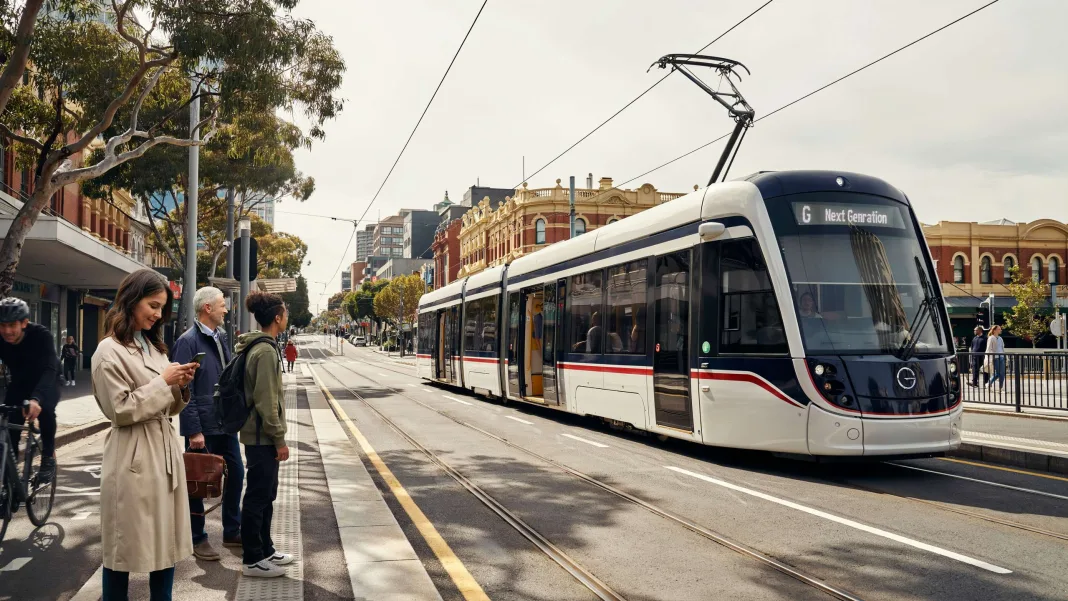
Image generated with Ai
July 2026 will bring the first step in the modernization of the Melbourne Public Transport system with the introduction of the first next generation G Class Trams. The first hundred of these next generation trams will modernize the popular Melbourne Tram network.
The Melbourne Tram network carries over a million people annually on it’s 250+ km of double track with almost 500 trams. The new trams will be an improvement for all commuters and will especially help the accessibility needs of everyone from visitors to residents. New sustainable transport systems to support sustainable tourism will be aided by the new tram system.
Advertisement
Advertisement
What is not visible with the redesign of the tram fleet is the modern integrated transportation and tourism infrastructure systems, indigenous manufacturing systems, accessibility, and one of the largest urban renewal projects in Australia.
The G Class trams will bring worldwide recognition to Melbourne for the leadership the city shows in Public Transport Systems.
The Hidden Story Behind Melbourne’s New Tram Era
The first G Class tram entering service represents the beginning of a wider transformation rather than an isolated transport upgrade.
Alstom’s delivery programme follows a major contract initially awarded in 2022, involving the design, manufacturing and maintenance of 100 new trams. The project includes long-term support from a dedicated maintenance facility at Maidstone in Melbourne.
The Victorian Government has described the project as the largest investment in locally manufactured trams in Australian history, with strong local content requirements supporting jobs and industrial capability.
The numbers reveal the scale:
Advertisement
Advertisement
| Category | Details |
|---|---|
| Location | Melbourne, Victoria, Australia |
| New tram model | Next Generation G Class Tram |
| Total fleet order | 100 trams |
| Manufacturing location | Alstom Dandenong, Melbourne |
| Contract value | Around €700 million |
| Passenger capacity | More than 150 passengers |
| Network served | Melbourne tram network |
| Network size | Approximately 250 km of double track |
| Local employment impact | Up to 1,900 local jobs supported |
| Accessibility upgrades | Low-floor design, mobility spaces, wider access areas |
The real significance lies beyond the vehicles themselves. Melbourne is using transport investment as a tool to strengthen economic resilience, visitor experience and urban liveability.
Why Melbourne’s Tram Upgrade Matters Beyond Public Transport
Melbourne’s trams are not only a commuting system. They are part of the city’s global tourism identity.
For international visitors, the tram network represents one of Melbourne’s most recognisable experiences. Unlike many global cities where tram systems disappeared during the automobile expansion era, Melbourne preserved and expanded its network.
The Victorian Government identifies Melbourne’s tram network as the largest in the world, with services connecting communities, commercial districts, cultural attractions and tourism hotspots.
The introduction of G Class trams strengthens this advantage by improving:
- Passenger comfort
- Accessibility for travellers with mobility requirements
- Energy efficiency
- Boarding speed
- Capacity management
- Visitor confidence in city movement
The tourism connection is particularly important.
A modern tram system influences how visitors experience a destination. Faster boarding, improved information systems and easier accessibility can affect whether travellers view a city as convenient and welcoming.
For Melbourne, transport is becoming part of the destination product itself.
What Others Are Missing About Australia’s Tram Manufacturing Strategy
Many observers may view the G Class project only through the lens of new vehicles arriving on tracks.
However, what others get wrong is assuming the project is simply about replacing older trams.
The deeper story is industrial.
The trams are being built at Alstom’s Dandenong facility, continuing Melbourne’s long history of local rolling-stock manufacturing. The programme strengthens regional supply chains and maintains specialised engineering skills within Victoria.
This creates a three-layer economic impact:
1. Transport Transformation
Passengers receive modern vehicles designed around comfort, efficiency and accessibility.
2. Industrial Growth
Manufacturing capability remains active in Melbourne, supporting skilled employment.
3. Tourism Competitiveness
Visitors experience a cleaner, easier and more reliable urban transport environment.
This integrated approach separates Melbourne from cities that simply purchase transport equipment from overseas suppliers without building local capability.
The Accessibility Revolution Hidden Inside Melbourne’s New Trams
One of the strongest aspects of the G Class design is its focus on inclusive mobility.
The tram was developed using feedback from more than 1,000 stakeholders, including disability organisations, drivers and passenger representatives.
This approach reflects a wider global shift.
Modern transport systems are increasingly judged not only by speed or capacity but by how effectively they serve every passenger.
The G Class fleet includes:
- Low-floor accessibility
- Dedicated mobility spaces
- Additional doors
- Wider passenger movement areas
- Improved onboard passenger information
For travellers, accessibility is becoming a major destination decision factor. Older passengers, families with children, wheelchair users and visitors carrying luggage increasingly evaluate cities based on transport simplicity.
Melbourne’s upgrade directly responds to this changing travel behaviour.
Melbourne Versus Global Tram Cities: A New Mobility Race
| City | Country | Tram Network Character | Current Mobility Focus |
|---|---|---|---|
| Melbourne | Australia | World’s largest tram network | Fleet modernisation and accessibility |
| Vienna | Austria | Historic European tram system | Sustainable urban transport |
| Amsterdam | Netherlands | Dense city tram connectivity | Tourism and commuter integration |
| Zurich | Switzerland | High-frequency tram operations | Reliability and efficiency |
| Berlin | Germany | Large metropolitan network | Integrated public transport |
Melbourne’s advantage is not only size. It is the combination of scale, heritage and continued investment.
While many cities are rebuilding tram systems after decades of decline, Melbourne is upgrading an existing global leader.
The Sustainable Transport Factor Behind The G Class Arrival
The global transport sector is under pressure to reduce emissions while supporting growing urban populations.
Melbourne’s G Class programme fits into this wider transition.
The new trams include regenerative braking technology, which allows energy generated during braking to be recovered and reused.
This technology supports more efficient operations and aligns with global efforts to create lower-carbon cities.
For tourism planners, sustainable mobility has become increasingly important. Travellers are paying closer attention to how destinations manage environmental impacts.
A visitor arriving in Melbourne does not only experience attractions, hotels or restaurants. They experience the entire movement ecosystem.
A sustainable tram journey becomes part of the destination story.
The Travel Impact: Why Melbourne’s New Tram Fleet Could Change Visitor Experiences Across Australia
Melbourne’s Next Generation G Class tram rollout is expected to create effects far beyond daily commuting. As the first of 100 new trams begins passenger operations, the project strengthens the city’s position as one of the world’s most recognisable urban transport destinations.
For tourism, mobility is no longer a background service. It has become a defining part of the visitor experience.
Travellers increasingly judge destinations by how easily they can move between airports, hotels, attractions, entertainment districts and cultural landmarks. Melbourne’s tram network already provides a unique advantage because visitors can access many central locations through one of the world’s largest and most distinctive tram systems.
The arrival of the G Class fleet adds another layer to that advantage.
Modern accessibility features, improved passenger space and more efficient technology could make Melbourne more attractive for:
- International leisure travellers
- Business visitors attending conferences
- Older travellers seeking easier mobility
- Families travelling with children
- Visitors with accessibility requirements
The hidden opportunity is that transport infrastructure is becoming a tourism marketing tool.
Cities around the world are competing not only through attractions but through convenience. A visitor-friendly transport system can influence destination reputation, length of stay and overall travel satisfaction.
Melbourne’s tram upgrade strengthens this competitive position.
Melbourne’s Tram Network Becomes A Global Urban Mobility Showcase
Melbourne has long held a special place in global transport discussions because it maintained one of the world’s largest operational tram networks while many international cities reduced or removed their systems.
The city’s tram identity has become deeply connected with its culture.
Visitors often associate Melbourne’s trams with:
- Federation Square
- The central business district
- Sporting precincts
- Shopping streets
- Cultural institutions
- Waterfront areas
The G Class introduction modernises this iconic experience without removing the character that makes Melbourne’s network internationally recognised.
Unlike a completely new transport system, the challenge has been upgrading an existing network while keeping services running for millions of passengers.
That balance is what makes the project significant.
The programme demonstrates how established cities can modernise heritage transport assets while maintaining their unique identity.
The Technology Behind Melbourne’s Next Generation Tram Fleet
The G Class tram represents a major technological evolution compared with older vehicles operating across Melbourne.
The new fleet has been designed around passenger-focused improvements rather than simply replacing ageing equipment.
Key features include:
| Feature | Passenger Benefit |
|---|---|
| Low-floor accessibility | Easier boarding for passengers with mobility needs |
| Regenerative braking | Improved energy efficiency |
| More doors | Faster passenger boarding and exit |
| Wider internal spaces | Better movement during busy periods |
| Increased capacity | More passengers carried per journey |
| Modern design standards | Improved comfort and travel experience |
Each tram can accommodate more than 150 passengers, helping increase network capacity while supporting Melbourne’s growing population and visitor economy.
The focus reflects a broader global trend.
Modern public transport systems are moving away from being purely functional. They are becoming designed experiences where comfort, accessibility and sustainability influence passenger choices.
Why Local Manufacturing Makes Melbourne’s Tram Story Different
A major element separating the Melbourne project from many transport upgrades worldwide is the emphasis on local manufacturing.
The G Class fleet is being built at Alstom’s Dandenong facility in Victoria, continuing decades of rolling-stock production in the region.
The programme supports thousands of direct and indirect employment opportunities and strengthens Melbourne’s engineering ecosystem.
This creates a long-term economic impact through:
- Skilled manufacturing jobs
- Engineering expertise
- Local supplier networks
- Maintenance capability
- Industrial investment
The project also highlights an important lesson for cities worldwide.
Transport investment is not only about moving people. It can support regional economies, create specialised employment and preserve technical expertise.
What others are missing is that Melbourne is not simply buying new trams. It is investing in a complete mobility ecosystem.
The $700 Million Question: What Does Melbourne Gain From The Investment?
The approximately €700 million contract represents one of Australia’s most significant modern tram investments.
The value extends across several areas.
Passenger Experience
New vehicles provide improved comfort, accessibility and capacity.
Economic Development
Local manufacturing strengthens Victoria’s industrial base.
Tourism Growth
A reliable and attractive transport system improves visitor confidence.
Environmental Progress
Energy-saving technology supports cleaner urban mobility.
The return on investment is therefore measured in more than transport statistics.
It can also be measured through:
- Increased city accessibility
- Better visitor experiences
- Improved urban reputation
- Stronger sustainability credentials
For Melbourne, the tram network is an economic asset.
Travel Analytics: How Better Transport Influences Destination Success
Global tourism patterns show that connectivity increasingly shapes travel decisions.
Visitors are more likely to choose destinations where movement between attractions is simple, affordable and predictable.
Urban transport quality influences:
- Visitor satisfaction scores
- Repeat travel decisions
- Conference and business event competitiveness
- Tourism spending patterns
- City reputation
Melbourne competes with major global cities that are investing heavily in sustainable mobility.
Destinations including Amsterdam, Vienna, Zurich and Berlin have used public transport as part of their international identity.
Melbourne’s advantage is that its tram network combines history with modernisation.
The G Class rollout strengthens a system already recognised worldwide and positions the city for future tourism growth.
The Future: Could Melbourne’s Trams Become A Bigger Tourism Attraction?
The next phase of Melbourne’s tram evolution could see transport become an even stronger part of the visitor experience.
Future opportunities may include:
- More tourism-focused travel information
- Improved connections with major attractions
- Better integration with digital travel platforms
- Stronger accessibility standards
- More sustainable visitor mobility options
Many travellers now seek destinations where they can explore without relying heavily on private vehicles.
Melbourne’s tram system provides exactly that advantage.
A visitor staying in the city centre can reach restaurants, museums, shopping areas and entertainment venues while experiencing one of Australia’s most recognisable transport symbols.
The tram itself becomes part of the journey.
Editorial Perspective: Melbourne Is Selling More Than A Tram Upgrade
The arrival of the first Next Generation G Class tram represents a strategic moment for Melbourne.
From an editorial perspective, this story should not be viewed only as a transport announcement. It reflects a wider global competition among cities to create smarter, greener and more visitor-friendly urban environments.
The strongest message is that Melbourne understands mobility is part of destination branding.
A city’s reputation is shaped not only by landmarks but by everyday experiences.
A tourist’s journey begins the moment they leave an airport, station or hotel. Efficient transport creates confidence. Accessible design creates inclusion. Sustainable systems create long-term value.
Melbourne’s tram investment connects these elements.
The city is not simply introducing 100 new vehicles.
It is reinforcing a global identity built around movement, accessibility and urban innovation.
Melbourne’s Tram Future Could Redefine Australia’s Tourism Experience
The unveiling of Melbourne’s first Next Generation G Class Tram is the beginning of the largest change to Australia’s largest tram network.
This is more than just replacing an aging tram fleet.
This project costs around €700 million and includes up to 100 trams. The trams boast a range of new technologies, sustainability features with a design that focuses on accessibility, and are the first of their kind to be manufactured locally.
The project positions Melbourne to emulate and compete with other cities to host multiple industries (business, tourism and even make city living better) using accessibility and improvements to their transportation systems.
The positive impacts of the new system on transport will all help the business and tourism sectors of the city.
Melbourne’s modern, flexible and easily accessible transport systems will help them become a primary destination for urban tourism.
Transport systems that prioritize accessibility will help Melbourne win over the modern traveler looking for urban destinations.
Call To Action
The rollout of the G Class tram is the primary element of your network’s next major transformation. We are already certain that the next generation of urban tourism will propel Melbourne to new heights.
Advertisement
Advertisement