
Published on
March 27, 2026

Image generated with Ai
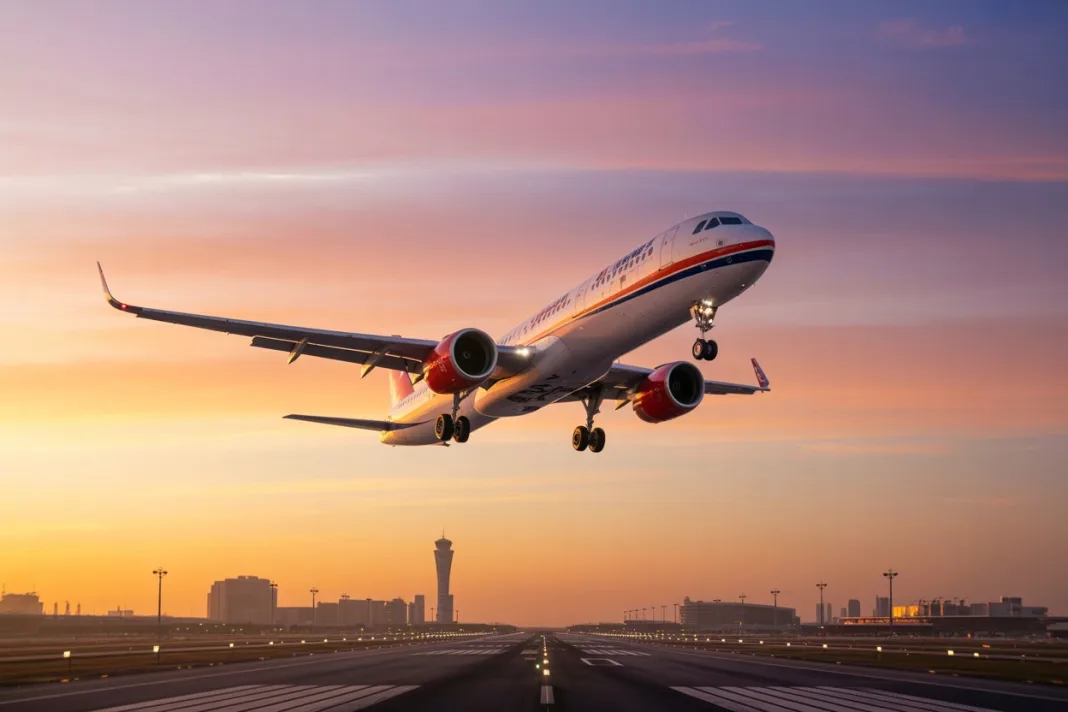
China Eastern Airlines has finalized a massive order for 101 Airbus A320neo family aircraft, valued at approximately $15.8 billion at list prices. This deal includes the highly anticipated A321XLR, a narrowbody jet capable of flying long-haul distances previously reserved for massive “jumbo” jets. Deliveries are set to take place in stages between 2028 and 2032, cementing Airbus’s dominance in the Chinese aviation market.
Quick Summary of the Deal
- The Fleet: 101 aircraft from the A320neo family, including the A320neo, A321neo, and the extra-long-range A321XLR.
- The Investment: Valued at approximately $15.8 billion (though standard industry discounts likely apply).
- Timeline: Aircraft will be delivered in batches starting in 2028 through 2032.
- Strategic Goal: To phase out older, less efficient models and expand “long-thin” routes (long distances with lower passenger demand).
- Market Impact: Strengthens Airbus’s position in China, where it already operates a massive final assembly line in Tianjin.
In a move that signals a robust recovery and an ambitious future for Asian aviation, China Eastern Airlines has signed a monumental agreement with European planemaker Airbus. The deal, worth upwards of $15 billion, will see 101 next-generation narrowbody aircraft join the fleet of the Shanghai-based SkyTeam member. This isn’t just a purchase; it is a strategic pivot that could change how you fly across Asia and beyond.
A New Era for the Long-Haul Traveler
For the average traveler, the most exciting part of this announcement isn’t the price tag—it’s the inclusion of the Airbus A321XLR. Traditionally, if you wanted to fly from a secondary city in China to a destination in Europe or Australia, you’d likely have to transit through a massive hub like Shanghai or Beijing on a widebody aircraft.
The A321XLR changes the math. This “extra-long-range” single-aisle jet can stay in the air for up to 11 hours, covering 4,700 nautical miles. This means China Eastern can now launch direct flights between smaller cities that don’t have enough passengers to fill a giant double-aisle plane but have plenty of demand for a nimbler, more efficient jet.
The Pros and Cons for Your Next Trip
While the airline wins on efficiency, what does this mean for your legroom and comfort?
The Advantages: More Choice and Better Air
- Direct Connectivity: Expect more “point-to-point” routes. You might soon fly directly from a regional Chinese hub to Southeast Asia or even Eastern Europe without the hassle of a layover.
- Modern Cabins: These planes will feature Airbus’s “Airspace” interior, which includes larger overhead bins (fitting 60% more bags), customizable LED mood lighting to reduce jet lag, and redesigned sidewalls for more shoulder room.
- Sustainability: The “neo” (New Engine Option) series burns 20% less fuel and is significantly quieter than older models, making for a more “guilt-free” and peaceful flight.
The Disadvantages: The “Narrow” Reality
- Single-Aisle Struggles: On an 8-hour flight, a single aisle can feel cramped. If the beverage cart is in the aisle, you’re stuck in your seat. Unlike widebody planes (like the A350), there is less room to get up and stretch your legs.
- Cabin Pressure: Widebody aircraft often have advanced carbon-fiber hulls that allow for higher cabin humidity and lower “cabin altitude” pressure, which leaves you feeling more refreshed. Standard narrowbodies like the A320neo don’t always offer that same level of atmospheric comfort on ultra-long trips.
Conclusion
China Eastern’s massive investment is a testament to the resilience of the travel industry and a clear sign that the future of flight is getting smaller, smarter, and further-reaching. By choosing the A321XLR, the airline is betting that travelers will value the convenience of direct, non-stop routes over the spaciousness of a traditional jumbo jet. As these planes begin to arrive in 2028, the map of Asia will effectively shrink, bringing the world just a little bit closer to your local airport.
Advertisement
Advertisement
Advertisement
Advertisement
Advertisement
Advertisement