
Published on
March 27, 2026

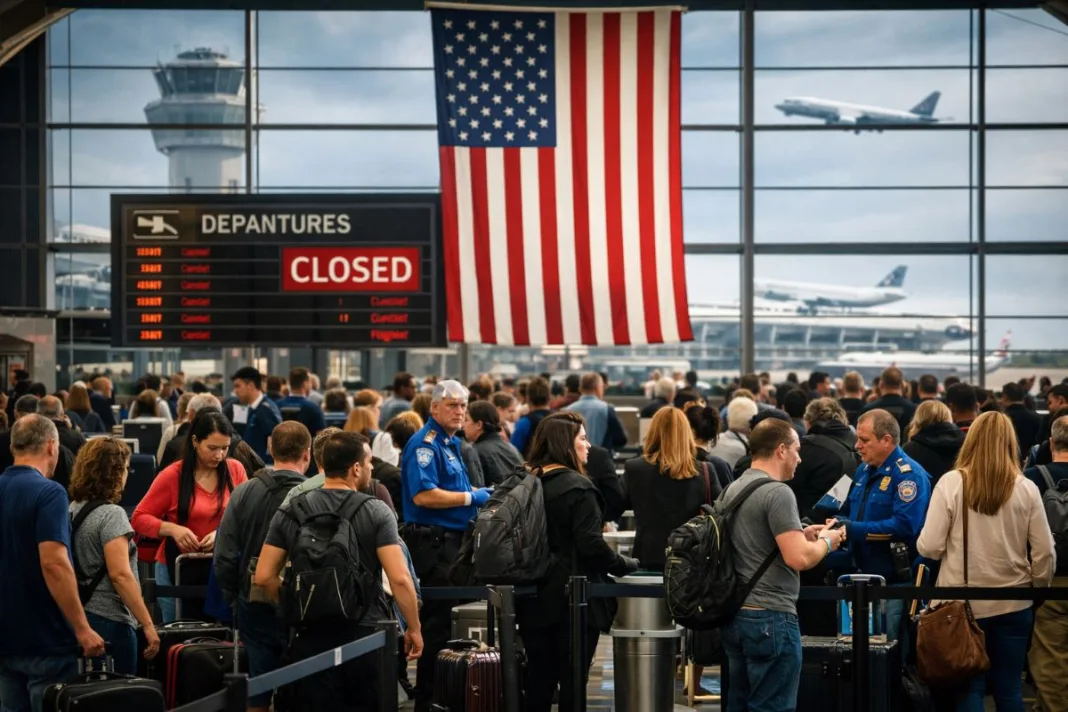
Image generated with Ai
The US travel sector, crucial for both the national and global economy, is directly linked to the effectiveness and efficiency of various government services. When the shutdown started in February 2026, it led to the furloughing of key federal workers in various departments, including the Transportation Security Administration (TSA), customs and border protection, and other agencies involved in airport operations. The inability to fully staff these agencies resulted in delays, longer security check times, and limited operational capacity at airports across the country.
Rising Absenteeism and Operational Strain:
As the shutdown dragged on, absentee rates among airport staff grew significantly, with some airports like Atlanta (ATL) and Houston (IAH) reporting absenteeism rates of over 40%. The strain on remaining workers led to further delays, creating a backlog at security checkpoints. Passengers, particularly business travelers, began experiencing extended wait times at check-in, security, and customs. This has significantly impacted the efficiency and predictability of air travel, a critical factor for the tourism and business sectors.
Impact on Business Travel:
Business travel, a significant part of the US economy, was hit hardest by the shutdown. According to the Global Business Travel Association (GBTA), business travelers on a typical 48-hour work trip could lose up to 12 hours to waiting in security lines alone, leading to reduced productivity. This not only affects the travelers themselves but also businesses that rely on the timely and efficient movement of executives, sales teams, and other employees. These delays and inefficiencies have prompted many businesses to reconsider or delay travel plans, leading to cancellations and a reduction in overall demand for air travel.
Effect on International Tourism:
International tourism, particularly from business travelers, has also been severely affected. Programs like Global Entry, designed to expedite international travel, faced temporary suspensions due to the shutdown. This resulted in significant delays for international passengers who would have otherwise benefited from expedited entry. With the US being a major hub for international business, these disruptions caused uncertainty among foreign visitors who rely on smooth and efficient travel experiences to conduct business in the US.
Advertisement
Advertisement
Economic Consequences for the Tourism Sector:
The tourism sector is a major contributor to the US economy, accounting for billions of dollars in direct spending each year. According to the US Travel Association, the US tourism industry generates over $1.6 trillion annually, supporting over 15 million jobs. When disruptions like the government shutdown occur, they directly impact tourism revenue by reducing the number of incoming visitors, both domestic and international. In particular, international travelers are often deterred by delays and cancellations, while domestic travelers postpone or cancel leisure trips due to the inconvenience caused by long wait times and uncertainty.
The ripple effect of these disruptions spreads beyond airports, affecting local economies, especially in tourist-heavy cities. Hotels, restaurants, transportation services, and attractions rely on business and leisure travelers. With a decrease in the number of visitors, these businesses experience a downturn in revenue, leading to layoffs, reduced services, and a slowdown in the hospitality sector.
Advertisement
Advertisement
Future Implications:
As the shutdown drags on, the broader implications for the tourism sector continue to unfold. If Congress does not reach a resolution, the continued uncertainty could further undermine consumer confidence in the US travel system. Additionally, the ongoing inefficiency of air travel could cause long-term damage to the US’s reputation as a leading global business and leisure destination. The US tourism economy depends on stable, predictable air travel, and prolonged disruptions may lead to a shift in travel patterns, with some international travelers opting for other destinations with more reliable travel infrastructure.
The shutdown began on February 14, 2026, due to a deadlock in Congress over federal immigration enforcement and ICE reforms. During this time, TSA officers, responsible for securing airports across the country, have been forced to work without pay. This has resulted in an alarming absentee rate, especially at major hubs like Houston (IAH) and Atlanta (ATL), where absenteeism is over 40%. These issues, compounded by staffing shortages, are wreaking havoc on airport operations.
TSA PreCheck and Global Entry programs, designed to expedite security screening for trusted travelers, have also been severely impacted. Although TSA PreCheck is still operational, Global Entry has experienced significant disruptions, stalling international business travel. The system has been operating under immense pressure, with some airports even considering temporary closures due to security line congestion.
Severe Delays and Impact on Productivity:
As the strain on the TSA workforce continues, security wait times have skyrocketed, causing major delays at several airports across the country. Travelers are now facing wait times of up to four hours at peak hours, especially at major hubs such as New York’s JFK, Chicago O’Hare, and Los Angeles LAX. This has led to a ripple effect across business and leisure travel, as planes are delayed, meetings are missed, and business trips are re-evaluated.
For business travelers, this has become a particularly grave issue. A recent GBTA report estimates that business travelers on a 48-hour trip could easily lose 12 hours of valuable time just waiting in security lines. This represents 25% of the trip’s total duration—time that could otherwise be spent on meetings, networking, or closing deals. As a result, productivity has dropped, and businesses are being forced to reallocate resources or cancel trips altogether.
Economic Consequences:
The economic consequences of these delays extend far beyond individual travelers. Business travel in the US is a critical driver of economic activity, contributing $484.4 billion annually to the economy and supporting over 6 million jobs. It also accounts for nearly 2% of the country’s GDP. The ripple effect of these disruptions impacts sectors like tourism, hospitality, and retail, as business travelers are a major source of revenue for hotels, restaurants, and local businesses.
With significant portions of the economy tied to travel, these delays are also eroding consumer confidence in the US as a destination for international business. Companies are beginning to reconsider whether it’s worth sending employees through US airports, with some even considering alternative routes through international hubs to avoid lengthy delays.
Congress Faces Urgent Pressure to Act:
The GBTA has repeatedly urged Congress to take swift action to resolve the shutdown. With lawmakers set to leave for a two-week spring recess on March 30, 2026, the pressure is mounting for a resolution. The GBTA has met with several members of Congress, warning that every day of inaction exacerbates the situation, further crippling the aviation system. Business leaders, including hundreds of GBTA members, have also written to their representatives, urging them to act before Congress heads into recess.
Despite the House passing multiple bipartisan funding packages, including the most recent H.R. 8029 on March 26, the Senate remains deadlocked on the issue. Without an agreement by March 30, the TSA workforce and travelers will be left in limbo for at least two more weeks, causing further disruption and economic harm.
Emergency Measures and Future Outlook:
In an attempt to mitigate the chaos, some airports have enlisted ICE agents to assist TSA officers with security screening. However, these temporary measures have proven ineffective in addressing the root cause of the delays. Wait times remain unpredictable, and frustration continues to grow among both travelers and TSA personnel.
Looking forward, the GBTA is calling for immediate congressional action to end the shutdown and restore stability to the aviation system. As airports and airlines struggle to manage growing congestion, a prolonged shutdown will only lead to further disruptions, undermining the US’s competitiveness as a global business hub.
The ongoing government shutdown is pushing the US travel system to its limits, causing severe disruptions at airports across the country. TSA workforce strain, skyrocketing wait times, and the suspension of trusted traveler programs are significantly affecting business travel and productivity. With US business travel contributing billions to the economy and supporting millions of jobs, Congress must act swiftly to resolve the shutdown and restore stability to the aviation system. The longer this crisis persists, the greater the economic fallout, not just for the travel industry, but for the broader US economy.
Chronological Analysis of the TSA Crisis Caused by the US Government Shutdown
Here is the chronological analysis of the TSA crisis caused by the US government shutdown in a tabulated format:
| Date | Event | Impact |
|---|---|---|
| February 14, 2026 | Government Shutdown Begins | Budget impasse triggers government shutdown, leading to TSA officers working without pay. Airports begin to face strain, with some staffing shortages. |
| February 14 – 28, 2026 | TSA Workforce Strain | TSA workers face rising absenteeism, especially at major airports like Houston (IAH) and Atlanta (ATL). Wait times start increasing as the TSA workforce shrinks. |
| March 1 – 10, 2026 | Absenteeism and Record Delays | Absentee rates continue to rise, with some airports reporting absenteeism as high as 40%. Wait times soar, with travelers experiencing delays of up to three hours. |
| March 11 – 15, 2026 | Global Entry Disruptions | Global Entry program suspended for several weeks, causing disruptions for international travelers. TSA PreCheck remains operational but strained. |
| March 16 – 20, 2026 | Increased Frustration and Economic Impact | Business travelers face 12 hours of delays on 48-hour trips, leading to cancellations, rescheduled meetings, and lost productivity. Economic toll begins to show. |
| March 21 – 26, 2026 | GBTA Urges Congress to Act | GBTA calls for immediate action from Congress to resolve the shutdown, highlighting the negative impact on business travel, economic growth, and US competitiveness. |
| March 26, 2026 | House Passes Funding Package | The House passes several bipartisan funding packages, but the Senate remains deadlocked, leaving the crisis unresolved for now. |
| March 27, 2026 | Absentee Rates and Security Line Delays Reach Historic Levels | Absenteeism continues to rise, and TSA struggles to manage increasing delays. Some airports report wait times of up to 4 hours. |
| March 30, 2026 | Congress Heads into Recess with No Resolution | With no agreement reached, Congress breaks for a two-week spring recess, leaving the TSA and travelers in limbo. Delays and uncertainty continue. |
| April 2026 (Project) | Ongoing Chaos and Economic Toll | If no resolution is reached, the crisis is expected to continue, with severe impacts on business travel, the economy, and productivity. |
The ongoing US government shutdown, which began on February 14, 2026, has severely impacted the travel industry, particularly airport security operations. The strain on the TSA workforce, combined with rising absenteeism and record delays, has disrupted both domestic and international travel. This crisis has not only caused significant inconvenience for travelers but also threatens the US economy, with business productivity taking a hit. Below is a chronological analysis of the shutdown’s impact on the TSA and the wider travel system.
February 14, 2026: Government Shutdown Begins
The crisis begins when a budget impasse over federal immigration enforcement and ICE reforms triggers the government shutdown. The shutdown officially starts on February 14, 2026, leaving many federal workers, including those in the TSA workforce, furloughed or working without pay. This sets the stage for increasing strain on airport operations, particularly in the TSA.
February 14 to February 28, 2026: TSA Workforce Strain
During the early days of the shutdown, TSA officers at airports across the country are forced to work without pay. The lack of funding for federal workers leads to rising absenteeism rates, particularly at major travel hubs like Houston (IAH) and Atlanta (ATL). The stress of working without compensation exacerbates the situation, and TSA workers face growing pressure to maintain security without adequate staffing.
March 1 to March 10, 2026: Absenteeism and Record Delays
Absentee rates continue to rise, with some airports reporting absenteeism as high as 40% at peak hubs. Travelers begin to notice increasing delays at security checkpoints. The TSA struggles to manage the flow of passengers as wait times soar, with some airports experiencing wait times of up to three hours. Passengers, especially business travelers, begin feeling the first major impacts as their travel plans are disrupted.
March 11 to March 15, 2026: Global Entry Disruptions
As the shutdown continues, the effects on international business travel become more apparent. While TSA PreCheck remains operational, the Global Entry program, which expedites international travelers’ entry into the US, experiences disruptions. For several weeks, Global Entry is suspended, forcing international business travelers to go through the regular screening process, further escalating delays at customs and immigration points.
March 16 to March 20, 2026: Increased Frustration and Economic Impact
As the TSA’s resources become further strained, frustration mounts. Business travelers on 48-hour work trips face up to 12 hours of waiting time at airports, cutting into their productivity. This disruption not only affects the individuals involved but also has a ripple effect on businesses. Meetings are delayed or canceled, business trips are re-evaluated, and some companies even reconsider sending employees through US airports due to the delays. The economic impact becomes evident as business travel, a significant contributor to the US economy, slows down.
March 21 to March 26, 2026: GBTA Urges Congress to Act
The Global Business Travel Association (GBTA) issues an urgent call to action. In multiple statements and meetings, the GBTA stresses that the failure to resolve the shutdown is severely damaging the US travel industry. The GBTA warns that the delays are negatively affecting US business travel spending, projected to reach $395.4 billion in 2026, and contributing almost 2% of US GDP. The association urges Congress to act before they depart for their two-week spring recess, which is scheduled to begin on March 30, 2026.
March 26, 2026: House Passes Funding Package
In response to the growing pressure, the House of Representatives passes several bipartisan funding packages to end the shutdown. The most recent, H.R. 8029, is approved by the House on March 26, but the Senate remains deadlocked, unable to reach an agreement. The package addresses some of the immediate issues, but without Senate approval, it is ineffective in immediately resolving the crisis.
March 27, 2026: Absentee Rates and Security Line Delays Reach Historic Levels
As the Senate continues to stall, absentee rates among TSA officers hit record highs, with some airports reporting absenteeism rates exceeding 40%. This leads to severe delays, with wait times at major airports like JFK, O’Hare, and LAX reaching up to four hours during peak travel times. The situation is becoming unsustainable, with concerns that the travel system is on the verge of collapse. Temporary measures, such as deploying ICE agents to assist TSA officers, fail to ease the backlog significantly.
March 30, 2026: Congress Heads into Recess with No Resolution
With the Senate unable to pass a funding deal before the March 30 deadline, Congress breaks for its two-week spring recess, leaving TSA workers and travelers in limbo for at least two more weeks. The continued uncertainty puts additional pressure on the already strained travel system, further delaying essential business trips and domestic travel.
Projected Impact in April 2026: Ongoing Chaos and Economic Toll
If Congress does not act before their return on April 10, 2026, the disruptions are expected to continue and worsen. The TSA’s ability to handle security efficiently will remain impaired, resulting in longer wait times and more missed flights. The impact on US business travel could have long-term consequences, not only for the travel sector but also for the wider economy. The cumulative effect of lost productivity, increased travel costs, and strained international relations due to inefficiency may take months to resolve.
Conclusion: The Need for Immediate Congressional Action
The ongoing government shutdown has created a crisis for the US travel system, particularly for business travelers and the TSA workforce. With a growing backlog of travelers, extended wait times, and significant absenteeism among TSA officers, the shutdown is having severe consequences on the country’s economy. While some temporary measures have been implemented, Congress must act swiftly to resolve the budgetary issues and end the shutdown to avoid further disruption. The travel industry, already facing immense strain, is at a breaking point, and the longer the shutdown continues, the more profound the economic damage will be.
Advertisement
Advertisement