
Published on
March 26, 2026

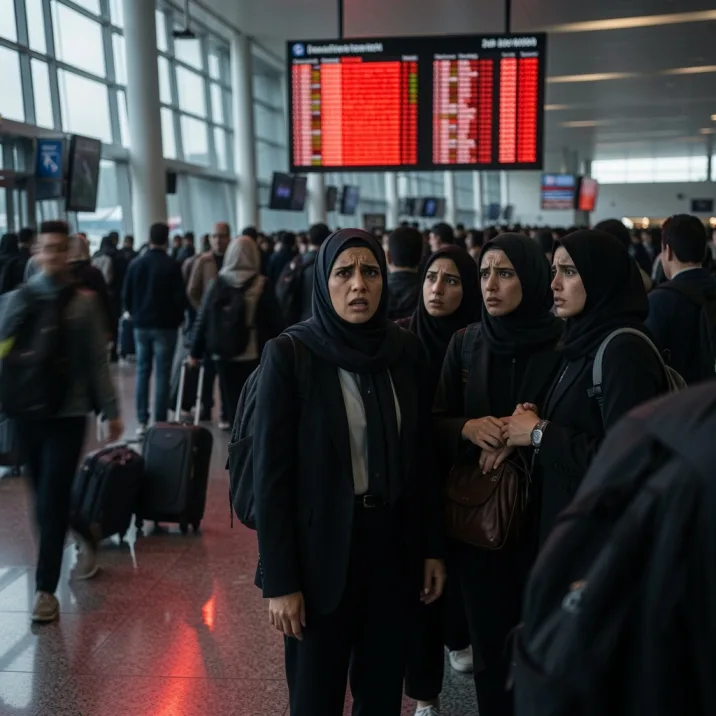
Image generated with Ai
Travel chaos has descended upon the Middle East, fundamentally shifting the landscape of regional mobility. Aviation networks across Saudi Arabia are currently navigating a highly unpredictable operating environment. Recent data reveals significant disruptions as carriers like Saudia and Gulf Air confront widespread cancellations. These interruptions center on the kingdom’s primary gateways: Riyadh, Dammam and Jeddah. Consequently, standard travel protocols no longer ensure reliable transit for personnel or cargo. Experts point to rapidly evolving security conditions and reduced institutional capacity as the primary drivers of this instability. Airspace restrictions now dictate flight availability, making entry and exit options increasingly constrained. Furthermore, the suspension of certain immigration services adds layers of complexity to in-country compliance. Organizations must now adopt flexible strategies to maintain continuity. This report examines the 38 cancellations and 6 delays currently impacting Riyadh, Dammam and Jeddah, providing essential insights for those navigating this volatile period of travel.
The disruption to travel is most evident when examining the specific data from the kingdom’s three primary international gateways. The following impact has been recorded at the major airports:
- King Khalid International Airport (Riyadh): As the capital’s primary hub, Riyadh has faced the most significant volume of disruptions today. A total of 23 cancellations and 3 delays have been documented. This high level of activity reflects the broader challenges faced by carriers like Saudia and Gulf Air as they navigate an increasingly complex and unstable airspace.
| Airline | Cancelled | Cancelled (%) | Delayed | Delayed (%) |
|---|---|---|---|---|
| Saudia | 14 | 4% | 2 | 0% |
| Gulf Air | 8 | 80% | 0 | 0% |
| Air France | 1 | 100% | 0 | 0% |
| Etihad Airways | 0 | 0% | 1 | 12% |
| Flynas | 0 | 0% | 1 | 0% |
- King Fahd International Airport (Dammam): In the Eastern Province, Dammam has also seen its flight schedules impacted. Records indicate that 6 cancellations and 1 delay have occurred at this facility today. The strategic location of Dammam near the Gulf makes it particularly sensitive to changes in regional stability and airspace accessibility.
| Airline | Cancelled | Cancelled (%) | Delayed | Delayed (%) |
|---|---|---|---|---|
| Gulf Air | 6 | 26% | 1 | 4% |
- King Abdulaziz International Airport (Jeddah): The gateway to the Red Sea, Jeddah, has not been immune to the prevailing chaos. Data shows that 9 cancellations and 2 delays have been registered at this airport today. As a critical point for both international commerce and religious pilgrimage, the constraints in Jeddah represent a significant bottleneck for regional movement.
| Airline | Cancelled | Cancelled (%) | Delayed | Delayed (%) |
|---|---|---|---|---|
| Gulf Air | 6 | 60% | 0 | 0% |
| Saudia | 2 | 0% | 0 | 0% |
| Uzbekistan Airways | 1 | 33% | 0 | 0% |
| Flynas | 0 | 0% | 1 | 0% |
| Lion Air | 0 | 0% | 1 | 50% |
Along with domestic routes, international routes like Bahrain, Kenya and Uzbekistan are also affected by todays travel disruptions.
The current state of travel in Saudi Arabia is expected to have long-reaching consequences for the burgeoning tourism sector. While the kingdom has invested heavily in positioning itself as a premier global destination, the current instability has prompted a reassessment of relocation and visitation strategies by many international organisations.
It is noted by experts that traditional safe locations within the Gulf and wider Middle East are no longer considered stable by global mobility standards. This shift in perception introduces additional complexity regarding workforce planning and entry requirements. As uncertainty remains a defining feature of the current environment, the ability of the tourism industry to maintain continuity is being tested.
The reduced institutional capacity of immigration systems—which are operating at reduced levels or are fully suspended in several jurisdictions—presents immediate challenges for visa processing and renewals. For future tourism to thrive, a flexible and responsive approach must be adopted, yet the current unpredictability makes long-term planning for visitors and travel providers exceptionally difficult.
Advertisement
Advertisement
For those currently caught in the midst of this travel disruption in Saudi Arabia, immediate action is required to navigate the complexities of the current environment. Because conditions are subject to rapid change with little to no notice, the following steps are advised for affected passengers:
Firstly, close monitoring of flight statuses via official airline channels is essential. With 38 cancellations already recorded across Riyadh, Dammam and Jeddah, passengers are encouraged to confirm the status of their journey before heading to the terminal. Many immigration and government services are currently operating at reduced capacity, so delays in processing documentation should be anticipated.
Secondly, travellers are advised to maintain close coordination with their respective HR, legal, or risk functions if travelling for professional purposes. Because organisations can no longer rely on standard mobility protocols, a bespoke approach to safety and compliance is necessary.
Finally, flexibility is the most critical tool for any traveller in the region today. With airspace restrictions and unstable border conditions impacting entry and exit options, alternative routes outside the region are being considered by many. Passengers should remain prepared for sudden changes to travel routes and government operations as the security situation continues to evolve.
-The flight information provided is sourced from FlightAware.
Advertisement
Advertisement