
Published on
March 26, 2026

Image generated with Ai
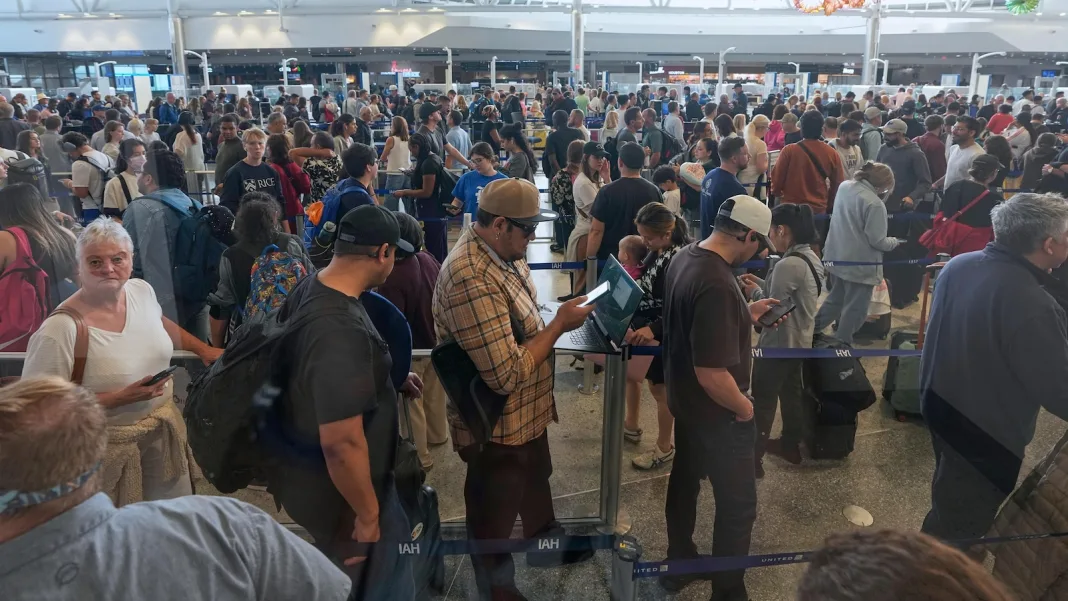
A significant shift in the domestic travel landscape is being observed as Immigration and Customs Enforcement (ICE) has initiated a surge in increased ICE enforcement across several major aviation hubs. It is reported that airport patrols and intensive secondary screenings have been expanded at primary terminals, frequently targeting travelers on temporary visas. This intensified oversight is reportedly linked to broader DHS staffing changes resulting from ongoing federal budget impasses, rather than an expansion of statutory authority. While the primary focus is directed toward individuals without valid work authorization, instances of U.S. citizens of Hispanic appearance being subjected to questioning have been documented. Consequently, proper documentation and a comprehensive awareness of legal rights have become essential for all passengers. For the business community, it is now critical that corporate travelers are prepared for potential travel disruptions, as the presence of federal agents at departure gates introduces a new layer of complexity to routine transit.
The Departure Gate Interrogation: Why You Might Be Stopped Before Boarding
The traditional boundary of immigration enforcement, once confined largely to international arrivals, is being moved into the heart of domestic terminals. It is observed that agents are now frequently positioned at departure gates in high-traffic airports such as Hartsfield-Jackson Atlanta International, George Bush Intercontinental in Houston, O’Hare International in Chicago, Los Angeles International (LAX), and John F. Kennedy International in New York. In these locations, travelers are being selected for interviews and thorough document reviews before being allowed to board their flights.
These interactions are described as tactical deployments intended to supplement existing security frameworks during periods of personnel shortages. However, the result for the traveler is often a heightened sense of scrutiny. It is reported that these “consensual encounters” can quickly escalate into formal secondary screenings if inconsistencies are perceived in a traveler’s responses or paperwork. Because these checks are occurring at the gate, the risk of missing scheduled flights is significantly increased, creating a volatile environment for those on tight professional schedules.
Corporate Travel Nightmares: How A Simple Trip Could Ground Your Employees
For organizations with a global workforce, the current enforcement climate presents a unique operational risk. It is found that foreign-national employees—even those possessing valid H-1B, L-1, or O-1 visas—are particularly vulnerable to delays. Companies are being advised to ensure that every employee is equipped with a complete “travel packet” that includes not only their passport but also original copies of their approval notices, employment verification letters, and recent pay stubs.
The impact on business operations is not limited to legal hurdles; it extends to the well-being of the staff. It is observed that the psychological stress of being targeted for questioning based on appearance can lead to decreased morale and a reluctance to engage in necessary business travel. To mitigate these travel disruptions, human resources departments are being encouraged to implement a “tracking and alert” system. By monitoring enforcement trends at specific hubs, businesses can reroute essential travel or provide real-time legal support if an employee is detained at an airport. This proactive stance is viewed as a necessary evolution in corporate duty of care.
Know Your Rights: The Magic Phrases That Could Stop An Unlawful Search
A critical component of navigating the modern airport is an understanding of the legal protections afforded to all individuals on U.S. soil. It is frequently emphasized by civil rights advocates that while ICE agents have the authority to approach and ask questions, individuals are generally not required to answer unless they are being lawfully detained. The use of specific languages, such as asking, “Am I free to leave?” is recommended to clarify the nature of the encounter.
Advertisement
Advertisement
| Action | Traveler’s Right | Officer Requirement |
| Questioning | Right to remain silent | Must have “reasonable suspicion” to detain |
| Search of Belongings | Right to refuse consent | Requires a warrant or probable cause |
| Device Inspection | Right to decline password | May seize device for later inspection |
| Recording | First Amendment right to film | May restrict if it disrupts operations |
If the response to a query about freedom of movement is negative, the individual is advised to state that they wish to remain silent and request to speak with an attorney. It is noted that providing false information to a federal officer is a criminal offense, making silence a safer legal strategy than providing inaccurate details under pressure. Furthermore, while U.S. citizens cannot be denied boarding for refusing to answer questions about their lineage, the choice to do so may result in extended delays as identity is verified through secondary means.
Staffing Shuttles: The Truth Behind The Surge In Airport Tactical Gear
The visible increase in armed agents in tactical gear is often attributed to the “DHS staffing crisis” rather than a shift in national security policy. It is reported that hundreds of ICE and Homeland Security Investigations (HSI) personnel have been reassigned from interior enforcement duties to support the Transportation Security Administration (TSA) during a partial government shutdown. This redirection of resources has placed agents who are typically trained for criminal investigations into roles involving crowd control and passenger identification.
This cross-training has sparked debate among aviation unions and local officials, who argue that the presence of immigration officers in security lines may distract from the primary mission of aviation safety. It is observed that the “lines of authority” between different federal agencies have become blurred, leading to inconsistent application of screening protocols. For the traveler, this means that the experience at Newark Liberty may differ wildly from the experience at Phoenix Sky Harbor. Until a permanent funding solution for the Department of Homeland Security is established, this heightened enforcement presence is expected to remain a permanent fixture of the American travel experience.
Advertisement
Advertisement