


Published on
March 26, 2026

Image generated with Ai
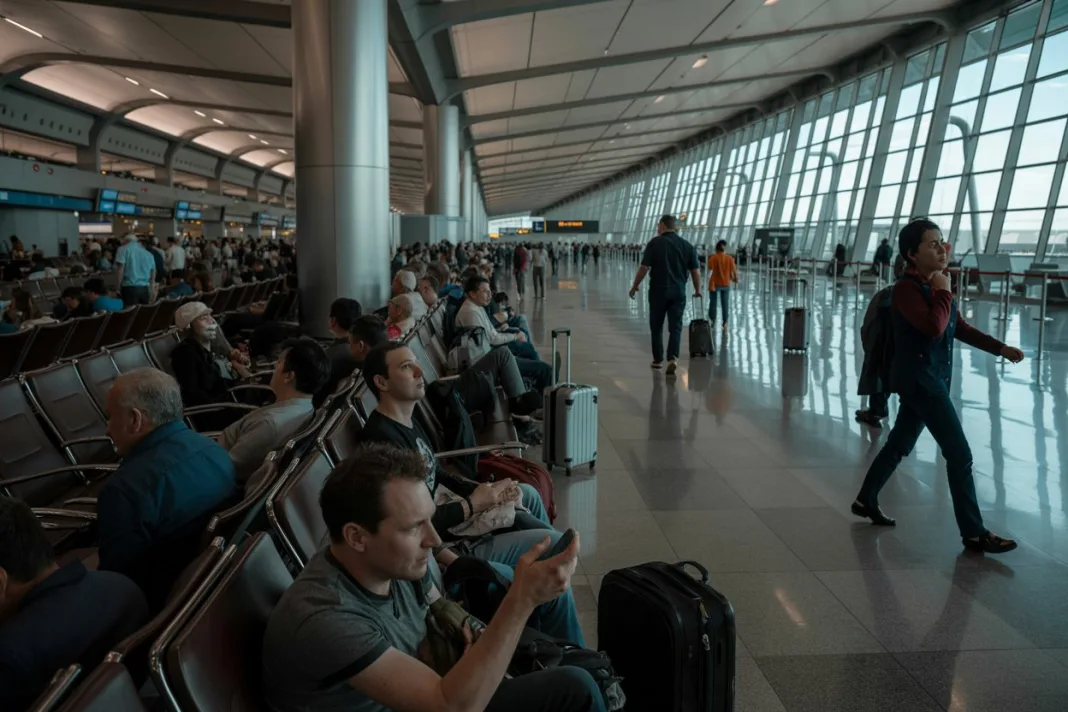
Dallas–Fort Worth International Airport is living up to its reputation as a critical Texas gateway today, but for thousands of travelers, the journey is anything but smooth as 160 delays and 4 cancellations reshape carefully planned itineraries. Parents cradle tired children in crowded gate areas, business travelers refresh their emails searching for updated meeting times, and students clutch backpacks and boarding passes, all united by one shared feeling: uncertainty about when their flights will finally depart. Against this human backdrop, the disruption at one of the world’s busiest airports is a stark reminder of how fragile the air travel system can feel when even a portion of the schedule falters.
Dallas–Fort Worth Airport: Scale Of The Disruption
Dallas–Fort Worth International currently reports 160 delayed flights and 4 cancellations, a sizable share for a single day at an airport that routinely handles hundreds of departures and arrivals. Each delayed flight can ripple across multiple routes, compounding schedule changes for passengers who may never even set foot in Texas. Cancellations, though fewer in number, bring a sharper impact, forcing travelers to rebook, adjust hotel reservations, or miss events entirely. For many, what began as a straightforward trip has turned into an extended layover with an uncertain endpoint.
Dallas–Fort Worth: Possible Causes Behind Today’s Delays
While exact causes vary flight by flight, delays at Dallas–Fort Worth International often reflect a combination of weather, air traffic management constraints, and airline operational issues. The Federal Aviation Administration (FAA) regularly issues traffic management initiatives and ground delay programs when congestion, storms, or low visibility affect key airspace corridors, which can slow arrivals and departures even under otherwise clear skies. Airlines may add their own buffers, adjusting schedules when crews reach duty time limits or when aircraft arrive late from earlier legs. Together, these factors can quickly snowball into the 160 delays now affecting the airport’s daily rhythm.
Dallas–Fort Worth Travelers: Official Guidance And Passenger Rights
Dallas–Fort Worth International and airline partners typically advise travelers to monitor official flight status pages and mobile apps frequently when delays spike. Government resources, such as FAA flight information and consumer guidance from the U.S. Department of Transportation (DOT), outline how passengers can track operational issues and understand their rights when flights are significantly disrupted. These advisories often emphasize keeping contact information updated with airlines, checking in early, and confirming rebooking options if a delay threatens to cause a missed connection. For many passengers, clear information can ease at least some of the stress that comes with a long and uncertain wait.
Advertisement
Advertisement
Dallas–Fort Worth: How Airlines Are Responding
At Dallas–Fort Worth, airlines typically respond to a surge in delays by reshuffling aircraft assignments, adjusting crew pairings, and, where possible, opening up additional seats on later flights. Gate agents play a frontline role, updating departure times, issuing meal vouchers when policies allow, and helping families and vulnerable travelers find earlier alternatives. Some carriers may waive change fees or fare differences in limited circumstances, especially when disruptions tie back to broader operational or airspace constraints rather than isolated, passenger-specific issues. The degree of flexibility can vary by airline and fare type, making it essential for travelers to check the exact conditions attached to their ticket.
Dallas–Fort Worth: Impact On Connections Across The Network
Dallas–Fort Worth International functions as a major connecting hub, which means today’s 160 delays stretch far beyond Texas and ripple through domestic and international routes. A late inbound aircraft from Dallas can delay a follow-on departure to another U.S. city or even an overseas destination, creating a cascade of revised schedules. Passengers with tight layovers are especially vulnerable, sometimes landing just in time to watch a connecting flight push back from the gate. For airlines, this adds complexity in managing crew hours, aircraft positioning, and customer service resources far from where the original delay began.
Advertisement
Advertisement
Dallas–Fort Worth Airport: Practical Tips For Stranded Passengers
For travelers stuck at Dallas–Fort Worth during this wave of delays and cancellations, a few practical steps can make the experience more manageable. Keeping all itinerary details, confirmation numbers, and loyalty program information handy speeds up any interaction with airline staff. Using airline apps or websites for self-service rebooking can often be faster than waiting in long lines at the customer service desk, especially when many flights are affected at once. Travelers are also well-served by knowing the basic guidance from transportation authorities on compensation, refunds, and rebooking options, which helps set realistic expectations during conversations at the gate.
Dallas–Fort Worth: What To Watch As The Day Unfolds
As the day progresses at Dallas–Fort Worth International, the number of delays could either stabilize or grow, depending on how quickly airlines and the broader air traffic system absorb the backlog. Improvements often come in waves when weather clears, airspace constraints ease, or additional aircraft and crews become available to restore normal operations. On the other hand, compounding factors late in the day sometimes turn minor slippages into missed curfews at destination airports, forcing further schedule changes. Travelers and industry observers alike will be watching whether the 160 delays and 4 cancellations represent a peak or just an early chapter in a longer day of disruption.
Dallas–Fort Worth: A Human Ending To A Difficult Travel Day
For the people moving through Dallas–Fort Worth International today, the statistics of 160 delays and 4 cancellations translate into missed reunions, postponed business deals, rescheduled medical appointments, and cherished holidays cut short or extended unexpectedly. Yet amid the frustration, scenes of quiet solidarity often emerge: strangers watching each other’s luggage, sharing device chargers, offering snacks to nearby families, and swapping stories about where they are headed and why it matters so much to arrive. As the departure boards slowly shift from “Delayed” to “Boarding” and “Departed,” each traveler at Dallas–Fort Worth carries a private hope that this disrupted day will eventually become just one more story, told later with a sigh of relief rather than the stress felt in the moment.
Advertisement
Advertisement