
Published on
March 25, 2026

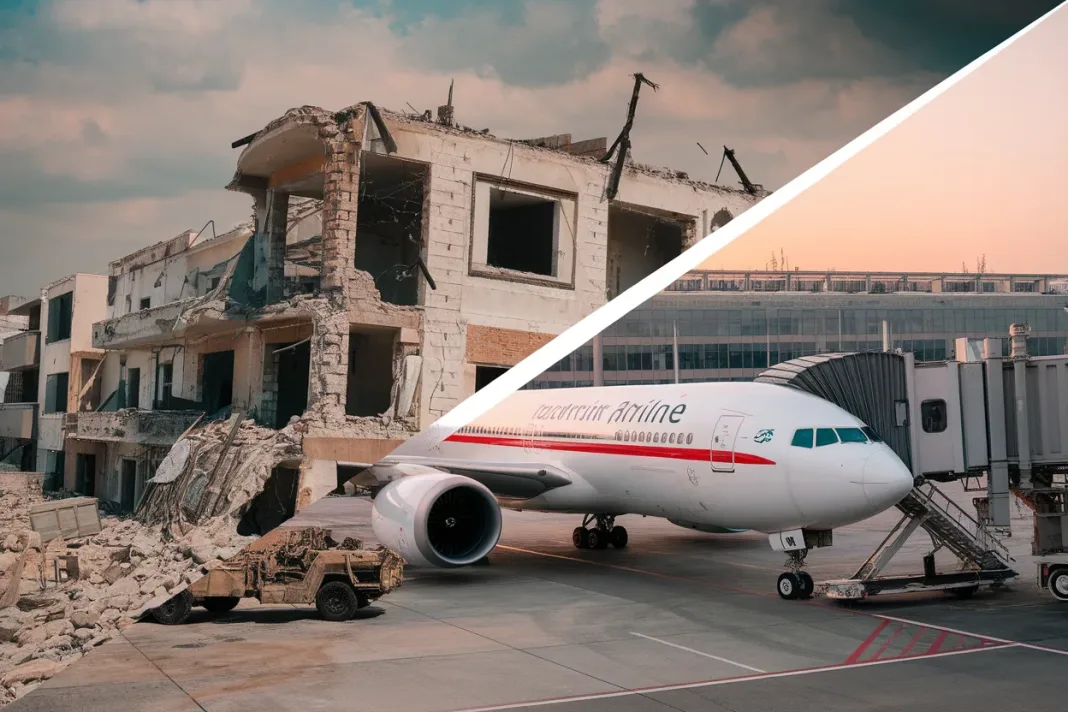
Image generated with Ai
The war in Iran is drastically changing travel and tourism patterns worldwide, causing a seismic shift in international mobility. Due to serious safety concerns and extensive airspace closures, travel to the Middle East has drastically decreased since the war between the United States, Israel, and Iran escalated. There is a huge increase in demand for alternative tourism destinations, including Italy, France, and several hubs in Asia-Pacific, as people flee the unrest. In addition, the crisis has severely disrupted international aviation, resulting in flight cancellations and increased fuel prices that are driving up airfares to all-time highs. This geopolitical instability is not just a regional issue; it is a broader economic consequence that is forcing the tourism industry to adapt to a new, unpredictable reality in 2026.
The Shocking Decline of the Middle East Tourism Empire
The once-booming tourism sectors of the United Arab Emirates, Qatar, and Saudi Arabia are now facing an unprecedented crisis. It is reported that inbound arrivals to the Middle East could decline by as much as 27% year-over-year in 2026, a staggering reversal from the 13% growth initially projected by industry analysts. This downturn is largely attributed to the Iran war, which has transformed the region into a perceived high-risk zone for international vacationers. Major luxury hubs like Dubai and Doha have seen a dramatic spike in cancellations as travelers prioritize safety over high-end experiences.
Beyond the immediate conflict zone, the psychological impact of the war is being felt across neighboring states. Tourism Economics has estimated that the region could face a total loss of $56 billion in visitor spend throughout the remainder of 2026. Government advisories from the U.K., France, and the United States have been updated to include “do not travel” or “reconsider travel” warnings for several jurisdictions. Even in areas where infrastructure remains fully operational, the shadow of regional tensions has led to a “crisis of confidence,” effectively stalling the post-pandemic recovery that had reached record highs just months prior.
Where Everyone Is Heading Instead: The Great Tourist Migration
As the Middle East doors are effectively shut, a massive redirection of global tourist traffic is being observed. Travelers who originally planned trips to the Gulf Cooperation Council (GCC) countries are now flocking to “safe haven” destinations. Europe has emerged as the primary beneficiary of this shift, with Italy and Spain reporting record-breaking booking numbers for the spring and summer seasons. The perception of stability in the Mediterranean has made these countries the top choices for luxury travelers who are redirecting their high-spend budgets away from the Persian Gulf.
In the Asia-Pacific region, Singapore and Japan are experiencing a similar tourism boom. It is documented that Singapore is forecasting up to 18 million tourists in 2026, driven by its reputation for world-class safety and its role as an alternative transit hub. Similarly, Japan continues to attract diverted demand due to the weak yen and its geographic distance from the Middle East crisis. This change is indicative of a larger trend where tourists are prioritizing proximity and stability over exotic risks, leading to a “regionalization” of travel habits that could persist long after the current hostilities subside.
The Aviation Nightmare: Why Your Flight Just Got Much Longer
The impact on global aviation is described by experts as the most significant disruption since the 2020 lockdowns. The closure of the Tehran FIR (OIIX) and surrounding airspaces has forced airlines to abandon the efficient “Silk Road” air corridors that connect Europe and Asia. It is reported that carriers like Lufthansa, Air France-KLM, and Singapore Airlines are now rerouting flights through much longer paths over Central Asia or the Southern Atlantic. These detours can add up to three hours of flight time to a single journey, leading to increased crew fatigue and operational complexity.
Advertisement
Advertisement
The financial burden of these reroutes is being passed directly to the consumer. Because aircraft must carry significantly more fuel to cover the extended distances, and because global fuel prices have surged past $115 per barrel due to the Iran war, airfares have skyrocketed. In some instances, economy class tickets between London and Singapore have doubled in price, reaching averages of €1,650. The International Air Transport Association (IATA) has warned that if the Strait of Hormuz remains closed, the industry could face a sustained fuel surge that would make long-haul travel unaffordable for a large segment of the global population.
The Billion-Dollar Toll: Can the Travel Industry Survive?
The broader economic consequences of the geopolitical instability are being felt far beyond the ticket counter. Oxford Economics research suggests that the Iran war risks disrupting up to 116 million trips globally, affecting nearly every sector of the travel economy. From hotel groups in Egypt and Turkey to tour operators in Australia, the ripple effects of the conflict are visible. The “weaponization of economic tools” and the resulting inflation are dampening discretionary spending, meaning that even travelers who are not flying through the Middle East are reconsidering their plans due to the rising cost of living.
Advertisement
Advertisement
However, the industry is demonstrating a degree of resilience through active management and diversification. While Middle Eastern hubs like Dubai International are revising their passenger targets downward, other nodes like Istanbul and Addis Ababa are seeing increased transit numbers as they fill the void. The 2026 travel landscape is defined by this constant state of flux; it is a year where geoeconomic confrontation is the top risk, yet the human desire for exploration remains. For the remainder of the year, the travel industry must navigate this “multipolar or fragmented order,” balancing the high costs of a world at war with the ongoing demand for safe, reliable passage.
Advertisement
Advertisement