
Published on
March 24, 2026

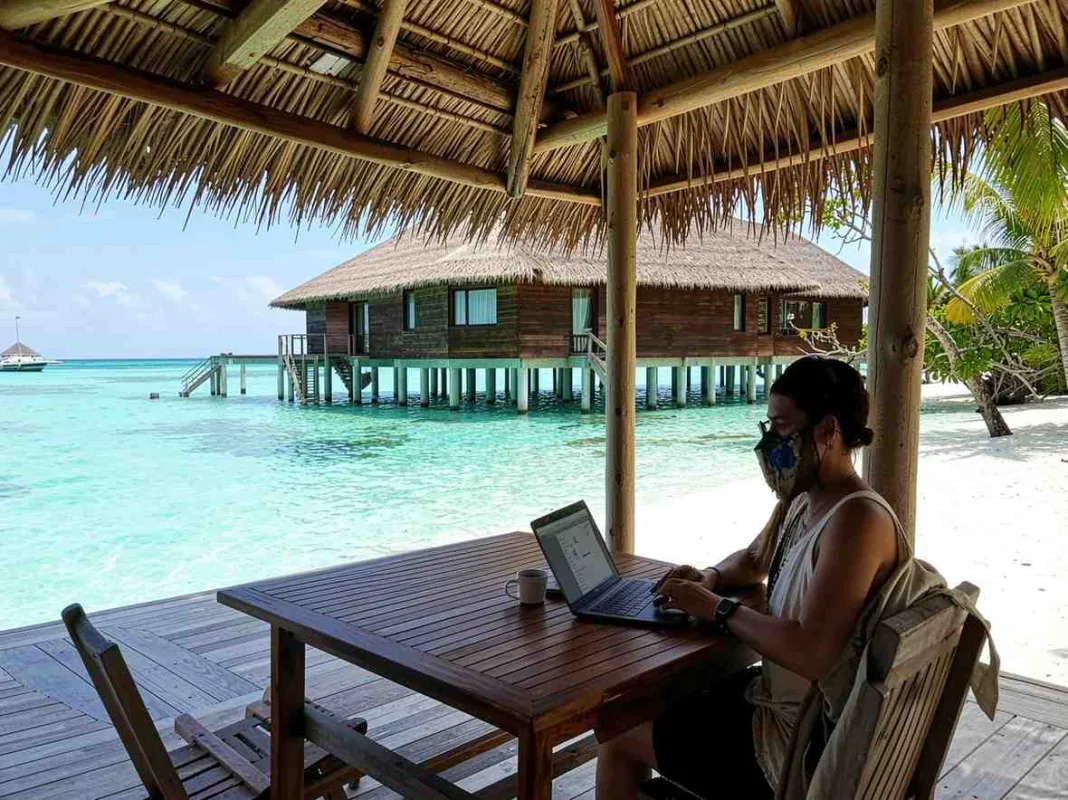
Image generated with Ai
The Maldives, renowned for its breathtaking islands and world-class resorts, is navigating an unprecedented challenge as disruptions caused by the ongoing Middle East conflict ripple across the global travel landscape. Major airlines like British Airways, Lufthansa, and Qatar Airways have been forced to reroute flights, causing significant delays and cancellations, which have directly impacted tourist arrivals. Despite these setbacks, the United Kingdom, Germany, China, Russia, and India have emerged as the driving forces behind the Maldives’ tourism recovery, maintaining a steady flow of visitors amid ongoing uncertainties. In response, the Maldives government has introduced the Remote Working Visa and the Content Creator Visa, positioning the island nation as a sanctuary for digital nomads and influencers seeking both work and leisure. This bold move aims to secure long-term tourism growth, providing a much-needed lifeline for the hospitality industry, which has been heavily impacted by the disruption of flight routes. With travelers increasingly seeking flexible options, the Maldives is embracing a new era of tourism, offering extended stays and a chance to work in paradise while continuing to uphold its status as a premier global destination.
United Kingdom Joins Germany, China, Russia, India in Leading Maldives Recovery as British Airways, Lufthansa & Qatar Airways Reroutes Hammer Arrival Numbers —
The Maldives, a nation known for its pristine beaches and luxurious resorts, is facing a unique set of challenges as it responds to the ongoing disruptions caused by the Middle East conflict. The escalating situation has led to widespread flight cancellations and reroutes, impacting many travelers’ ability to reach the idyllic island nation. However, the Maldives is not standing still. With the introduction of the Remote Working Visa and Content Creator Visa, the government aims to tap into emerging markets and continue its recovery. The nation has already witnessed significant support from China, Russia, India, the United Kingdom, and Germany, who are leading the charge in maintaining a steady influx of tourists.
Tourism Decline Driven by Middle East Airspace Disruptions
The ongoing Middle East conflict has caused a ripple effect in global travel. Major airlines, including British Airways, Lufthansa, and Qatar Airways, have been forced to reroute flights or cancel operations to the Maldives due to the closure of critical airspace. As a result, the Maldives has experienced a 21-23% drop in tourist arrivals as travelers face more expensive and time-consuming routes. Airlines’ ability to connect passengers from Europe and Asia to the Maldives has been severely impacted, with indirect flights increasing in duration and cost.
For the Maldives, which heavily relies on international tourism, this has posed a serious challenge. The Middle East serves as a crucial transit hub for visitors traveling to the Maldives from Europe and Asia. The closure of these air corridors has not only driven up travel costs but has also left many tourists stranded or opting for alternative destinations. As a result, the island nation is looking to adapt its strategy to minimize the negative effects of the situation.
China, Russia, India, United Kingdom, and Germany Lead the Recovery Efforts
Despite the disruptions, China, Russia, and India have remained strong sources of tourism for the Maldives. China, in particular, has become one of the largest markets for the Maldives, with direct flights operating from major cities like Beijing, Shanghai, and Guangzhou. These direct flights bypass the need for Middle Eastern transit, providing a more stable option for travelers despite the ongoing crisis. In 2025, China accounted for nearly 15% of Maldives’ international arrivals.
Advertisement
Advertisement
Russia, another key market, has maintained steady tourist numbers thanks to direct flights from Moscow and St. Petersburg. Russian travelers, known for their preference for luxury beach destinations, continue to flock to Maldives resorts, with many preferring the exclusivity offered by five-star resorts such as Soneva Fushi and Anantara Veli Maldives Resort.
Similarly, India has seen a surge in visitors to the Maldives. Direct flights from Delhi, Mumbai, and Bengaluru to the Maldives have remained unaffected by the Middle East crisis. Indian travelers are increasingly drawn to the Maldives for family vacations, honeymoon packages, and wellness retreats. The Maldives continues to be a top destination for Indian tourists, accounting for a large portion of visitor arrivals in 2025.
The United Kingdom and Germany, while impacted by the Middle East disruptions, still contribute significantly to the Maldives’ tourism recovery. British Airways and Lufthansa are essential carriers for European travelers, and while rerouting has increased travel times, both airlines continue to operate flights to the Maldives with the support of adjusted routes. Germany and the UK remain top sources of high-end travelers, many of whom prefer the luxury resorts that dominate the Maldives’ hospitality industry.
Innovative Remote Working Visa to Attract Long-Stay Tourists
To address the tourism decline caused by the disruptions, the Maldives government has introduced a new visa category, specifically targeting remote workers. The Remote Working Visa allows visitors to stay in the Maldives for up to one year while working remotely for their employer or running their business from the islands. This initiative is designed to capitalize on the growing trend of remote work, a shift that has accelerated in the wake of the COVID-19 pandemic.
This visa allows workers to live and work in paradise, offering them the flexibility to extend their stay as long as they remain employed. For many digital nomads, this is an attractive proposition. With the Maldives’ stunning natural beauty and high-speed internet access, remote working has become an ideal way to blend productivity with leisure. It also provides a much-needed boost to the country’s hospitality industry, as long-term visitors will be able to fill rooms in resorts and guesthouses that are typically more vulnerable to short-term fluctuations in arrivals.
Furthermore, the introduction of the Content Creator Visa is another key strategy to attract visitors. This visa is aimed at social media influencers, bloggers, and content creators who are interested in producing high-quality content during their stay in the Maldives. By offering these creators an opportunity to stay longer, the Maldives hopes to benefit from the promotional power of social media. This move has the potential to generate significant international exposure, further driving tourism recovery.
Hospitality Industry to Benefit from Long-Term Visas and Market Diversification
The introduction of long-term visas for remote workers and content creators is expected to have a positive impact on the Maldives hospitality industry, particularly for smaller guesthouses, boutique hotels, and luxury resorts. Resorts such as Conrad Maldives Rangali Island and The St. Regis Maldives Vommuli Resort are already reporting increased interest from long-stay guests who are looking to work in a tranquil, luxurious environment.
The shift toward long-term stays could also help to ease the pressure on small hotels and guesthouses that are more sensitive to short-term fluctuations in tourist arrivals. Many of these accommodations are particularly vulnerable to the types of disruptions caused by the ongoing geopolitical tensions, and the remote working visa could provide a stable source of revenue for these businesses. Small hotels are also diversifying their offerings by creating remote working packages, which include high-speed internet access, dedicated workspaces, and wellness services such as yoga and meditation sessions for guests looking to balance work and relaxation.
Additionally, the Maldives is diversifying its tourism offerings to attract a wider range of visitors. Sports fishing, big-game fishing, and scuba diving are becoming increasingly popular activities for tourists, and these activities can be enjoyed year-round, even when traditional resort bookings may fluctuate. Resorts and guesthouses are incorporating these niche activities into their packages, helping to broaden the appeal of the Maldives beyond its traditional luxury offerings.
Flight Details and Travel Tips for Visitors
With the introduction of the Remote Working Visa and the Content Creator Visa, potential travelers to the Maldives will benefit from a more seamless entry process. Flights to the Maldives are available from major international airports, and tourists should be aware of the following important travel details:
- Direct Flights: Major airlines such as Qatar Airways, Emirates, British Airways, and Lufthansa continue to operate flights to the Maldives, although passengers may experience longer transit times and reroutes. For those traveling from Europe and North America, the journey can be affected by airspace closures in the Middle East. Travelers should check their flight itineraries to ensure smooth connections and explore alternative routes if necessary.
- Flight Duration: For travelers from the United States, the flight time to the Maldives is approximately 18-20 hours with layovers, depending on the airline and route. From Europe, the journey usually takes around 10-12 hours, with direct options available from major hubs in London, Frankfurt, and Paris.
- Travel Insurance: With the increasing uncertainties in global air travel, travelers are strongly encouraged to invest in comprehensive travel insurance. This will help cover the costs of any potential disruptions or cancellations due to the ongoing conflict in the Middle East.
- Accommodation Options: The Maldives boasts a wide range of accommodation, from luxurious overwater bungalows to more affordable guesthouses. Travelers on the new remote working visa can choose to stay at resorts like Hilton Maldives Amingiri Resort & Spa, which offer extended stay packages with excellent amenities, or explore smaller eco-friendly guesthouses that provide a more immersive local experience.
The Future of Maldives Tourism in a Changing World
As the Middle East conflict continues to impact global travel, the Maldives is responding with innovative solutions to ensure that its tourism sector remains resilient. The introduction of the Remote Working Visa and Content Creator Visa represents a forward-thinking approach to maintaining a steady stream of visitors in uncertain times. By attracting digital nomads and influencers, the Maldives is diversifying its tourism offering and expanding its appeal to new, long-term visitors.
United Kingdom, Germany, China, Russia, and India Lead Maldives Recovery as British Airways, Lufthansa, and Qatar Airways reroute, hammering arrival numbers. The Maldives responds with innovative Remote Working and Content Creator Visas to boost tourism amidst ongoing flight disruptions.
While the disruptions caused by airline reroutes and flight cancellations are undeniable, the Maldives remains a top travel destination. As travelers from China, Russia, India, the UK, and Germany continue to lead the recovery, the Maldives has proven that it can adapt to the ever-changing landscape of international travel. With its natural beauty, luxurious resorts, and new visa options, the Maldives is poised to continue its status as a premier destination for travelers seeking both work and leisure in one paradise setting.