


Published on
March 24, 2026

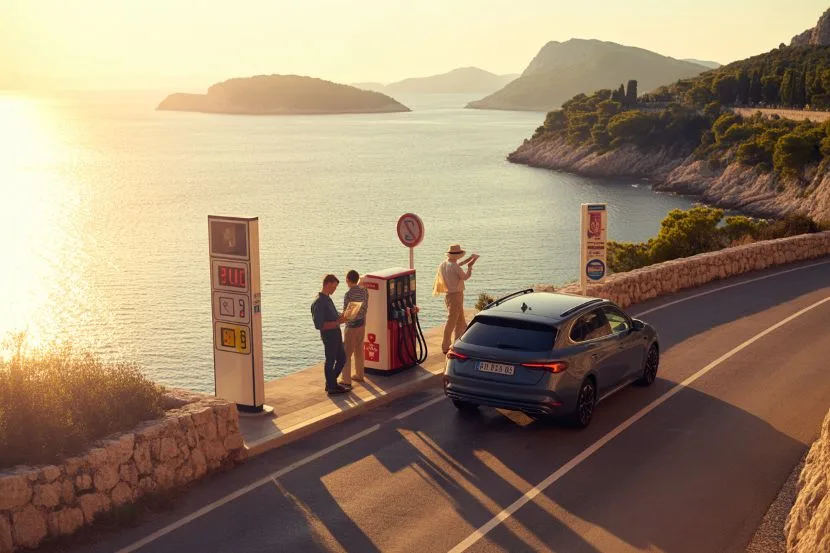
Image generated with Ai
Croatia’s government has rolled out an updated set of fuel price controls and energy interventions aimed at slowing the pace of rising gasoline and diesel costs, while also reducing the phenomenon known as fuel tourism — where motorists from neighbouring states cross borders to fill up at lower prices. As the Mediterranean nation prepares for a busy tourism season along its Adriatic coastline and historic inland cities like Dubrovnik, Split and Zagreb, officials are trying to strike a balance between energy market pressures and the needs of both residents and visitors. Fuel prices, which had been forecast to climb sharply due to global oil market volatility, have instead been capped through state measures that soften spikes and support transportation costs for drivers exploring Croatia’s renowned road trip routes and coastal ferry connections.
Travelers planning a road adventure through Croatia’s scenic landscapes — from the Istrian peninsula to the Dalmatian islands — will find that these price caps provide more predictable fuel costs compared to other parts of the EU, although prices still vary by region and station type. This approach is designed not only to avoid panic buying but also to maintain stability for tourism‑dependent services throughout the peak travel months.
Stabilised Fuel Costs: A Timely Measure for Travellers
In response to rising global energy prices driven by geopolitical tensions in the Middle East and associated oil market fluctuations, the Croatian government has introduced price ceilings to limit how much fuel retailers can charge at most petrol stations across the country (excluding motorway outlets where deregulated pricing still applies). These caps effectively temper the anticipated increases, cushioning motorists and tourists alike from steep rises that might otherwise diminish travel budgets.
Official projections suggest that absent these measures, petrol prices could have reached up to €1.71 per litre and diesel up to €1.86 per litre. Instead, the state has allowed maximum prices of €1.62 per litre for petrol and €1.73 for diesel, easing the financial burden on both local drivers and those on scenic drives between Croatia’s iconic destinations.
Advertisement
Advertisement
For travellers budgeting a road trip across Europe’s Mediterranean fringe, these rates remain competitive. For comparison, data earlier in March 2026 showed average fuel retail prices in Croatia generally traded slightly below the EU average — petrol and diesel often remained a few cents cheaper than the continental norm, even before official caps were announced.
Understanding ‘Fuel Tourism’ and Croatia’s Policy Response
Fuel tourism occurs when drivers intentionally cross borders into countries with lower fuel prices to fill their tanks more cheaply. Studies across Europe — such as analyses from border regions like Italy’s Friuli Venezia Giulia — show that price differences can lead to significant cross‑border fuel purchasing, affecting local markets and transportation patterns.
Advertisement
Advertisement
In Croatia’s case, authorities have seen unusually high petrol station sales near border crossings in recent weeks, suggesting demand from non‑resident drivers taking advantage of relatively moderate prices. By capping fuel costs, the government aims to reduce these incentives, ensuring that supply remains stable and prioritised for the domestic market and genuine tourist travel rather than opportunistic cross‑border refuelling.
For international travelers driving from neighbouring Slovenia, Hungary, Serbia or Bosnia and Herzegovina to the Adriatic’s summer hotspots, this policy may slightly reduce the attractiveness of cross‑border fuel runs, but it also supports broader stability in regional energy markets.
Travel Impact: What It Means for Tourism in Croatia
Croatia’s tourism industry — responsible for roughly 10%–15% of national GDP and attracting over 20 million visitors in 2024 — is heavily influenced by operating costs like fuel, transportation, accommodation and food. For driving tourists, stable fuel prices can help planners better estimate trip expenses for journeys along the Adriatic coast, inland national parks, UNESCO heritage cities and island hopping routes.
Because fuel prices also indirectly affect rental car rates, ferry fuel costs and ground transport services, caps help curtail large spikes that might otherwise deter route exploration or push travellers to cut itineraries short. Visitors planning multi‑stop explorations — such as the popular road trip from Zagreb to Plitvice Lakes, then on to Split and Dubrovnik — benefit from predictable fuel costs in their budgeting, especially during summertime travel surges.
Moreover, Croatia’s status as a value‑oriented destination compared to some Western European neighbours — where fuel costs can run significantly higher — may still appeal to road tourists seeking scenic driving around coastal peninsulas and inland highlands.
What Travellers Should Know Ahead of the Season
Smart Refueling and Route Planning
- Fuel Cost Comparison: Check live fuel price apps or local petrol station pricing before departure; inland areas and smaller towns often offer slightly better rates than motorway stations.
- Efficient Driving: For long drives between major Croatian cities and scenic spots, consider fuel‑efficient or hybrid rental vehicles to minimise fuel expenditure.
- Border Considerations: If travelling from neighbouring EU states, refuel early — but understand that price caps aim to moderate significant cross‑border price arbitrage.
Seasonal Travel Tips
- Peak Season: Summer months (July–August) see the highest tourism flows; book accommodation and ferries early and plan for heavier traffic on coastal and island roads.
- National Park Access: Explore iconic spots like Plitvice Lakes and Krka waterfalls, but be aware that road travel between parks can add fuel costs — plan stops for rest and refuelling strategically.
- Local Transit: In urban centres like Dubrovnik or Split, consider using shuttle services or local buses to cut down on rental car fuel expenses.
Travel‑Savvy Navigation Through Croatia’s Changing Energy Landscape
Croatia’s proactive measures to limit fuel price volatility and tame cross‑border refuelling demand are not just economic policy — they play a meaningful role in shaping a smoother travel experience for visitors exploring Europe’s historic Mediterranean crossroads. From coastal drives along the Adriatic Sea to inland cultural routes, predictable energy costs help travellers make the most of this diverse and picturesque destination without unwelcome financial surprises.