
Published on
March 20, 2026

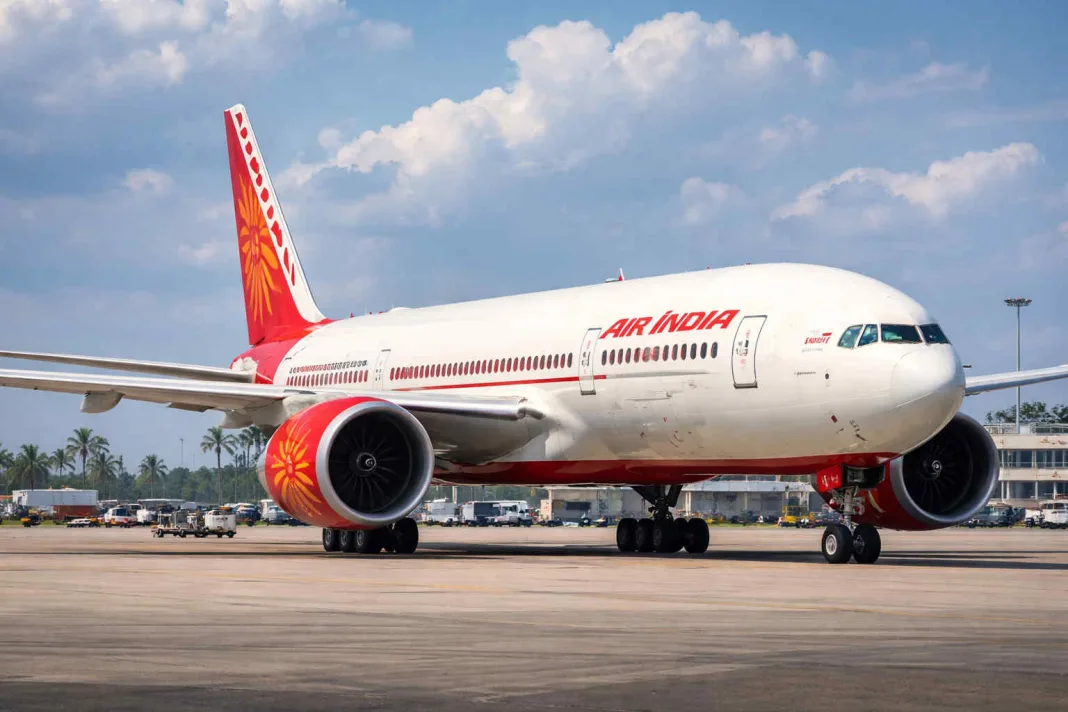
Image generated with Ai
Air India’s flight to Vancouver ended in an unexpected return to Delhi after 9 hours in the sky due to a critical issue: the Boeing 777-200LR aircraft lacked the necessary clearance from Canada’s aviation authorities to enter the country’s airspace. Despite departing Delhi with a full load of passengers, the aircraft was not authorised to operate on this route, as Air India is only approved to use the Boeing 777-300ER for flights to Vancouver. This regulatory oversight led to the flight being turned back mid-route, causing significant disruption and frustration for the passengers onboard.
In a shocking turn of events, Air India’s flight AI185, which took off from Delhi for Vancouver, Canada, was forced to return to the Indian capital after a grueling 9-hour journey. The Boeing 777-200LR aircraft, with a full load of passengers onboard, was not cleared by Canada’s aviation authorities to operate on this route, causing significant delays and inconvenience for travellers.
The Unfortunate Turnaround
The flight, which departed Delhi at 12:18 p.m. on Thursday, was en route to Vancouver when the issue with the aircraft’s clearance was discovered. Despite Air India’s approval to operate Boeing 777-300ER planes on this route, the 777-200LR version was deployed for the journey, which did not meet the necessary regulatory standards for entry into Canadian airspace.
The Boeing 777-300ER, with a range of approximately 13,650 km, is typically used on this route, as it comfortably accommodates between 350 to 396 passengers. On the other hand, the Boeing 777-200LR, which has a longer range of around 15,840 km, carries fewer passengers—ranging from 301 to 317. While the 777-200LR is designed for long-haul flights, it was not authorised for the specific flight into Canada, which led to the airline’s sudden operational setback.
Advertisement
Advertisement
The Long Journey Back
After entering Chinese airspace near Kunming, four hours into the flight, the regulatory error was detected, prompting the flight crew to turn the aircraft around and head back to Delhi. The passengers, initially headed for Vancouver, were then subjected to a prolonged 9-hour journey back to the national capital, retracing the path they had already flown.
Despite the unexpected detour, the aircraft landed safely in Delhi, and all passengers were disembarked. The return journey, while safe, left many passengers disappointed and frustrated, as they had missed their destination and faced a significant delay.
Advertisement
Advertisement
Efforts to Mitigate the Impact
Once the plane had safely returned to Delhi, the airline’s ground staff quickly sprung into action to assist the affected passengers. Efforts were made to provide hotel accommodation for those stranded, and every possible measure was taken to ensure that the passengers would be flown to Vancouver at the earliest. A fresh flight departed the next morning to Vancouver, carrying the same passengers who had been forced to return to Delhi.
While the airline apologised for the inconvenience caused to its passengers, it assured that all necessary steps had been taken to minimize the disruption and ensure that the journey continued promptly. Despite this effort, the flight’s unexpected return left a number of passengers questioning the airline’s operational management and the importance of thorough pre-flight checks.
Advertisement
Advertisement
Air India’s Previous Operational Challenges
This is not the first time Air India has encountered issues related to operational clearance. In November 2025, the airline had been fined by the Directorate General of Civil Aviation (DGCA) for operating eight commercial flights with an Airbus A320neo that lacked the necessary Airworthiness Review Certificate (ARC). The airline was penalised with a fine of Rs 1 crore for this violation, highlighting the importance of regulatory compliance in ensuring flight safety and operational efficiency.
In light of this incident, Air India will likely face further scrutiny from aviation authorities regarding its operational practices and flight clearance procedures. The need for accurate and compliant operations has never been more pressing, especially for an airline with international routes and a large number of passengers.
The Bigger Picture: Regulatory Challenges in the Aviation Industry
Air India’s unexpected return to Delhi underscores the complexities and challenges faced by airlines in navigating international airspace regulations. As air travel continues to grow globally, airlines must adhere to a stringent set of standards imposed by aviation authorities in various countries. Failing to meet these standards, as seen in this case, can lead to costly disruptions, passenger dissatisfaction, and reputational damage.
Moreover, as global travel continues to rebound, airlines around the world must invest in improved operational protocols to avoid similar incidents. This includes ensuring that the appropriate aircraft are deployed for specific routes, obtaining the necessary clearance and certifications, and carrying out rigorous pre-flight inspections.
Air India’s flight to Vancouver ended in an unexpected return to Delhi after 9 hours in the sky due to the Boeing 777-200LR lacking the necessary clearance from Canada’s aviation authorities to operate on the route. The aircraft, approved only for the Boeing 777-300ER, was forced to turn back mid-flight, causing significant delays.
while Air India managed to safely return to Delhi and eventually continue its passengers’ journey to Vancouver, the incident highlights the critical importance of regulatory compliance in international aviation. For airlines, ensuring that all operational requirements are met before departure is crucial in maintaining smooth operations and safeguarding their passengers’ experience. As the aviation industry continues to evolve, incidents like this will serve as important lessons in the need for thorough checks and regulatory adherence.