
Published on
March 18, 2026

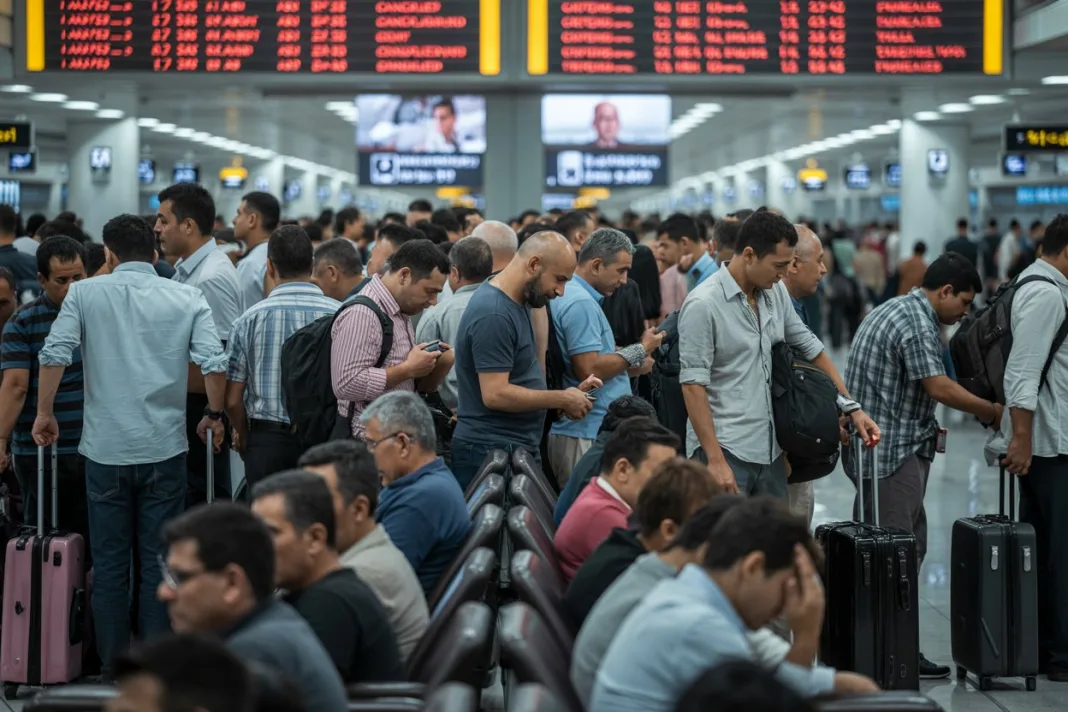
Image generated with Ai
Milwaukee Mitchell International Airport is grappling with a fresh wave of flight disruptions today, with 78 delays and 15 cancellations already impacting travelers during an already sensitive spring travel period. For families starting long‑planned vacations, business travelers on tight schedules, and students heading back to campus, every alert on a phone screen now carries a mix of anxiety, frustration, and hope that their journey will still go ahead as planned.
Milwaukee Mitchell: 78 Delays, 15 Cancellations Hit Spring Travel
According to live tracking data and airport status tools, flights at Milwaukee Mitchell International Airport (MKE) are experiencing elevated disruption levels, with dozens of departures and arrivals running behind schedule and multiple services being scrubbed from the board. While the airport itself remains open and operational, passengers are facing longer waits at gates, rebookings onto later flights, and increased congestion at airline customer service counters.
These disruptions are unfolding against the backdrop of a volatile week for U.S. aviation, with a series of late‑season storms and operational knock‑on effects from earlier cancellations across the Midwest network. Carriers serving MKE, including legacy and low‑cost airlines, have been adjusting schedules, repositioning aircraft, and juggling crew availability in response to shifting weather and congestion at larger hub airports.
Storm Hangover and System Stress
Recent government and regulatory updates underscore how weather and system strain can ripple through airports like Milwaukee Mitchell for days after the worst of a storm has passed. Federal briefings have highlighted widespread delays and cancellations across the national airspace system this week, with the Midwest particularly affected as airlines recover from heavy snow and storms that disrupted operations at major hubs such as Minneapolis–St. Paul and Chicago.
Advertisement
Advertisement
Even when Milwaukee itself is not directly under an active weather warning, flights into and out of MKE depend on aircraft arriving from cities still battling adverse conditions or backlog. If a plane is stuck at a snow‑hit hub, or a crew has exceeded duty limits due to earlier delays, that disruption is often felt hours later by passengers waiting at Milwaukee Mitchell.
TSA, FAA, and Official Guidance for Passengers
Government agencies are urging passengers to stay informed and build additional time into their journeys as delays and cancellations continue to fluctuate. The Transportation Security Administration (TSA) has previously warned that staffing shortages, heavy seasonal demand, and unexpected system shocks can combine to lengthen security screening times at airports, including Milwaukee, especially around peak travel periods.
Advertisement
Advertisement
The Federal Aviation Administration (FAA), through its national delay maps and advisory updates, continues to flag weather‑related and volume‑related constraints that may affect flights even when local skies appear clear. Travelers are being encouraged to check both the FAA’s real‑time air traffic status tools and their airline’s flight status page before leaving home, and again upon arrival at the airport, as gate changes, revised departure times, and rolling delays remain common.
What Passengers at Milwaukee Mitchell Should Do Today
For passengers flying out of Milwaukee Mitchell International Airport today, the first step is to verify the status of their flight directly with the airline or through official airport flight information services before heading to the terminal. Airlines are frequently updating departure times, swapping aircraft, and in some cases consolidating flights as they attempt to recover schedules and manage capacity after earlier disruptions.
Advertisement
Advertisement
Government travel advisories and airport best‑practice guidance suggest arriving at the airport earlier than usual—especially during morning and late afternoon peaks—to allow time for security queues and potential rebooking. Passengers with tight connections downline should consider speaking to airline agents in advance about alternative options or longer connection windows, as residual delays can cascade across multi‑segment itineraries.
Broader Impact on the Midwest Aviation Network
Milwaukee Mitchell is not alone in facing turbulence this week; the entire Midwest air travel network has been dealing with disruptions following major winter weather events and storm systems that forced airlines to cancel hundreds of flights and delay thousands more across multiple states. When a big hub experiences widespread cancellations, regional airports like MKE often feel the aftershocks in the form of delayed inbound aircraft, equipment shortages, and reshuffled crew rotations.
Regulators and aviation officials have pointed out that even relatively modest disruption percentages at individual airports can represent thousands of passengers forced to change plans, miss connections, or overnight unexpectedly. For Milwaukee Mitchell, today’s tally of 78 delays and 15 cancellations translates into hundreds—if not thousands—of disrupted journeys, affecting local residents and connecting travelers alike.
Looking Ahead: Recovery and Resilience
As airlines work to restore normal operations at Milwaukee Mitchell International Airport, recovery will hinge on stabilizing schedules, matching aircraft and crew availability, and monitoring evolving weather patterns across the national network. Industry experience suggests that once peak disruption days subside, airports like MKE typically see a gradual reduction in delays and cancellations over 24–72 hours, provided no new storms or system failures intervene.
For now, the best strategy for passengers is to stay flexible, keep digital boarding passes and notifications switched on, and maintain close contact with their airline’s customer service channels as conditions evolve. Amid the numbers and acronyms, there are real people waiting at Milwaukee Mitchell today—parents keeping kids entertained at crowded gates, workers trying not to miss crucial meetings, and loved ones hoping a delayed arrival still ends with a long overdue hug in the arrivals hall
Source: Flightaware