
Published on
March 15, 2026

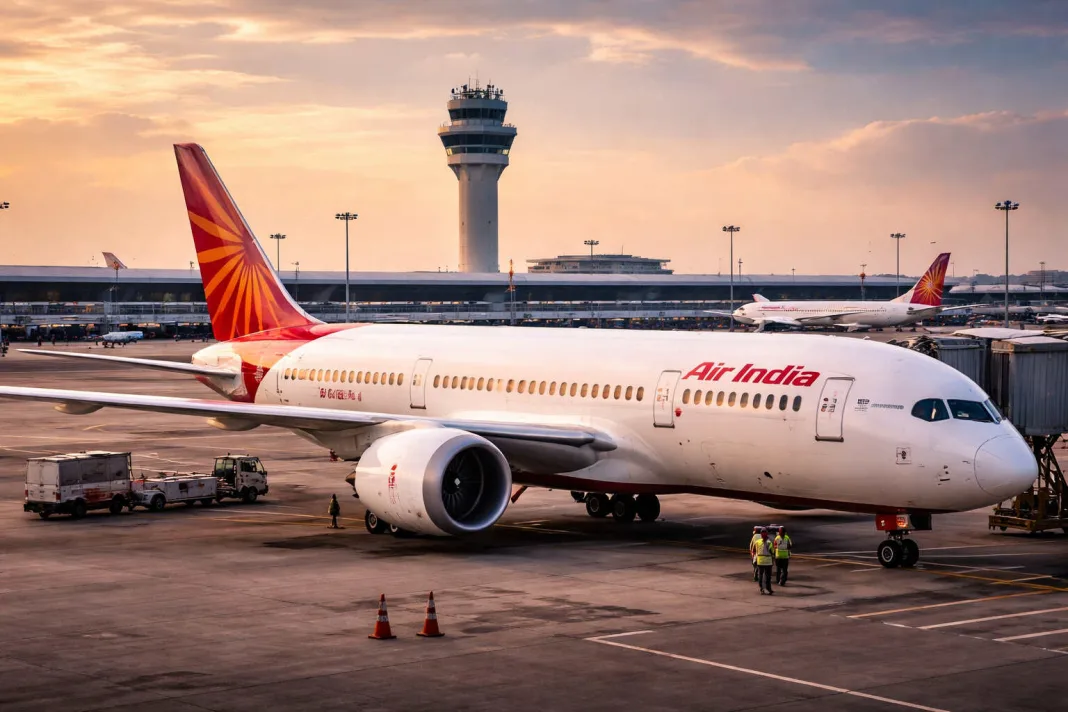
Image generated with Ai
Air India has secured emergency relaxations for pilot flight duty hours amid ongoing airspace restrictions in West Asia, as the airline is forced to reroute its long-haul flights due to the closure of Iranian and Iraqi airspace. With the new flight paths, including detours through Egypt, the airline is experiencing longer flight durations, prompting the Directorate General of Civil Aviation (DGCA) to temporarily extend flight time and duty period regulations for pilots. These adjustments are crucial to maintain the airline’s operations while ensuring the safety and well-being of its crew during this challenging period.
The Directorate General of Civil Aviation (DGCA) has provided temporary relaxations for Air India’s long-haul flights as the airline adjusts its operations in response to the ongoing airspace restrictions in West Asia. These measures come after the escalating conflict in the region, which has forced multiple airlines, including Air India, to reroute flights due to Iranian and Iraqi airspace limitations.
Air India’s long-haul services, primarily to North America and Europe, have been significantly impacted by the airspace restrictions. To avoid navigating through the closed Iranian and Iraqi airspaces, the airline has taken an alternative route via Egypt. This adjustment has led to extended flight durations, as the new routes are longer than previously used paths.
To accommodate the operational adjustments and ensure that Air India’s pilots are not overburdened by these extended flight durations, the DGCA has granted temporary relaxations in pilot Flight Duty Time Limitations (FDTL) norms. These relaxations, effective until April 30, 2026, specifically apply to long-haul flights operated with two pilots. Sources confirm that these adjustments are aimed at allowing Air India to maintain its schedule without compromising on safety or flight crew wellbeing.
Advertisement
Advertisement
Under the new temporary relaxations, the Flight Time (FT) for long-haul flights has been extended by 1.5 hours, bringing the total maximum flight time to 11.5 hours. Similarly, the Flight Duty Period (FDP), which refers to the total time from when a crew member reports for duty until the completion of their last flight of the day, has been extended by 1.45 hours, now allowing up to 11.75 hours of duty for pilots.
These relaxations come as Air India is operating its European and North American flights via alternative routes, such as Oman, Saudi Arabia’s southern regions, and Egypt, to circumvent the closed Iranian and Iraqi airspace. In some cases, ultra-long-haul flights even require technical stops in places like Rome to refuel. The extended flight routes are necessary to ensure the safety of passengers while complying with airspace restrictions.
Advertisement
Advertisement
However, despite the DGCA’s approval of these relaxations, concerns have arisen regarding Air India’s adherence to the newly approved norms. Sources report that the airline has been operating a particular Jeddah flight with a Flight Duty Period (FDP) of 11.55 hours, exceeding the DGCA’s relaxation by 10 minutes. This deviation from the approved guidelines has raised questions regarding the management of extended flight times and its potential impact on crew fatigue and overall safety.
In addition to the extended flight times and duty periods, the DGCA has also exempted Air India from the standard 30-minute buffer typically required in the roster planning for pilots. This exemption aims to streamline operations during this challenging period, where time constraints and operational flexibility are crucial.
Advertisement
Advertisement
For context, the Flight Time (FT) is defined as the total time that an aircraft is in motion, starting from when the aircraft first moves for takeoff until it comes to a complete stop upon landing. The Flight Duty Period (FDP), on the other hand, includes the time a pilot is on duty, from reporting for work to completing their last flight of the day. These norms are designed to ensure that pilots are not overworked, preventing fatigue, which is critical to maintaining safety during long-haul operations.
Despite the DGCA’s temporary measures to support Air India’s operations, there remains uncertainty surrounding the extent of the impact on other Indian carriers operating in the region. It is not immediately clear if other airlines, such as IndiGo, have been granted similar exemptions for their long-haul services during this period of airspace restrictions. The DGCA’s move to relax flight duty time regulations for Air India reflects the seriousness of the airspace restrictions caused by the ongoing West Asia conflict, which has forced airlines to adapt quickly to new routing challenges.
The ongoing conflict between the United States, Israel, and Iran, which escalated on February 28, 2026, has had a ripple effect on the global aviation industry. With several countries restricting airspace, particularly in the volatile regions of Iran and Iraq, many airlines, including those operating from India, have had to modify their flight paths. Air India’s European and North American services have been rerouted through Oman, Saudi Arabia, and Egypt to maintain safe flight operations. These diversions have led to longer flight times, prompting the need for regulatory changes to ensure smooth operations.
In the longer term, this situation may lead to increased operational costs for Air India as well as a potential adjustment in pricing for passengers flying on affected routes. However, the airline’s ability to adjust to the new flight patterns while ensuring crew safety has been a crucial factor in maintaining its international service. This operational flexibility is a testament to the airline’s commitment to its passengers and staff during these turbulent times.
As the conflict in West Asia continues, it is expected that airlines will continue to face challenges related to flight times, airspace restrictions, and the safety of passengers and crew. The DGCA’s temporary relaxations are a crucial response to these challenges, but it is likely that further regulatory adjustments may be necessary as the situation evolves.
Air India’s current flight schedules will be closely monitored to ensure that pilots are not pushed beyond safe operational limits. The DGCA’s efforts to balance operational needs with safety concerns will be key in determining the airline’s ability to maintain its long-haul flight network during these exceptional circumstances.
Air India has secured emergency relaxations for pilot flight duty hours amid West Asia airspace restrictions, as the airline is now taking longer routes through Egypt for its long-haul flights to Europe and North America. These extended flight times necessitated the DGCA’s intervention to ensure safe operations.
Air India’s adjustment to longer flight routes due to airspace restrictions in West Asia has led to a necessary regulatory change, allowing for extended flight duty times for its pilots. This adjustment ensures that the airline can continue to serve its passengers while addressing the logistical challenges posed by the conflict. However, concerns about adherence to the extended norms and the impact on crew safety remain important issues to monitor in the coming weeks. The global aviation community will continue to watch how airlines adapt to these unprecedented challenges and the evolving situation in West Asia.