
Published on
March 9, 2026

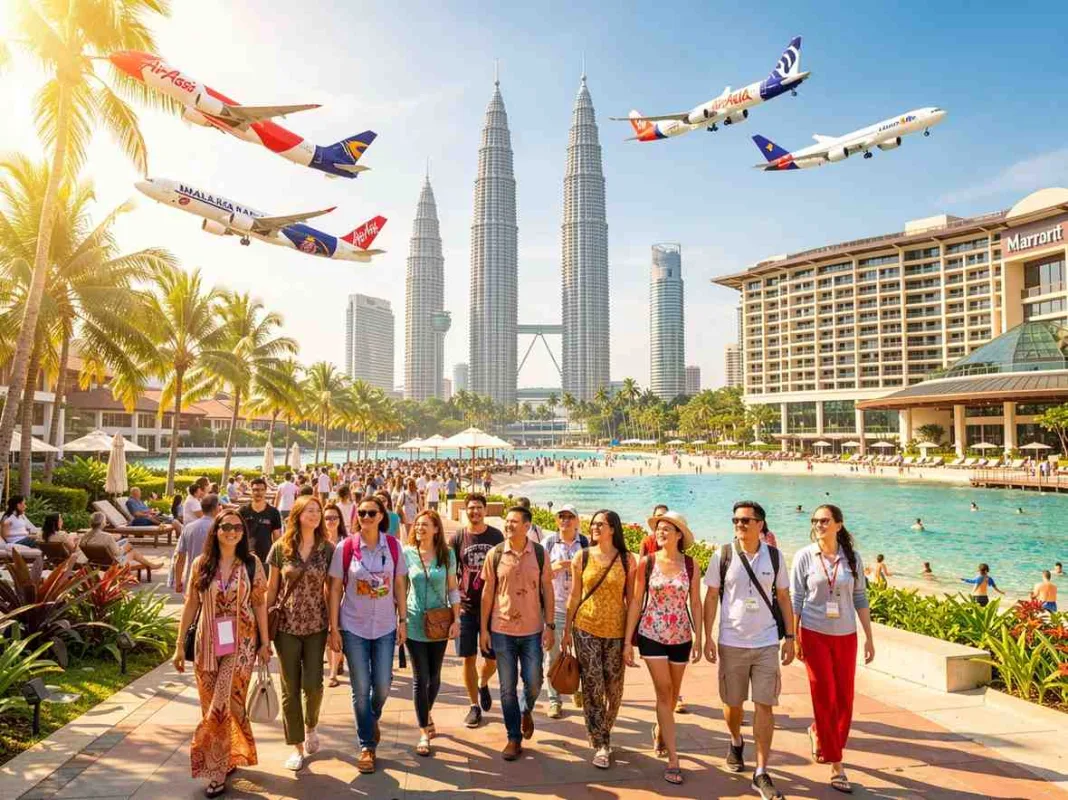
Image generated with Ai
Singapore, China, India, and Indonesia are flooding Malaysia, as AirAsia, Malaysia Airlines, and Marriott Hotels boom with the surge of the Malaysia My Second Home (MM2H) programme, driving the tourism industry to record-breaking heights. This unprecedented rise in international arrivals follows a major reform by the Malaysian government, encouraging long-term tourism through the MM2H programme, which has relaxed entry requirements and made residency in Malaysia more attractive than ever before. Countries such as Singapore, China, India, and Indonesia are at the forefront of this movement, with millions of tourists now flocking to Malaysia for extended stays. AirAsia and Malaysia Airlines have ramped up flight operations to accommodate the increasing demand, offering more direct routes and affordable options for long-haul travellers. Meanwhile, Marriott Hotels and other luxury hospitality brands are seeing unprecedented occupancy levels, benefiting from the influx of high-spending tourists who are choosing to make Malaysia their second home. As the Malaysian government continues to bolster tourism, the country is not only witnessing a recovery from the pandemic but is also poised to redefine long-term travel and residency in Southeast Asia. With easy access, vibrant cultural experiences, and exceptional value for money, Malaysia has become the go-to destination for global travellers seeking a mix of adventure, relaxation, and an affordable lifestyle. This transformation marks a new chapter in Malaysia’s tourism story, positioning it as one of the fastest-growing travel hubs in Asia.
Singapore, China, India and Indonesia Flood Malaysia as AirAsia, Malaysia Airlines & Marriott Hotels Boom with MM2H Visa Surge — Tourism Hits Record High!
In a remarkable turnaround for Malaysia’s tourism industry, the Malaysian government’s decision to extend the Malaysia My Second Home (MM2H) programme has had an immediate and profound impact, drawing tourists from around the world. Specifically, Singapore, China, India, and Indonesia have emerged as the top contributors to this surge, with AirAsia, Malaysia Airlines, and Marriott Hotels seeing unprecedented demand. The MM2H programme, which allows foreigners to reside in Malaysia for extended periods, has transformed the landscape of the country’s tourism, creating a new wave of international visitors and significantly boosting both the airline and hospitality industries.
As the world reopens post‑pandemic, Malaysia’s strategic reforms and the MM2H programme have emerged as a game‑changer, enticing long‑stay tourists, retirees, and expatriates, and driving the country’s tourism to record highs. Here’s a closer look at how this surge is shaping the future of travel to Malaysia.
Advertisement
Advertisement
MM2H Programme: A Game Changer for Malaysia’s Tourism Industry
The MM2H programme has long been a hallmark of Malaysia’s strategy to boost tourism by encouraging long‑term stays. However, the recent changes made by the Malaysian government have supercharged this effort, attracting foreigners with relaxed financial requirements and simplified application processes. These modifications have paved the way for a fresh influx of international visitors, bringing a flood of long‑stay tourists who are keen to experience Malaysia’s vibrant culture, cuisine, and natural beauty. The programme’s appeal lies in its ease and the perks it offers, including eligibility for long‑term residency, affordable healthcare options, and access to high‑quality infrastructure.
Advertisement
Advertisement
Countries such as Singapore, China, India, and Indonesia have emerged as the biggest contributors to this MM2H surge, with tourists flocking to Malaysia not only for short visits but for extended stays. The MM2H programme has become particularly attractive to those seeking an affordable yet high‑quality lifestyle, with Malaysia’s cost of living offering great value compared to other destinations in the region.
Singapore, China, India and Indonesia Lead the Charge in Tourist Arrivals
Malaysia has long enjoyed a strong relationship with its ASEAN neighbors, but with the MM2H programme gaining traction, countries like Singapore, China, India, and Indonesia are now sending larger numbers of tourists than ever before. These countries are also among the world’s biggest outbound travel markets, and their interest in Malaysia is showing no signs of slowing down.
Singapore remains Malaysia’s largest source of international tourists, accounting for around 18.9 million visitors, which is more than 50% of the total arrivals. The proximity of both countries, combined with ease of travel, has made Singaporean tourists frequent visitors to Malaysia, especially in Kuala Lumpur, Penang, and Johor Bahru. AirAsia and Malaysia Airlines continue to provide convenient and affordable flights from Singapore to Malaysia, with multiple daily departures to key cities such as Kuala Lumpur and Langkawi.
China is another key market, with more than 3.7 million Chinese tourists visiting Malaysia in 2025 alone. The relaxed visa requirements and direct flight connectivity have made Malaysia an increasingly popular destination for Chinese tourists, many of whom are seeking a cultural experience coupled with the convenience of visa‑free travel. AirAsia and Malaysia Airlines play a critical role in accommodating this influx, operating daily flights from various Chinese cities such as Shanghai, Beijing, and Guangzhou.
India continues to be a growing market for Malaysia, with over 1.3 million Indian tourists visiting in 2024, and numbers expected to rise steadily in the coming years. The appeal of Malaysia as a tourist destination lies in its rich cultural diversity, world‑class shopping, and iconic attractions like the Petronas Towers. With Malaysia Airlines and AirAsia providing multiple direct flights from cities like Mumbai, New Delhi, and Bangalore, it’s easy for Indian tourists to experience the best of what Malaysia has to offer.
Meanwhile, Indonesia contributes about 4.1 million visitors annually, making it one of Malaysia’s strongest ASEAN markets. The ease of travel and shared cultural ties between the two countries have helped maintain this strong flow of tourism, with AirAsia offering direct flights from Jakarta, Bali, and Surabaya to major Malaysian cities.
As these countries continue to generate significant numbers of tourists for Malaysia, the MM2H programme has only served to amplify the attraction of Malaysia to these regional markets, while also drawing visitors from other parts of the world.
Airlines See Surge in Flights and Capacity with MM2H Growth
The growth in tourist arrivals driven by the MM2H programme has had a significant effect on Malaysia’s airlines. AirAsia and Malaysia Airlines have both ramped up their operations to meet the increasing demand, with AirAsia offering more flights between Malaysia and popular tourist hubs in China, India, and Singapore. As a low‑cost carrier, AirAsia plays a vital role in ensuring that affordable travel options are available for those wishing to visit Malaysia, while Malaysia Airlines provides more premium services with greater flexibility for tourists from higher‑income markets.
With the MM2H programme drawing an increasing number of long‑stay tourists, both airlines have worked to expand their international routes to cater to this demand. AirAsia, for instance, has increased its flights from major Indian cities, while Malaysia Airlines has bolstered its connections to China, with additional flights between key Chinese cities and Kuala Lumpur. These increased capacities are expected to benefit both the airline industry and Malaysia’s tourism sector, contributing to a more vibrant travel landscape across Southeast Asia.
Marriott Hotels, Shangri-La, and Other Hospitality Giants Reap Rewards
On the ground, the hospitality industry is also experiencing a boom as more tourists flock to Malaysia for extended stays. With the MM2H programme encouraging long‑term visitors, Marriott Hotels, Shangri‑La, and other major hotel chains are seeing an uptick in bookings, particularly in key tourist areas such as Kuala Lumpur, Penang, and Langkawi.
Marriott International, one of the world’s largest hotel chains, has expanded its footprint in Malaysia, capitalising on the growing number of international visitors. Shangri-La Hotels, renowned for offering premium hospitality services, has also seen a surge in bookings from tourists seeking high‑quality accommodations during their extended stays. These hospitality giants have been quick to respond to the increased demand, with new properties opening and existing ones upgrading their facilities to accommodate the growing number of MM2H participants.
Hotels are offering attractive packages and benefits tailored to long‑stay visitors, including extended stay discounts, special packages for families, and partnerships with airlines offering attractive travel deals. The hospitality industry is capitalising on this surge, with luxury resorts in destinations such as Langkawi and Penang seeing an increase in international bookings, driven by long‑term tourists who stay for extended periods.
Flight Details and Travel Tips for MM2H Tourists
For tourists travelling to Malaysia under the MM2H programme, the ease of access and availability of affordable flights is one of the key attractions. AirAsia, Malaysia’s leading low‑cost carrier, offers a variety of routes from key international markets, making it an excellent choice for budget‑conscious tourists. Direct flights from Singapore, China, and India are available on a daily basis, ensuring that tourists can easily find suitable flights to Kuala Lumpur, Penang, and other major tourist destinations.
Malaysia Airlines, the country’s flagship carrier, provides more premium services with direct flights from major international hubs, ensuring comfort and flexibility for long‑haul passengers. Malaysia Airlines also provides international tourists with the benefit of a strong network of domestic routes, making it easy to travel within Malaysia once they arrive.
For long‑stay visitors, there are also various travel packages available, including flights combined with hotel stays, as well as special deals for families and retirees. Airlines and travel agencies have partnered with local accommodations to create comprehensive packages tailored to the needs of MM2H tourists.
Travel Tips:
- Visa Requirements: Ensure that you meet the financial requirements for the MM2H programme, including proof of income and a sufficient fixed deposit. These requirements differ by age and nationality.
- Health Insurance: It is mandatory to have valid health insurance for the duration of your stay. Many insurers in Malaysia offer packages tailored to MM2H holders.
- Cultural Etiquette: Malaysia is a multicultural country with diverse religious practices. Tourists are encouraged to respect local customs and dress modestly when visiting religious sites.
- Explore Beyond Kuala Lumpur: While Kuala Lumpur offers plenty of attractions, don’t miss out on Penang, Langkawi, and Borneo for their unique natural beauty and cultural richness.
- Transportation: Malaysia has an extensive public transport system, but renting a car is recommended for exploring more remote areas or if you plan to stay for an extended period.
Future Prospects for MM2H Tourists
The future looks bright for Malaysia’s tourism sector, as the MM2H programme continues to grow in popularity. With tourist arrivals at record highs, and a steady influx of long‑stay visitors, the airlines, hotels, and local businesses will continue to see substantial benefits.
In the coming years, Malaysia is expected to attract even more international visitors, particularly from China, India, Singapore, and Indonesia, making it one of Southeast Asia’s most dynamic tourist destinations. The expansion of flight services and improved infrastructure will only add to the appeal of Malaysia as a long‑term destination for tourists seeking a blend of cultural immersion, affordable living, and world‑class amenities.
Singapore, China, India, and Indonesia are flocking to Malaysia as AirAsia, Malaysia Airlines, and Marriott Hotels experience a boom driven by the Malaysia My Second Home (MM2H) programme. This surge in international arrivals is reshaping Malaysia’s tourism industry, attracting long-term visitors and reshaping the travel landscape.
This record growth in Malaysia’s tourism, spurred by the MM2H programme, signals a positive future for the country’s travel and hospitality industries. For tourists, this offers a golden opportunity to explore one of Asia’s most diverse and welcoming countries, with excellent flight options, luxurious accommodations, and an enriching cultural experience awaiting them.