


Published on
March 8, 2026

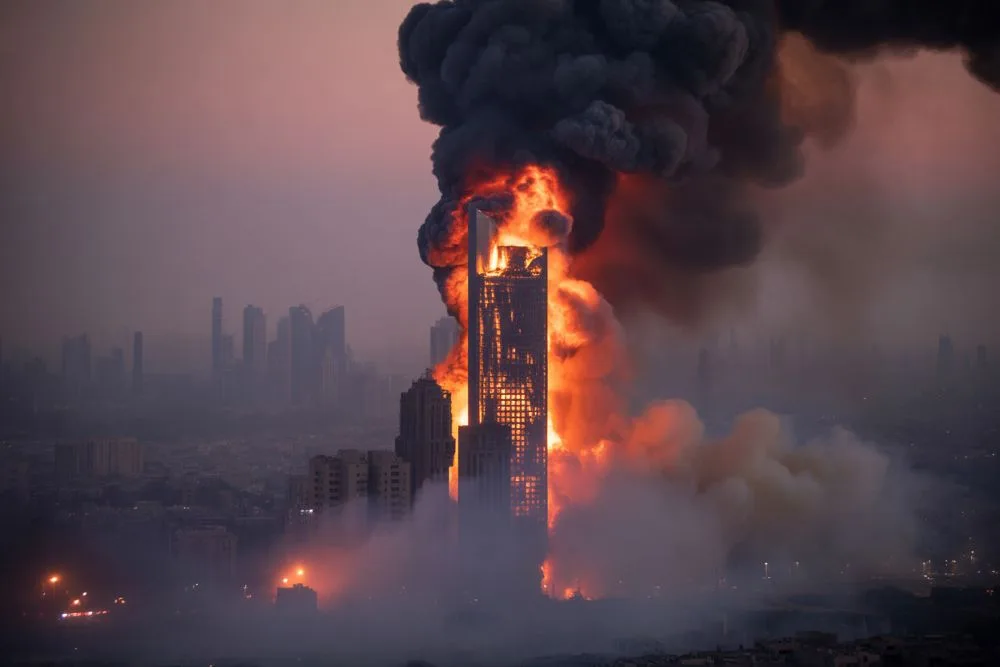
Image generated with Ai
Kuwait City, alongside the UAE, Saudi Arabia, and Qatar, is grappling with a dire security situation after a series of Iranian missile and drone strikes tore through critical infrastructure across the Gulf region. These attacks are part of the escalating conflict that has sent shockwaves through international travel corridors, leading to widespread flight cancellations, airport closures, and government travel warnings. Travelers planning to visit the Gulf states are facing growing uncertainty as the region becomes a high-risk zone for tourism.
Kuwait City Tower Set Ablaze: A Warning for Tourists and Residents
The most recent attack in Kuwait City has been nothing short of catastrophic, with a towering skyscraper engulfed in flames after a missile strike. Kuwait International Airport has also been significantly impacted, with disruptions to air traffic as critical infrastructure and oil facilities were targeted. As smoke rises over Kuwait City, the government is urging residents and visitors alike to stay indoors and avoid key areas, including commercial hubs and transport terminals, until the situation stabilizes.
Officials have issued immediate safety protocols for all international visitors, urging caution when traveling within Kuwait’s borders. Tourist hotspots, including the famous Kuwait Towers, are now on lockdown as emergency response teams battle blazes sparked by these strikes.
The Gulf in Crisis: UAE and Saudi Arabia Also Targeted
The attack on Kuwait is just the tip of the iceberg. The UAE and Saudi Arabia have also been embroiled in the conflict, with air defenses scrambling to intercept Iranian missiles. Cities like Dubai and Riyadh are on high alert, with debris falling from intercepted drones causing damage to buildings and infrastructure. In Dubai, a missile landed just outside a major shopping mall, narrowly avoiding civilian casualties. Meanwhile, Saudi Arabia has faced missile strikes aimed at key oil production facilities, threatening the region’s economic stability.
For tourists planning to visit iconic locations like the Burj Khalifa or the Pyramids of Riyadh, it’s crucial to follow real-time updates from local authorities. Travel insurance providers are advising against non-essential trips to these areas due to the volatility of the situation.
Qatar’s Worsening Security Situation – A Precautionary Warning
Qatar, the host of the 2022 World Cup and a key player in the regional economy, has not been spared from the escalation. Doha’s international airport, a major transit hub for passengers traveling between Europe, Asia, and Africa, is now operating under severe restrictions. As the conflict intensifies, the Qatari government has closed some airspace, diverting flights to neighboring safe zones. Qatar has also stepped up civil defense operations to mitigate damage to critical sectors, including energy plants and desalination facilities.
Authorities are urging travelers to reconsider their trips to Qatar due to the unpredictability of security conditions. For those already within the country, evacuation routes and government transportation are being arranged for foreign nationals.
Advertisement
Advertisement
Government Travel Warnings: What You Need to Know Before You Go
In light of these ongoing threats, several governments, including the United States, the UK, and France, have issued clear travel advisories for citizens intending to visit the Gulf region. These advisories warn against all non-essential travel to Kuwait, the UAE, Saudi Arabia, Qatar, and Bahrain.
- US Department of State: Official warnings have advised Americans to defer all travel to the region, citing heightened risk of missile strikes and airspace restrictions.
- UK Foreign Office: Issued similar cautions, specifically highlighting Kuwait City and Doha as areas to avoid.
- French Ministry of Foreign Affairs: Echoed concerns, particularly in Qatar and Saudi Arabia, advising French nationals to leave the region if possible.
For travelers already within the region, embassies are facilitating safe evacuation routes and providing temporary shelter. Authorities are also monitoring evacuation procedures for affected tourists and residents. If you have ongoing travel plans in these areas, it is essential to stay in contact with your embassy and adhere to their guidelines.
Air Travel Disruptions: Massive Flight Cancellations and Delays
One of the most significant consequences of this regional conflict has been the severe disruption to air travel. Kuwait International Airport, along with major hubs in the UAE, Saudi Arabia, and Qatar, has reported massive flight cancellations and delays as airspace continues to be closed and rerouted due to security threats. Airlines operating within the region are advising passengers to check their flight statuses regularly and remain flexible with travel plans.
While airports in Dubai, Abu Dhabi, and Riyadh have partially resumed operations, Qatar Airways, Emirates, and Saudia Airlines are all experiencing delays on key routes. Travelers looking to leave the Gulf region should anticipate limited flight availability and possible increased waiting times at affected airports.
What to Do If You’re Trapped or in Danger
If you’re currently in any of the affected Gulf countries, maintaining communication with your embassy is crucial. Many national governments are offering assistance programs for citizens wishing to evacuate. Stay updated through official government channels or embassy alerts regarding air travel, ground transport options, and potential evacuation procedures.
For those planning to visit in the coming months, the situation remains fluid and subject to rapid changes. It’s best to delay any travel to the Gulf region until conditions stabilize. Review your travel insurance policy to confirm coverage for war-related incidents and ensure it covers emergency evacuations.



