
Published on
March 7, 2026

Image generated with Ai
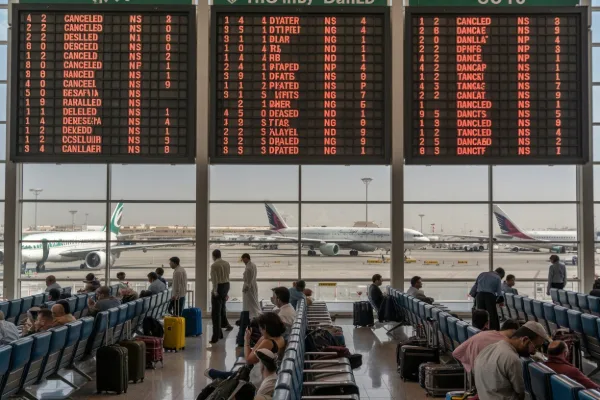
Major travel disruption unfolded at **King Abdulaziz International Airport in Jeddah, Saudi Arabia after dozens of flights were cancelled and delayed, leaving hundreds of passengers stranded and forcing airlines to reshuffle schedules across the Middle East.
Live aviation data from FlightAware indicates that 29 flights were cancelled and 89 flights delayed at the busy Red Sea gateway, affecting connections to major regional hubs including Dubai, Doha, and Muscat.
The disruption impacted several major Middle Eastern airlines including Emirates, Saudia, Oman Air, and Qatar Airways, causing a ripple effect across the aviation networks of the United Arab Emirates, Saudi Arabia, Qatar, and Oman.
Air travelers reported long queues, missed connections and last-minute itinerary changes as airport staff worked to manage the growing backlog of flights.
King Abdulaziz International Airport (JED) serves as one of Saudi Arabia’s busiest aviation hubs and acts as the main international gateway to the holy cities of Makkah and Madinah.
The airport handles millions of passengers annually, including religious pilgrims traveling for Hajj and Umrah, along with international tourists and business travelers.
Advertisement
Advertisement
With such heavy passenger traffic, even a moderate number of flight cancellations can create widespread disruptions across regional aviation networks.
Real-time aviation tracking platforms show that multiple flights scheduled to depart from or arrive at Jeddah faced cancellations and significant delays.
Flight Status Overview at JED
| Status | Number of Flights |
|---|---|
| Cancelled | 29 |
| Delayed | 89 |
| Operating Normally | Several domestic and international services |
Many of the disrupted flights were linked to key Middle East aviation corridors connecting Saudi Arabia with the UAE, Qatar, Oman and other global destinations.
Cancelled flights listed in aviation trackers included services operated by several international carriers and codeshare partners.
Several major Gulf carriers experienced operational disruptions due to the cancellations and delays.
Key Airlines Impacted
| Airline | Hub City | Country |
|---|---|---|
| Saudia | Jeddah / Riyadh | Saudi Arabia |
| Emirates | Dubai | United Arab Emirates |
| Qatar Airways | Doha | Qatar |
| Oman Air | Muscat | Oman |
These airlines operate extensive networks across Asia, Europe and Africa, meaning disruptions in Jeddah can quickly affect international travel routes.
According to live aviation trackers, several flight numbers associated with major airlines and codeshare partners were listed among the cancelled services.
Sample Cancelled Flights
| Flight Number | Airline | Route |
|---|---|---|
| QR1183 | Qatar Airways | Doha – Jeddah |
| QR1185 | Qatar Airways | Doha – Jeddah |
| SV526 | Saudia | Regional route |
| EY612 | Etihad Airways | Abu Dhabi – Jeddah |
| KU782 | Kuwait Airways | Kuwait – Jeddah |
These cancellations forced travelers to rebook flights or seek alternative routes across other Gulf airports.
Passengers reported extended waiting times and crowding inside terminals as airlines scrambled to rearrange schedules.
Travelers connecting through Jeddah faced several problems including:
- Missed international connections
- Rebooking delays
- Extended airport waiting times
- Disrupted travel plans across multiple countries
For many travelers, especially those connecting onward to Asia or Europe, the delays meant overnight stays and uncertain departure times.
Because Jeddah acts as a major transit point for flights across the Middle East, disruptions at the airport affected travel flows across several countries.
Key Routes Impacted
| Origin City | Destination | Airline |
|---|---|---|
| Dubai | Jeddah | Emirates |
| Doha | Jeddah | Qatar Airways |
| Muscat | Jeddah | Oman Air |
| Riyadh | Jeddah | Saudia |
These routes form the backbone of regional air travel across the Gulf.
When flights on these corridors are delayed or cancelled, connections across Europe, Africa and Asia are also impacted.
Airlines operating in the Gulf region rely heavily on tightly coordinated schedules and hub-and-spoke networks.
When flights are cancelled or delayed, carriers must quickly adjust operations by:
- Reassigning aircraft
- Rebooking passengers
- Redirecting connecting flights
- Rescheduling crews
Such disruptions can cascade across an airline’s entire route network.
Authorities at King Abdulaziz International Airport monitor flight operations and passenger movement through real-time systems.
Airport management also coordinates with airlines and aviation authorities to minimize disruptions.
The airport provides real-time flight updates through its official flight information system to help passengers stay informed about schedule changes.
Jeddah plays a vital role in the global aviation ecosystem.
Key facts about the airport include:
- One of Saudi Arabia’s largest international airports
- Major entry point for millions of religious pilgrims
- Key hub connecting Europe, Asia and Africa
- Strategic aviation gateway along the Red Sea corridor
Because of this strategic role, disruptions at Jeddah can quickly affect global airline operations.
The Middle East aviation network remains sensitive to operational disruptions, weather conditions and geopolitical developments.
Recent aviation reports indicate that airline cancellations and delays have increased across several regional airports, contributing to travel uncertainty for passengers.
Some regional aviation analysts warn that flight disruptions may continue if operational pressures persist across major Gulf aviation hubs.
Travelers flying through Jeddah or other Middle Eastern hubs are advised to monitor flight status updates regularly.
Key Travel Tips
- Check live flight status before leaving for the airport
- Confirm rebooking options with airlines
- Allow extra time for connections
- Monitor airline notifications for schedule changes
Using real-time flight tracking services can help passengers stay informed about cancellations or delays before reaching the airport.
Despite the current disruptions, aviation traffic across the Gulf continues to grow as airlines expand international routes.
Major carriers such as Emirates, Qatar Airways, Saudia, and Oman Air remain among the fastest-growing airlines globally.
However, aviation analysts say that maintaining smooth operations at key hubs like Jeddah will remain essential for keeping global travel networks functioning efficiently.
For now, passengers traveling through King Abdulaziz International Airport are advised to remain flexible with their plans as airlines work to restore normal operations.