
Published on
February 15, 2026

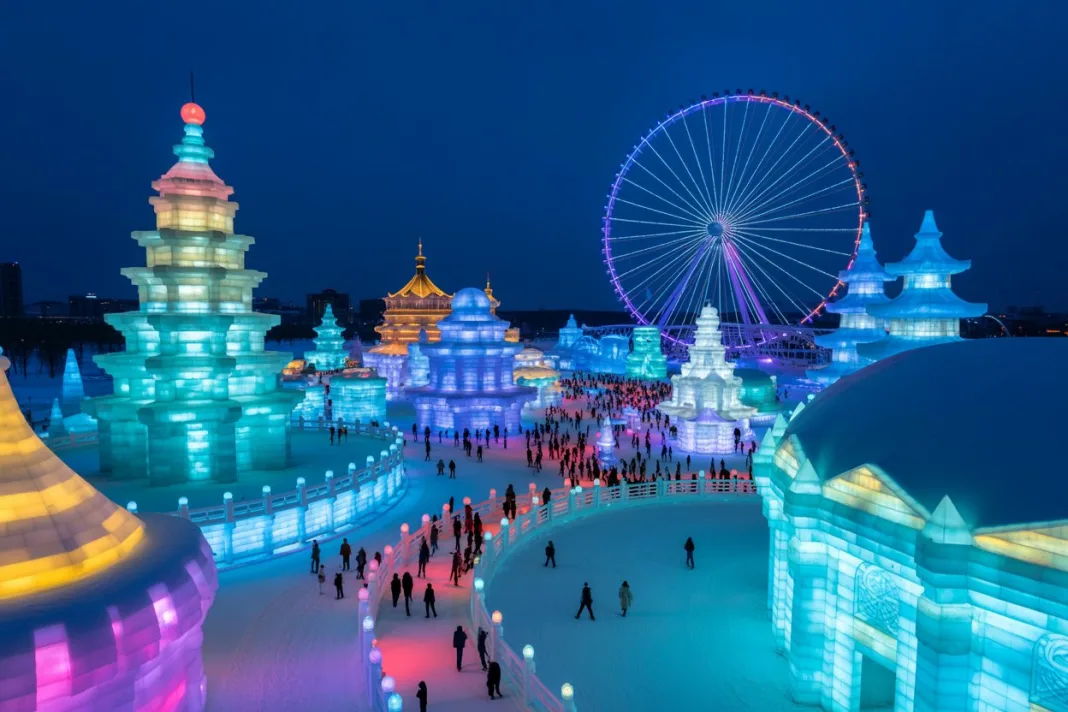
For decades, the phrase “winter in China” evoked images of the industrial chimneys of the Northeast or the biting winds of the Gobi. But in February 2026, that image has been replaced by a glowing, neon-lit skyline of ice sculptures and the high-speed hum of skiers descending the slopes of Changbai Mountain.
According to the latest data released at the Ice and Snow Tourism Development Forum 2026 in Harbin, China’s ice and snow tourism has officially entered a “new stage of sustained prosperity.” No longer just a seasonal trend, it has become an independent industrial giant.
By the Numbers: A Trillion-Yuan Milestone
The scale of this growth is staggering. In 2025, the total value of China’s ice and snow economy exceeded 1 trillion yuan (approx. $140 billion USD). This represents a fourfold increase from just a decade ago.
Looking forward, the momentum shows no signs of slowing. The China Tourism Academy (CTA) projects that the sector will reach:
- 1.2 trillion yuan by 2027
- 1.5 trillion yuan by 2030
For the current 2025-2026 season, experts predict over 360 million domestic winter trips, generating an estimated 450 billion yuan in direct revenue.
The Harbin Phenomenon: More Than Just Ice
The epicenter of this movement remains Harbin, the “Ice City.” The 42nd Harbin International Ice and Snow Festival has broken every previous record. During the recent New Year holiday alone, the city welcomed over 4.1 million travelers, who spent a combined 5.56 billion yuan in just three days.
Advertisement
Advertisement
But Harbin’s success in 2026 isn’t just about size—it’s about innovation. The Harbin Ice-Snow World, now sprawling over 1.2 million square meters, has integrated:
- AI-Assisted Guidance: Smart bots that help visitors navigate the massive park.
- 4D & VR Experiences: Immersive indoor shows that allow visitors to “experience” a blizzard or a ski jump safely.
- The “Super Slide”: Now expanded to 24 lanes to reduce wait times and maximize thrill.
The Shift from “Hard” to “Soft” Spending
Perhaps the most significant finding in the 2026 report is the change in how Chinese travelers spend their money. Historically, the bulk of tourism costs went to “hard expenses” like flights and hotels.
Today, consumers are shifting toward “soft expenses.” Travelers are now willing to pay premiums for:
- Immersive Cultural Experiences: Traditional winter fishing at Chagan Lake or ethnic morin khuur performances.
- Photography Services: High-end “snow shoots” have become a must-have for Gen Z travelers.
- Technology-Driven Entertainment: AR-guided tours and interactive light shows.
Southern Expansion: Snow Without the Sub-Zero
In 2026, you don’t need to go to the Russian border to see snow. Southern China has invested heavily in indoor ice and snow complexes. In 2025, South China accounted for 30% of the national investment in winter tourism, totaling 30 billion yuan. These indoor facilities ensure that the “winter economy” is no longer a three-month window but a year-round revenue driver.
The Global Reach: Exporting the Cold
China isn’t just consuming winter products; it’s making them. Domestic brands for skis, snowboards, and even heavy-duty snow-grooming vehicles are now competing on the global stage. Through cross-border e-commerce, China is positioning itself as a leader in the global winter equipment manufacturing chain, moving beyond its role as a mere destination.
Humanizing the Cold: A New Way of Life
Beyond the cold statistics, this boom represents a shift in the Chinese lifestyle. “Ice and snow have become an important part of people’s lives,” says Dai Bin, President of the China Tourism Academy.
From silver-haired travelers taking the “Snow Train” to Xinjiang to families enjoying hot pot in heated snow houses, winter has become a time for connection and celebration. It is a testament to China’s ability to turn its “cold resources” into a “hot economy,” proving that even the most frigid landscapes can be transformed into engines of warmth and prosperity.