
Published on
February 3, 2026

Located in South Korea’s Gangwon Province, Wonju is reimagining its role on the global stage not through large-scale developments or extravagant branding campaigns but by focusing on sustainable cultural practices and long-term industrial growth. The city is striving for structural changes that integrate its unique outdoor culture, growing tourism, and emerging industries like artificial intelligence (AI) and semiconductors into a cohesive, forward-thinking economic model.
Shaping Global Culture through Outdoor Events and International Exchange
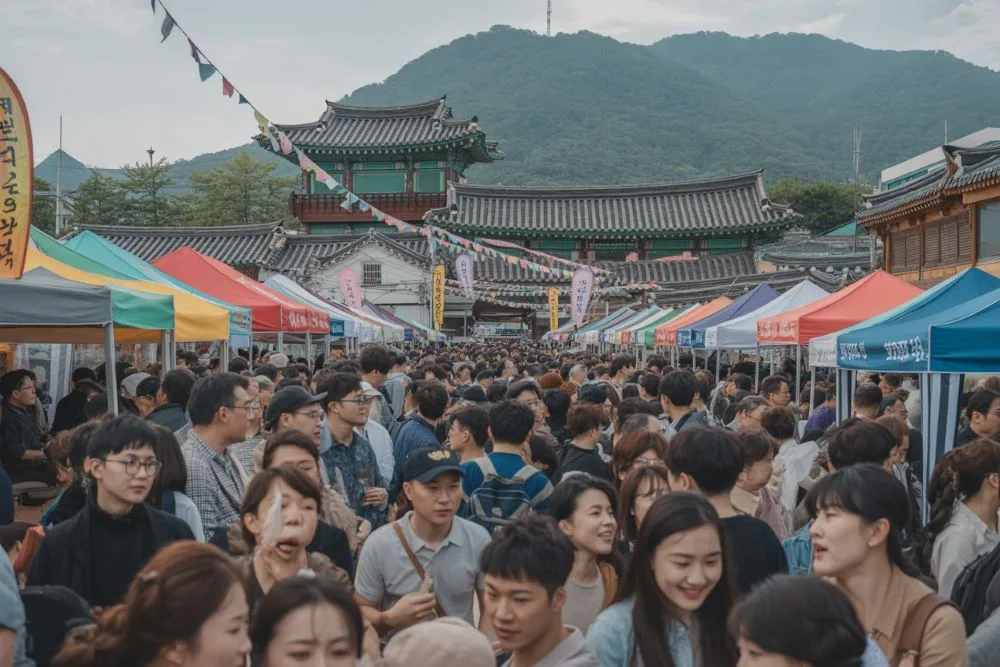
At the heart of Wonju’s cultural strategy is its acclaimed outdoor offerings. The city’s commitment to becoming a Global Culture Gateway is embodied in its recognition as an official walking city by the International Marching League. The Wonju International Walking Festival, known as the Wonju Two Days Walk, is a testament to the city’s successful approach to combining cultural engagement with physical activity. As one of the longest-running global outdoor events in South Korea, the festival draws international visitors from around the world each year, thanks to its official certification and steadily increasing participation.
Notably, the event has seen a surge in international walkers, with overseas participation growing from 145 in 2023 to over 900 in 2025. This expansion is evidence of Wonju’s growing reputation as an accessible and culturally vibrant destination. Through collaboration with the Korea Tourism Organization, the city has developed group tourism packages, combining the walking festival with experiences such as the Wonju Mandu Festival and visits to local markets. These packages enrich the cultural experience, moving beyond the traditional shopping trips and fostering deeper connections between visitors and local heritage.
As a UNESCO Creative City of Literature, Wonju also enhances its cultural reach through international partnerships with cities like Iowa City, Dublin, Manchester, and Prague. These connections strengthen its role in the global cultural ecosystem, further intertwining outdoor activities with intellectual and creative pursuits.
Industrial Evolution: Wonju’s Journey as a Global Economic Connector
While culture serves as the foundation of Wonju’s identity, the city’s focus on industrial transformation is central to its long-term sustainability. The Global Economic Connector strategy is evident in the way Wonju is restructuring its industrial base to center around the Gangwon R&D Special Zone, a critical hub for technological advancements in Korea.
In December 2025, Wonju was designated as an Innopolis by the Ministry of Science and ICT, securing significant national support for research and development in industries like semiconductors, digital health, and AI. This 5.52-square-kilometer zone, which encompasses industrial complexes, universities, and research institutes, benefits from 100 billion won in annual funding and offers tax reductions, regulatory exemptions, and preferential access to public assets. These incentives make Wonju an attractive destination for businesses seeking to innovate and scale in a rapidly evolving market.
Advertisement
Advertisement
A key element of this transformation is Wonju’s focus on AI ecosystems. The city is working to establish a digital healthcare AI transformation hub, backed by 10 billion won in national funds. This initiative is a multi-year effort aimed at integrating AI into the healthcare sector, particularly in hospitals, device companies, and data institutions. Additionally, the NVIDIA Education Center is set to become a pivotal part of the city’s AI ecosystem. With over 2,000 square meters of space, GPU servers, and 100 AI-ready workstations, this center will train professionals in AI-related fields, providing the workforce needed to drive the future of South Korea’s digital health and semiconductor industries.
Wonju’s economic restructuring is designed not only to foster innovation but to create a seamless process for businesses to operate. The city has revamped its internal governance, establishing an economic bureau and an investment promotion division that streamline administrative processes and accelerate project development. This focus on removing bureaucratic hurdles ensures that investments flow smoothly, which is crucial for attracting both local and international businesses.
Advertisement
Advertisement
A Blueprint for Future Success: Wonju’s Long-Term Vision
Wonju’s strategy is not based on speculative future developments, but rather on systems and structures that are already in place. The city is creating an integrated cultural and industrial ecosystem that capitalizes on its walkable geography, global event infrastructure, and cutting-edge industrial initiatives. These developments are proof of Wonju’s progress toward becoming a globally connected city that links South Korea’s national priorities with emerging global industries.
Mayor Won Gang-soo sums up the city’s vision their goal is to build an economy where companies want to invest and a semiconductor industry city that can compete globally. With its dual focus on culture and industry, Wonju is laying the groundwork for a city that is not only locally significant but globally connected, becoming a key player in both cultural and economic networks.
In conclusion, Wonju’s approach to becoming a global hub is not a fleeting attempt at quick growth but a carefully crafted, long-term vision that integrates outdoor culture with industrial innovation. By positioning itself as a city that seamlessly blends tourism with technological advancement, Wonju is paving the way for a sustainable, interconnected future.